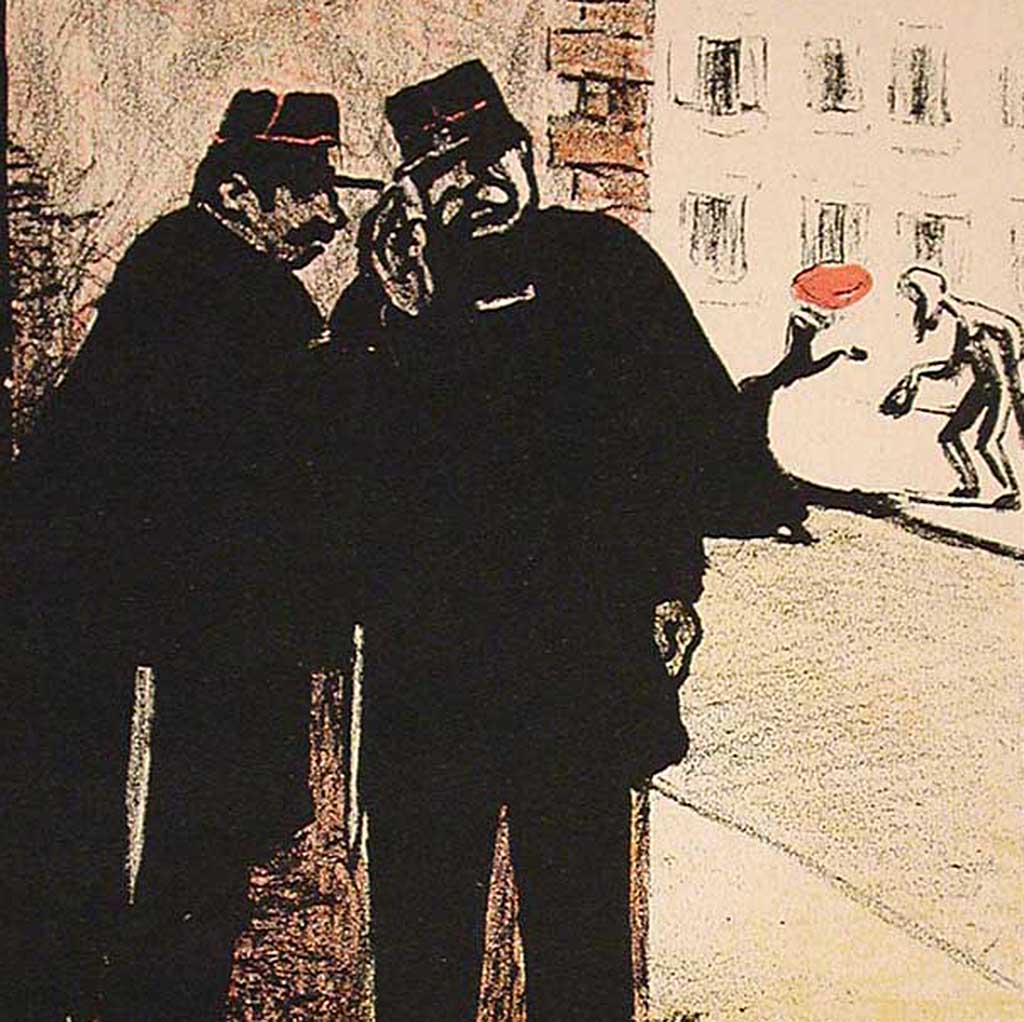
A judge in a modern office chooses between a gavel and a red baseball cap, symbolizing the Trump Supreme Court's commitment to law over partisan loyalty.

Constitutional Fidelity in an Age of Personality Politics

Should judges defy the president for the Constitution? True fidelity means law over personal allegiance.

Download Print-Friendly Version

The rule of law consists of a body of procedural standards. It requires those holding and exercising the authority to make, interpret, apply, and enforce laws to operate in accord with legal requirements. 

As a body of procedural standards, the rule of law is not romantic. It doesn’t turn out crowds in the street. And abiding by its requirements can be tedious—even frustrating. The demand to adhere strictly to legal principles sometimes stands in the way of achieving what we regard—perhaps entirely rightly—as important substantive goals. After all, substance is what ultimately matters, right?

We will not want to live with the consequences of abandoning the rule of law.

But respecting the rule of law is important—extremely important. The great political disasters, the tragic collapses of republics into tyranny, are nearly always abetted by the abandonment of the rule of law. We will not want to live with the consequences of abandoning the rule of law or compromising it to get more quickly to where we want to go.

Now, to be clear, the rule of law is not the rule of lawyers. It is not the rule of judges. It is not the rule of any particular government official. Whether someone is an executive officer, a legislator, or a judge, respecting the rule of law means staying properly within one’s constitutional lane even where one disagrees with the substance of what a coordinate branch of government is doing. It means respecting the lawfulness of decisions and actions one thinks are misguided or impede the achievement of what one regards—again, perhaps rightly—as extremely important objectives.

Judges, no less than other officials, are morally obligated to observe the rule of law, and history (including our own) is replete with cases of lawless judges imposing their will under the pretext of applying constitutional or other legal norms. Some notorious examples are Dred Scott v. Sanford, the pro-slavery decision that set the stage for the Civil War, and Roe v. Wade, striking down our nation’s laws protecting unborn children from abortion. So, respect for the rule of law does not mean that judges are entitled to do whatever they want. Nor does it mean that judges are always right. Nor does it mean that they always get the final say. But executive and legislative respect for the lawful rulings of courts validly exercising jurisdiction is a key component of the rule of law in systems like ours—just as judicial respect for lawful exercises of executive and legislative authority is such a component.

President Trump, like all modern presidents, is testing the limits of executive power under Article 2 of the Constitution. Sometimes he, like those other presidents, will be within those limits, even if he is getting near the edge; other times, he will cross the line. When he crosses the line, it is the duty of judges, whether they are Trump, Biden, Obama, Bush, or Clinton nominees, to rule against him. It is not the duty of judges nominated by a president to rule in favor of that president or his position in litigation in which the president is a party or has an interest. It is their duty—the duty of all judges in all cases—faithfully to apply the relevant common law norm, statute, or constitutional provision to the facts of the case. When the president is operating within the scope of his powers, it is the duty of judges to rule that his actions are constitutionally permissible, whether or not the judge happens to agree with those actions.

One of the achievements of President Trump’s first term, of which he should be proudest, is the appointment of excellent judges at all levels of the federal courts. Those judges, like other human beings—and (let us not forget) like presidents—are fallible and will not always get things right. But the vast majority of Trump nominees, their critics’ objections notwithstanding, are faithful constitutionalists. The President’s personally attacking them when they rule against him or his administration (and his utterly absurd defaming of Leonard Leo as someone who “probably hates America”) is worse than unseemly.

Every president, including the current one, will sometimes be wrong on questions of the scope and limits of his authority. In those cases, it will be the duty of the courts to uphold the Constitution and the rule of law by deciding the case against the president—ruling that he has exceeded his constitutional powers.

Every president, including the current one, will sometimes be wrong.

So, I would say this to President Trump: Mr. President, when one of the excellent judges you nominated rules against you or your administration, he or she is not being disloyal. And it diminishes you—it damages your credibility and standing—to suggest otherwise. By all means, you should criticize rulings you disagree with, but don’t imply that a judge’s job is to show his or her loyalty to you by ruling in your favor. Be a statesman. Make clear that the judge’s loyalty must be first and above all to the Constitution and the laws.

In doing that, you will show the public that your loyalty, too, is first and above all else to the Constitution and laws of our nation. That will only enhance your stature and credibility. For any president, it is the path to greatness.


About the author

Robert P. George

Robert P. George is McCormick Professor of Jurisprudence at Princeton University. He is the Director of the James Madison Program in American Ideals and Institutions. He has served as Chairman of USCIRF and as a Judicial Fellow at the U.S. Supreme Court. He holds MTS and JD degrees from Harvard and those of DPhil, DCL, and DLitt from Oxford.
On Key

You Might Also Like

Episode 7, “Blood Atonement”

Summary – Pyre joins Taba in talking with Prophet Onias about how Ron’s belief that he is the “One Mighty and Strong” tempted him into immoral behavior. In a flashback, Ron interrogates Matilda about the warning she gave Brenda and gets information about who helped Diana disappear. He comes up with the removal revelation, which Onias immediately rejects, but Dan pushes back, saying his doubts are just what an unbeliever would say. Ron brings out a blade he’s “consecrated” for the purpose. In the present, Pyre finds out that Ron has Diana’s address in Florida because their son sent a letter with a return address. Pyre struggles in his office to write out a testimony, presumably to give in church to fulfill his wife’s requirement or he quips to Taba he’ll “be single by fall.” Pyre is talking to Allen again when an unidentified church leader is brought in by Taba (I’m still not sure if it’s the stake president or a seventy). The church leader again pressures Pyre to wrap the case up, saying the church doesn’t need more bad press after the 1978 revelation and the “communists at the NAACP.” He then regales with Taba about how his “Lamanite” ancestors helped the Saints in the Mountain Meadows Massacre. Allen and Taba both dispute this interpretation, and the church leader leaves after brushing the dust off of his shoes against them. The detectives call the Florida police to do a welfare check on Brenda. They break into her home and find no one there, but security footage from a local store shows Diana and her kids at the grocery store four days ago. She looks behind her and is frightened by something, causing her to leave the groceries on the counter and quickly exit the store with her family.  At the police station, Jacob Lafferty, the mentally handicapped brother, wanders in and briefly causes a tense situation before turning over Dan’s journal to the police. Turns out he was the one who bolted from the cabin in episode 3. He was under orders to protect “God’s word” but heard the press conference and wants to help solve Brenda’s murder because he had a crush on her.  Pyre reads the journal, which reads like scripture, and finds out that Dan and Ron were holed up in Las Vegas earning money by gambling when they received the “revelation” that it was time to start the killing. Somehow (it’s not clear how) he knows that at that point Diana called Brenda to warn her and also called the prophet, which Pyre calls “bold as it gets for a woman.” He wants to fly out to Florida immediately to look for Diana. While he’s packing for the trip, Becca Pyre walks in. She’s disappointed he’ll be skipping out on Sunday’s testimony meeting. We find out that she’s the one who called the church leader on him. Pyre again orders her not to interfere with his investigation, pulling rank as the priesthood holder again. He claims that early church leaders saw “little girls and women as eternal servants” and that he’s afraid of what will happen to his daughters in the church. Ron’s car is located in Cheyenne and so the detectives are rerouted to there to investigate. They find the two strangers, Ricky and Chip, identified by Ma Lafferty in a previous episode. Ricky and Chip claim Dan and Ron are in Reno trying to make more money so they can finish their list, and that they stole the car to get away because they were disturbed by the murders. In flashback, we see Ron and Dan preparing for the murders at the Lafferty house, leaving Sam and Jacob behind. They stop by Robin’s home to ask for his rifle but he doesn’t have it. Ron leans in and kisses Robin on the mouth and then leaves. Now we come to the actual murder. Ron knocks on Brenda’s door, but no one answers, so they drive away. Brenda comes in from the backyard, calls Allen worried that there’s someone at the door, but no one is there. She goes out to check the mail and finds a letter from Diana which she writes a reply to. Back in the car, Dan stops in the middle of an intersection and attempts to wrest religious control back from Ron, saying that this was just a test of their faith and they should go back and try again. This time, Dan knocks on the door. Brenda answers and immediately tries to shut the door. She is overpowered by Dan who knocks her to the ground. She tries to convince Ron that this isn’t who he is and quotes scripture to them about being cast to outer darkness and testifies that she knows God will make her whole again. Ron cuts the cord from the vacuum cleaner that will be used to strangle Brenda before the camera cuts away to Dan and Ron leaving the house covered in blood. They drive to the Lows, find them not home, and miss the turn to the stake president’s home. Dan interprets this as a sign that they should stop killing and regroup, focusing on Diana so that he can keep Ron involved. Pyre and Taba are searching on the side of the highway where Ricky and Chip have told them the Laffertys discarded the weapon. Pyre worries that the men lied because they are atheists, but Taba asserts that it’s Mormons who have an allergy to facts. He shares the version of the Mountain Meadows Massacre that he was taught as a child, and eventually they find the murder weapon on the side of the road. The detectives return to Reno to search for the brothers, with Pyre trying to get details without a warrant by reminding the casino owner that “if there’s one thing our people have in common, it’s that we hate the feds crawling around our home.” They hear back from the Florida agents who

Subscribe To Our Weekly Newsletter

Stay up to date on the intersection of faith in the public square.

You have Successfully Subscribed!