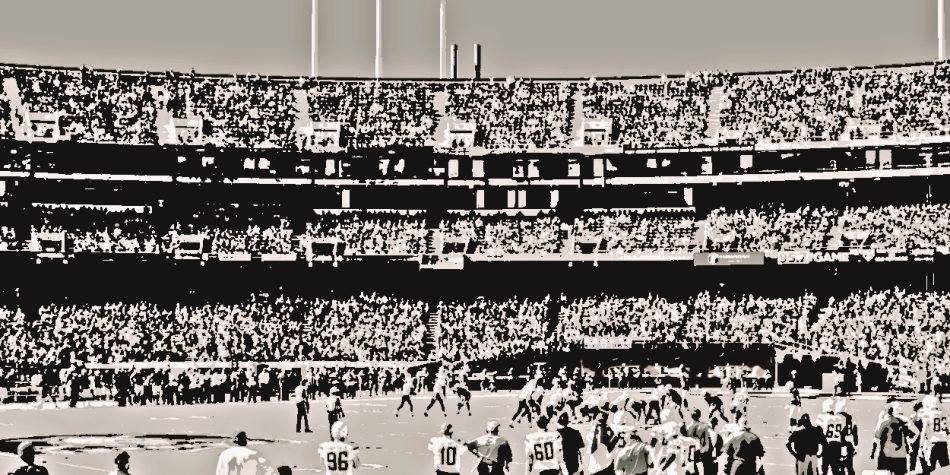
The fact that Super Bowl LV, a game featuring Patrick Mahomes and the Kansas City Chiefs squaring off against Tom Brady and Tampa Bay Buccaneers, will likely long hold the record for the fewest fans in attendance at a Super Bowl would be a problem for sex traffickers … if commonly held ideas about sex trafficking and the Super Bowl were actually true, that is.
Prior to Super Bowl LV in 2021, which will have just 25,000 fans in attendance (compared to 30,000 cutouts), the lowest-attended Super Bowl in NFL history was Super Bowl I when just shy of 62,000 fans showed up to watch the Green Bay Packers play the Kansas City Chiefs. The most-attended Super Bowl of all time boasted over 103,000 fans.
With attendance numbers that large, it isn’t difficult to see why misconceptions about the scope of sex trafficking in connection with the Super Bowl—such as claims that it is America’s biggest day for sexual slavery—have gained traction in the public’s perception. According to those misconceptions, it might also be easy for someone to think that COVID-19 restrictions limiting attendance at Super Bowl LV might be a huge win for the fight against sex trafficking in America. The problem with those assumptions, though, is that they are based on a faulty understanding of 1) what sex trafficking usually looks like, 2) how pervasive sex trafficking is in the United States, and 3) what solutions are needed to address the root of the problems. Sex trafficking in America is a phenomenon that occurs on a day-to-day basis in virtually all of our communities.
While sex trafficking certainly does occur around major events such as the Super Bowl—a reality that should definitely not be ignored—America has a much bigger problem with sex trafficking than sensational-but-poorly-sourced media narratives can unintentionally hide.
A limited number of fans at Super Bowl LV isn’t a problem for sex traffickers because the demand of commercial sex buyers that drives the market for all sex trafficking in America is a 24/7/365 reality.
Sex trafficking in America is a phenomenon that occurs on a day-to-day basis in virtually all of our communities. Sex trafficking doesn’t happen “over there” or “mostly just around major events.” Sex trafficking, as cases such as the one involving New England Patriots’ owner Robert Kraft exemplify, is happening all around us at almost all times at a scale that most in America are clueless about. For that reason, tackling the true scope and full demand for commercial sex buying is crucial for effectively addressing the problem.
As such, it is important that we leverage the sex trafficking misconceptions that swirl around the Super Bowl as an opportunity to enter into conversations and help change the narrative. It’s not enough to decry bad narratives. We have to be willing to set the record straight and redirect people’s rightful feelings of indignation toward real and tangible action.
That is why the National Center on Sexual Exploitation is dedicated to both awareness and advocacy. The National Center on Sexual Exploitation works hard to address demand’s core role in sexual exploitation and to help people understand the way myriad forms of sexual abuse and exploitation are interconnected in order to then motivate and equip them to take action through targeted and effective advocacy efforts such as the annual Dirty Dozen List.
Whenever and wherever you see myths about sex trafficking pop up, you can be a committed, tangible part of setting the record straight by sharing good information about how pervasive sex trafficking really is, how we can help spot it, and how all of us can be a part of building a world free from sexual abuse and exploitation of all kinds.