

- All Post
- Best of Public Square
- Book Club
- Bulletin
- Cartoon
- Covering the Coverage
- Devotionals
- Dialogue
- Editorials
- Essays
- Fact Check
- Faith
- Features
- Four Corners
- Health
- Interviews
- Media & Education
- Politics & Law
- Profiles
- Public Square Media
- Q&A
- Radical Civility
- Sexuality & Family
- Sports
- Think Twice
- Top List
- Utah Scary Stories
- Women in the Public Square
- Back
- Politics
- Political Atmosphere
- The 2020 Election
- Election Aftermath
- Freedom
- Legal
- America
- The 2024 Election
- Foreign affairs
- Religious Freedom
- Back
- The Father & Son
- Gospel Fare
- Church & State
- Holidays
- Climate & End Times
- Leadership
- Tributes
- American Families of Faith
- Proclamation On the Family
- Church History
- Humanitarian Work
- Back
- News Media
- Social Media
- Pop Culture
- Education
- Reading
- Book Club
- Technology
- Back
- Family Matters
- Parenting
- Generational
- Sexual Abuse
- Identity
- Back
- Tolerance
- Persuasion
- Racial Healing
- Social Justice
- History
- Back
- Pandemic
- Mental Health


- All Post
- Best of Public Square
- Book Club
- Bulletin
- Cartoon
- Covering the Coverage
- Devotionals
- Dialogue
- Editorials
- Essays
- Fact Check
- Faith
- Features
- Four Corners
- Health
- Interviews
- Media & Education
- Politics & Law
- Profiles
- Public Square Media
- Q&A
- Radical Civility
- Sexuality & Family
- Sports
- Think Twice
- Top List
- Utah Scary Stories
- Women in the Public Square
- Back
- Politics
- Political Atmosphere
- The 2020 Election
- Election Aftermath
- Freedom
- Legal
- America
- The 2024 Election
- Foreign affairs
- Religious Freedom
- Back
- The Father & Son
- Gospel Fare
- Church & State
- Holidays
- Climate & End Times
- Leadership
- Tributes
- American Families of Faith
- Proclamation On the Family
- Church History
- Humanitarian Work
- Back
- News Media
- Social Media
- Pop Culture
- Education
- Reading
- Book Club
- Technology
- Back
- Family Matters
- Parenting
- Generational
- Sexual Abuse
- Identity
- Back
- Tolerance
- Persuasion
- Racial Healing
- Social Justice
- History
- Back
- Pandemic
- Mental Health


- All Post
- Politics & Law

A Latter-day Saint case against the death penalty takes murder seriously while asking whether justice requires another death.

Abortion laws can protect mothers in medical emergencies without granting a broad right to elective abortion.

We may share eternity with our political adversaries. That possibility should change how we treat them now.
- All Post
- Best of Public Square
- Book Club
- Bulletin
- Cartoon
- Covering the Coverage
- Devotionals
- Dialogue
- Editorials
- Essays
- Fact Check
- Faith
- Features
- Four Corners
- Health
- Interviews
- Media & Education
- Politics & Law
- Profiles
- Public Square Media
- Q&A
- Radical Civility
- Sexuality & Family
- Sports
- Think Twice
- Top List
- Utah Scary Stories
- Women in the Public Square
- Back
- Politics
- Political Atmosphere
- The 2020 Election
- Election Aftermath
- Freedom
- Legal
- America
- The 2024 Election
- Foreign affairs
- Religious Freedom
- Back
- The Father & Son
- Gospel Fare
- Church & State
- Holidays
- Climate & End Times
- Leadership
- Tributes
- American Families of Faith
- Proclamation On the Family
- Church History
- Humanitarian Work
- Back
- News Media
- Social Media
- Pop Culture
- Education
- Reading
- Book Club
- Technology
- Back
- Family Matters
- Parenting
- Generational
- Sexual Abuse
- Identity
- Back
- Tolerance
- Persuasion
- Racial Healing
- Social Justice
- History
- Back
- Pandemic
- Mental Health

Gambling puts more than money at risk. It can reshape our appetites, weaken agency, and redirect our lives.
A Latter-day Saint case against the death penalty takes murder seriously while asking whether justice requires another death.
Abortion laws can protect mothers in medical emergencies without granting a broad right to elective abortion.

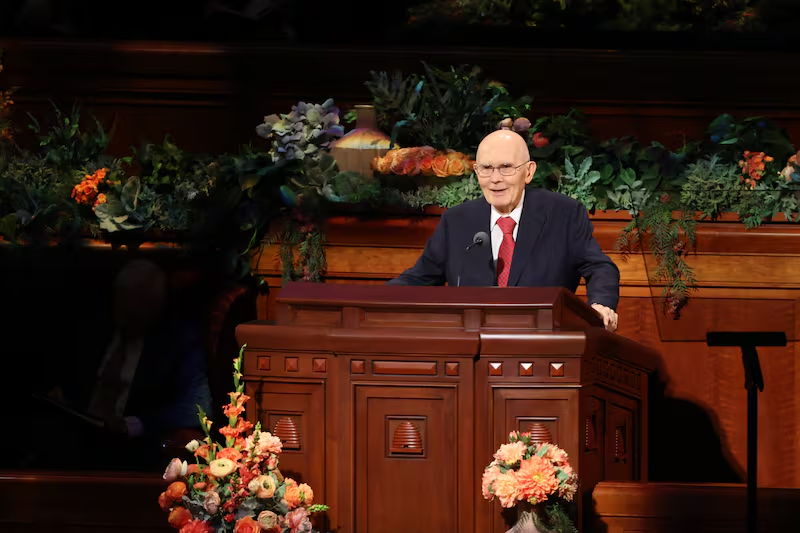


We may share eternity with our political adversaries. That possibility should change how we treat them now.

Women deserve more than permission to choose. They deserve the wisdom and moral guidance to choose well.

The spiritual impact of tithing reaches beyond budgets, investment returns, and promises of material prosperity.


- All Post
- Interviews


