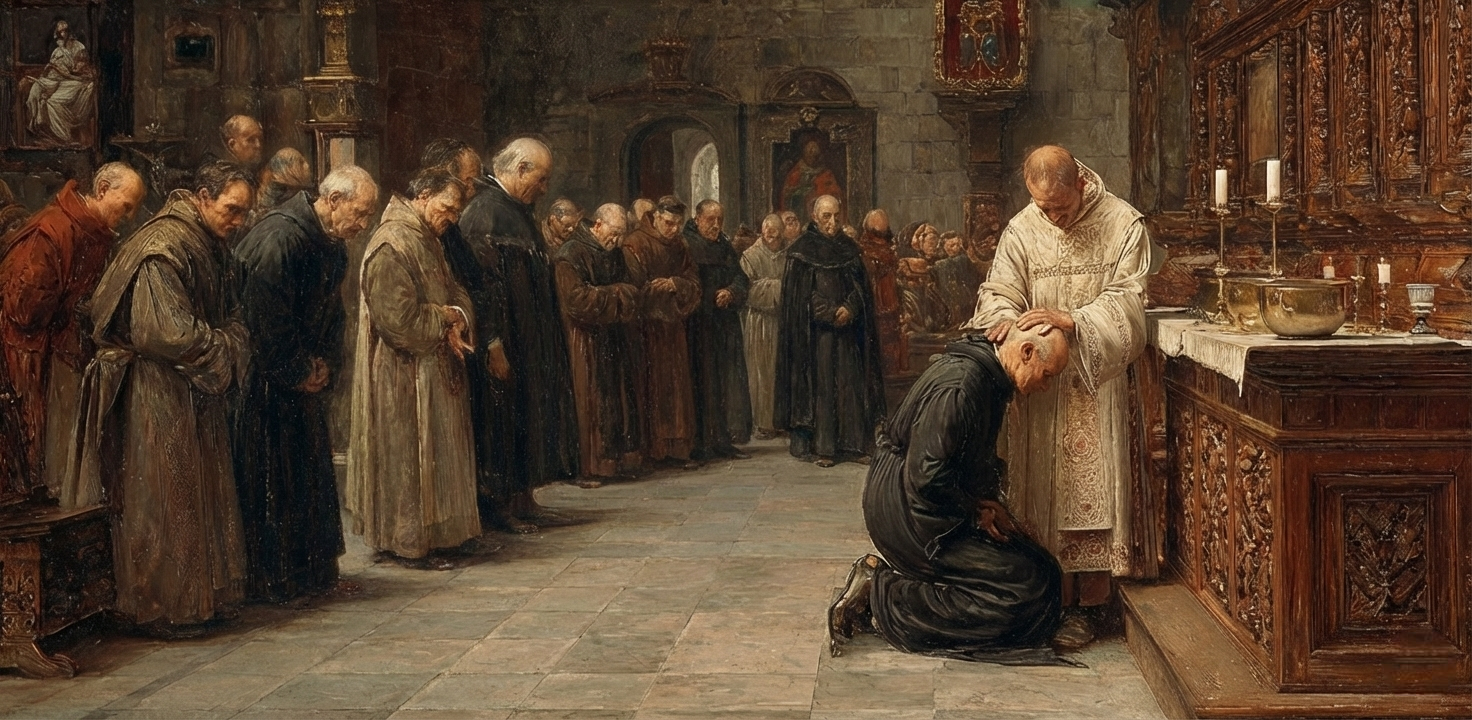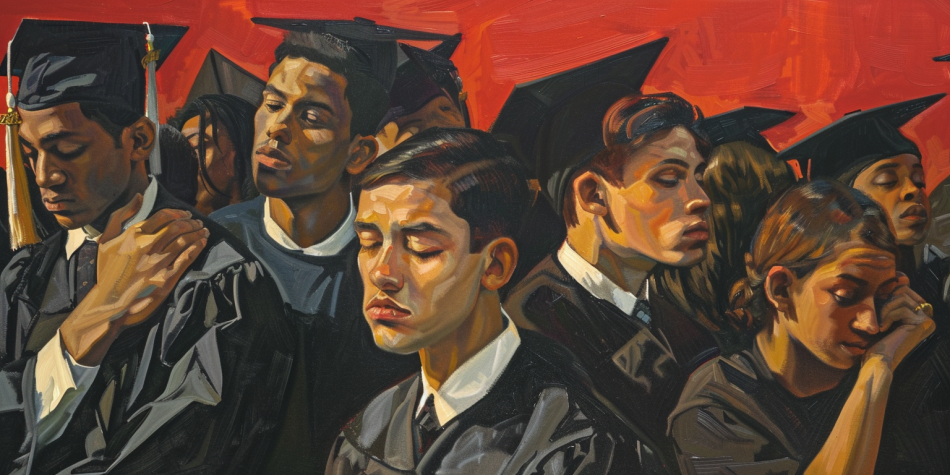
Graduates at a solemn ceremony ponder their futures, highlighting the existential uncertainty of the Higher Education Crisis.

The Crisis of Purpose in Academia

Higher education faces a crisis of purpose, with its moral and intellectual foundations eroded by modernism and postmodernism.
The first in a series of five articles on the state of psychology in education

It has become increasingly clear to thoughtful observers that over at least the last half-century higher education, particularly in the Western world, has lost not only its intellectual but its moral and spiritual bearings. As a result of this loss, the university as a foundational institution is in serious crisis, perhaps even catastrophically so. David Lyle Jeffrey, a fellow at Baylor University, correctly notes this crisis is intimately related to an overall “atrophy of wisdom as a subject for academic reflection, let alone as one imagined outcome of a good university education.”

D. H Davis, the editor of Educating for Wisdom in the 21st Century, notes it was not that long ago that “it was generally believed that the essential purpose of a university education involved shaping both the moral and intellectual character of students in ways that led them to live and do well over their entire lives.” In many quarters today, however, such a claim is most likely to be met with serious skepticism, if not outright hostility. I believe that at the center of today’s crisis in higher education is a profound confusion regarding what exactly it is that universities are supposed to be doing, a confusion fueled by a lack of any clear and compelling metaphysical or moral vision of what education actually means, what the fundamental purpose of a university is, or what sort of persons we should expect to emerge after extensive immersion in the process of obtaining a university education.

The university as a foundational institution is in serious crisis.

Indeed, as Alasdair MacIntyre, the moral and political philosopher, points out, “Universities have become, perhaps irremediably, fragmented and partitioned institutions, better named ‘multiversities.’” As such, Davis also notes, “it is no wonder that the academy seems to be suffering an identity crisis.”

Part and parcel of this identity crisis is the fact that the modern (primarily, but not exclusively, secular) university seems to lack not only any coherent grounding for itself and its educational project but also any genuinely ennobling and animating sense of what it means to be a person at all, what the aim of worthy human aspiration ought to be, or what human life—educated or otherwise—is really supposed to be about in the first place. As one thoughtful scholar has observed, the modern university has proven to be eminently capable of teaching students how to go about making money for themselves but seems to be entirely inadequate to the task of providing serious counsel as to what might be worth spending one’s money on.

What is missing, according to MacIntyre, is “any large sense of and concern for inquiry into the relationships between the disciplines and, second, any conception of the disciplines as each contributing to a single shared enterprise, one whose principal aim is neither to benefit the economy nor to advance the careers of its students, but rather to achieve for teachers and students alike a certain kind of shared understanding.” He further argues, “the conception of the university presupposed by and embodied in the institutional forms and activities of contemporary research universities is not just one that has nothing much to do with any particular conception of the universe, but one that suggests strongly that there is no such thing as the university, no whole of which the subject matters studied by the various disciplines are all parts or aspects, but instead just a multifarious set of assorted subject matters.”

Much of our contemporary predicament in higher education stems, then, from the progressive abandonment of those traditional intellectual, moral, and spiritual foundations that once provided the university with both the rationale for its institutional existence and the conceptual framework within which its fundamental purpose could be articulated and coherently defended. The steady erosion of the traditional intellectual and moral foundations of the university over the last century and a half has occurred, not surprisingly, as a direct consequence of the rise to prominence of two powerful ideologies:  modernism and postmodernism. These ideologies not only seek to eradicate more traditional—or what might be loosely called “pre-modern”—understandings of the nature and meaning of education but are equally hostilely opposed to one another, at both their most basic conceptual level and at the level of practice.

As these two movements have begun to exert a greater and greater influence on thinking in the academy, and subsequently, thinking in the larger cultural and political spheres, much of what were once taken to be the foundational virtues and to constitute the institutional telos of the university have increasingly become the object of open scorn. Prior generations’ understanding of the essence of higher education as a process of “soul-craft,” the formation of virtuous character through the accumulation of knowledge, in concert with the cultivation of wisdom as a result of sustained, disciplined pursuit of “the good, the true, and the beautiful,” has steadily faded as a serious concern of educational or cultural consideration. Ultimately, Davis observes, “Pursuing truth, knowledge, and virtue still sound like perfectly laudable pursuits, but they are not the first things—or even the second things—that define the life of the university.”

What were once taken to be foundational values have become the object of open scorn.

This is the first in a series of articles that will examine the basic presuppositions and aims of both modern and postmodern perspectives—broadly conceived—regarding the meaning and purpose of higher education. In addition to presenting each in contrast to the other, I will explore what I take to be central flaws intrinsic to both of these movements—flaws which, despite their clear differences, both movements share and which ultimately render them both inadequate—indeed, inimical—to the task of providing the necessary intellectual or moral foundation for achieving the true educational aims of the university.

In particular, I will argue that because both the modern and the postmodern approaches conceptualize the purpose of higher education primarily in terms of the pursuit of power rather than the pursuit of truth and, concomitantly, deny the possibility of genuine human freedom, each encourages a nihilistic worldview that, if embraced, ultimately signals the ruin of the university as a meaningful institution. In conclusion, by way of alternative, I will briefly sketch out the broad outlines of a perspective in which higher education is seen to be, first and foremost, and across all disciplines, about the business of seeking truth, becoming good, and attending to the beautiful.

In this endeavor, I will argue that psychology, though currently largely beholden to both modernist and postmodernist thinking and methods, has a significant role to play in defending those richer and more vibrant conceptions of human personhood and freedom necessary for achieving these more worthy (and, indeed, more human) aims of and for higher education in our world today.


About the author

Edwin E. Gantt

Edwin E. Gantt is a Professor of Psychology at Brigham Young University. He is the author of numerous scholarly articles and books, including Taking Sides: Clashing Views on Psychological Issues and Who is Truth? Reframing Our Questions for a Richer Faith (co-authored with Dr. Jeffrey L. Thayne). He has a Ph.D. from Duquesne University.
On Key

You Might Also Like

Faith, Facts, and Freedom

We often find ourselves profoundly shaped and grounded by secular liturgies without ever fully considering their logical, moral, or spiritual implications.

Mother Figurine Holding a Baby | Public Square Magazine | Meaning of the Lyrics Peace on Earth, Goodwill to Men

Now is the Time for Peace on Earth, Goodwill to Men

You’ve heard it before: “Peace on earth, goodwill to men.” Whether viewed as prophecy for a hopeful future, as rebuke to a fallen world, or as the deep aspiration of many human hearts, these words invoke wonder still today, especially at a time like 2020. I believe these words point towards legitimate reasons for great hope in humanity’s future, even in the midst of our current distress. A closer look at their meaning provides a glimpse into bright possibilities. The modern-day enshrinement of these words was penned by the hand of Henry Wadsworth Longfellow during a time of deep personal sadness and grief in his 1863 poem “Christmas Bells.” Subsequently, these words have been sung by millions as the hymn “I Heard The Bells On Christmas Day.” Sadly, few choirs will sing this popular carol during the Christmas season this year as many of our most cherished traditions are disrupted by the continuing, unprecedented epidemic.  Notwithstanding the familiarity of these words in the modern context, their first recorded rendering came anciently in a most unusual setting. It was one of the few instances in all of secular or religious writings where an entire host of heavenly beings—angels—came to deliver a message to a few lucky ones on earth. Their entire message as recorded in Luke 2:14 of the New Testament was “Glory to God in the highest, and on earth peace, good will toward men.” If there was more to the message or not, we don’t know. But this was the message that was recorded and handed down over thousands of years since that momentous event.  It was this short heavenly song of praise that Longfellow was referring to when he lamented that “hate is strong and mocks the song of peace on earth goodwill to men.” Then as now, we join Longfellow in observing a world stricken with contention, tragic death, and human suffering with no clear end in sight. As a bold counterpoint, however, his poem and the hymn conclude with a resounding proclamation of hope that indeed there will be yet “peace on earth and goodwill to men.” Is it possible to find for ourselves this same hope of which Longfellow wrote so long ago?    Some might assume that the author had somehow arrived at more pleasant circumstances and material conditions. Yet in describing his world that Christmas morning in 1863, Longfellow was feeling the weight of personal tragedy in the death of his wife and the strife of a hot civil war spreading devastating carnage across the land. In such a heavy time, he couldn’t help but underscore how much the surrounding hate he saw in the world seemed to mock the idea of peace and goodwill – a word that suggests to “tease or laugh at in a scornful or contemptuous manner.” The hate he was referring to, and which has the power to infect us in our own day, was between groups of people and between individuals who looked at each other with scorn and contempt. In an environment that fosters hate, any suggestion that feelings of scorn and contempt might be replaced with feelings of peace and goodwill can seem to be almost laughable (another reason it’s powerful to have a heavenly host delivering this message to the world).   We sometimes think of peace and goodwill as synonyms. They are not. In fact, they represent very different human conditions – either one by itself being incomplete. But together they weave a social fabric of heavenly dimensions. There are many examples of one without the other, but relatively few of both existing and being sustained for any great length of time.  In its simplest form, peace could be defined as the absence of conflict. When this kind of peace is voluntary, due to an underlying feeling of goodwill toward all, it is a wonderfully satisfying human condition.  However, a “peaceful” absence of conflict can also be achieved through coercion, even in the notable absence of goodwill. In that case, it comes at the obvious, and dear price of freedom and liberty and represents a most cruel form of the human condition. Coerced peace is usually a political construct as it requires overwhelming use of force to constrain human behaviors. There have been modern examples of peace without goodwill in the recent past. One can reflect on Yugoslavia, Libya, Iraq, and other nations. For example, Yugoslavia was created after World War II as a federation of six different ethnic regions. A strong central governing party ensured that conflicts were resolved emphatically and quickly. There was “peace,” but without the underlying goodwill among the different ethnic groups. Under Josip Broz Tito the country experienced an extended period of prosperity characterized by enforced peaceful interaction among the various ethnic groups. In many ways, it was considered a model of economic success.  But after Tito died in 1980, the ability to continue the peaceful climate through coercive means declined, and the unresolved conflicts among the different ethnic groups emerged with frightening consequences in human suffering for the whole country and region. In a relatively few years, the region completely lost both its peace and prosperity.  Similar events have unfolded in other countries where peace was enforced despite the absence of “goodwill toward men.” As the power to enforce coercive peace diminishes, people are subsequently often subjected to tragic suffering that can take decades and even generations to overcome to a point of regaining a semblance of stability. In short, peace without goodwill has a terrible historical record for producing great human suffering in the end.  Unlike “peaceful” conflict suppression, goodwill to men cannot be coerced. It is almost by definition an innate feeling of each individual human heart. It can be contagious, and it often seems to be either in large supply or in short supply in a particular family, community, or nation. It would seem that goodwill to other human beings is something that would be a universal good. However, once again we find that

Subscribe To Our Weekly Newsletter

Stay up to date on the intersection of faith in the public square.

You have Successfully Subscribed!

Pin It on Pinterest

Share This