A family shares a warm, intimate moment at home, epitomizing the essence of the International Year of the Family.

Redefining Wealth for the 21st-Century Family

What really defines the wealth of nations? Is it GDP or the strength and stability of its family units?

As the world grapples with pressing issues of economic and social development, the United Nations convened a council dedicated to these very challenges. Recently, delegates gathered to deliberate on policies aimed at elevating social development globally. Amidst the discussions, Sha Zukang, the under-secretary for economic and social affairs, said, “The real wealth of nations occurs when each and every individual has access to a decent job and educational opportunity, quality and affordable healthcare, adequate and nutritious food, secure shelter, and social protection.” His words resonate deeply, highlighting the fundamental importance of addressing basic human needs for the betterment of society. 

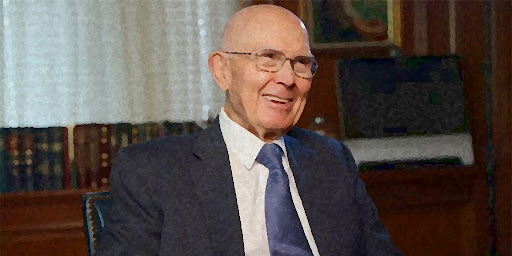
However, the basics of human flourishing and development go beyond supplying the necessities of life. Indeed, we would posit that the lack of these essentials reflects a deeper problem within our contemporary times. If we want to treat social development at its core, we must go beyond treating the symptom-like manifestations of a deeper problem. This idea is reflected in what Elder D. Todd Christofferson said in a recent conference address, “The concept of sustainable development is an interesting and important one. Even more urgent, however, is the broader question of sustainable societies.” The Family: A Proclamation to the World gives further insight into sustainable societies through the promotion of the family. It reads:

 We warn that the disintegration of the family will bring upon individuals, communities, and nations the calamities foretold by ancient and modern prophets. …We call upon responsible citizens and officers of government everywhere to promote those measures designed to maintain and strengthen the family as the fundamental unit of society. 

The Doha International Family Institute, DIFI, supports these statements in its own declaration, “the family is the natural and fundamental group unit of society.” From prophetic revelation, in addition to the pro-family stances of various other organizations, it is possible to trace some of the degradation and poverty in society to the disintegration of the basic and fundamental unit of society—the family.

The lack of these essentials reflects a deeper problem within our contemporary times.

In discussing sustainability more in-depth, Elder Christofferson shares, “Sustainability is not guaranteed, and a thriving society can fail in time if it abandons the cardinal virtues that uphold its peace and prosperity.” Here, he is, of course, referring to the virtues that come through gospel truth, including the truth found in the doctrine of the family. Based on his assertions, while it is important to create a society that promotes the general welfare and equal opportunity, it may not have the lasting effects that we want it to if we do not uphold the basic foundational strength and security that comes from families. Patrick Fagan, former William H.G. Fitzgerald fellow in family and cultural issues at The Heritage Foundation, notes, “Studies show that income disparity in America is affected most by the stability of a child’s home environment—primarily, whether that child has married parents or is part of a broken family.”

With this general understanding in mind on a worldwide scale, The United Nations established “The International Year of the Family” in 1989 to help in creating sustainable societies, with their first conference in 1994. The UN designated May 15th as the annual day to celebrate the family, and every 10 years on this date a larger memoration takes place, usually in the form of a conference. As part of the purpose of this celebration, they note, “The family constitutes the basic unit of society and therefore warrants special attention. The Doha International Family Institute, DIFI, hosted the global conference in 2014 and is again hosting in 2024. In DIFI’s declaration they affirm their mission by stating: “Strengthening the family presents a unique opportunity to address societal problems in a holistic manner.” Here at Public Square Magazine, we want to join in the celebration of the International Year of the Family by creating a series completely dedicated to the family.

A thriving society can fail in time if it abandons the cardinal virtues.
Over the course of the next several months, we will be releasing an article once a month which explores different aspects and issues within family life, including the nature of marriage, discussions of gender, the eternal nature of families, the law of chastity, the sanctity of life, and other topics. After publishing this series, we will also compile these writings into an accessible PDF formatted book available for your personal download. With the creation of this family series, we aim to enrich dialogue and highlight the family as a cornerstone of social development.

About the author

Public Square Staff

Our core team, including our Editor, Managing Editor, Communications and Media Directors, Visual Display Director and Copy Editor.
On Key

You Might Also Like

“Deep” Norwegian Film About Nothing in the End

How does a community and the families within it respond to a nearly unspeakable accusation? How do you treat everyone with dignity? How do you suss out the truth? Do you need to? “Armand,” the Norwegian submission for The Academy Award’s best international feature film, sets out as though it is interested in answering those questions. The film opens with a young teacher, a principal, and a school staff member wondering what they are going to do. Armand has done something again. The parents are called in. The film’s premise is that Armand was accused of hitting Jon in the bathroom when Jon said he didn’t want to play with Armand. There are many additional revelations about the context, the relationship between Armand and Jon’s families, and the history of Armand’s family. There are accusations upon accusations that both indict and exonerate the boys and the adults around them. But these revelations eke out. It feels like filling up a mug from a leak in the sink. “If you want us to know what’s happening, just tell us,” I felt like shouting at the screen more than once. The film’s first act works well. The cinematography is ragged, framing its subjects well but always just off from what we’d expect. Too close, or the light is just wrong. It felt like how I imagine it would feel to have my child accused of something horrific.  And when the parents first start talking the tension is terrific. Those first few drops of exposition in the mug were thrilling. Oh there’s something happening here; it’s complicated and interesting.  Thea Lambrechts Vaulen, plays Sunna, a young teacher in over her head trying to manage the meeting between Armand’s mother, Elisabeth, played by Renate Reinsve, and Jon’s parents Sarah and Anders played by Ellen Dorrit Petersen and Endre Hellestveit.  Vaulen is particularly effective. She has been sent on a mission by her principal, Jarle, to make sure the whole thing blows over. Watching her struggle to navigate this while the parents are processing what’s been said is captivating. But it just keeps going.  The film’s entire second act consists of learning the basic facts of what has happened and the context around it. This is a complicated situation, and as a viewer I’m interested to see how the compelling characters navigate that situation. But the screenplay seems mostly interested in telling you the information. As though learning that Armand “plays doctor” at school is enough to compel me to the film’s ending. But once the audience finally understands the situation, the third act begins and flies wildly off the handle into surrealism, including two interpretive dance numbers, three over-the-top metaphors, and five straight minutes of Anders’ mother laughing.  The movie feels so desperate to be deep that it forgets to be about anything. It’s the first film of director Halfdan Ullmann Tøndel, so perhaps the bold ideas and beautiful cinematography will be wielded for a more worthwhile story next time. The film is entirely in Norwegian. And its English subtitles include a fair amount of profanity, though not an overwhelming amount. And the accusations that fly include suicide, alcoholism, and sexual assault. So these are adult themes. The film is R-rated, but not an egregious one, it pretty well all takes place in a parent-teacher conference.  I can’t imagine ever showing this to my kids. The themes are hard ones, and the film has nothing worthwhile to say about them. Two out of five stars. Armand releases in US theaters on February 14, 2025.

Subscribe To Our Weekly Newsletter

Stay up to date on the intersection of faith in the public square.

You have Successfully Subscribed!

Pin It on Pinterest

Share This