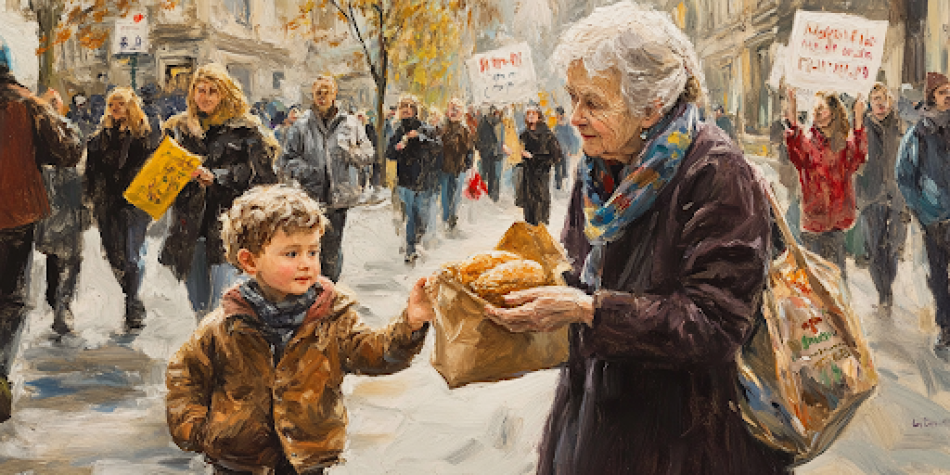
We live in a time of great divisiveness, and because of that, there are many difficulties in this fallen world that fall out of our control. Whether it is the behaviors of family members, the tax laws of the federal government, or wars in foreign countries, we are surrounded by problems we often feel powerless to change. Simultaneously, it feels easy to point to these calamities and say that we could feel better about life if those things were different, that they are the cause of all our distress. Certainly, these factors have an effect, but do they actually determine our peace? While much of this turmoil is found on social media, news outlets, and political arenas, contrary to popular belief, the heart of conflict will not be found there.
It will be found within each of us individually.
We have been called again and again to be peacemakers. The command would not be issued by God if we were, indeed, powerless to overcome these difficulties. Our peace is not dependent upon the state of the world but on the state of our hearts and relationship to the peacegiver, Jesus Christ. He said, “Peace I leave with you, my peace I give unto you: not as the world giveth, give I unto you. Let not your heart be troubled, neither let it be afraid.”
In essence, we may become peacemakers through the peacegiver.
This comes by allowing Christ fully into our lives and by changing our own thoughts, behaviors, and actions. We may not have the power to change the tide of current wars, but we do have the power to enact change within our own hearts, lives, and families. The importance and impact of this mandate cannot be overstated. President Harold B. Lee said, “The most important of the Lord’s work that you will ever do will be the work you do within the walls of your own home.” I would assert that a great deal of the work that we should do within the walls of our home is reflected in the ways we resolve conflict and orient ourselves toward one another. This message is the essence of our book this month: The Peacegiver: How Christ Offers to Heal our Hearts and Homes. Our peace is not dependent upon the state of the world but on the state of our hearts.
Ferrell illustrates the ways in which Christ’s love and atonement can reach us individually by telling a fictional story, a sort of parable, of a husband and wife on the brink of despair. Their story, while focused on their marriage, can be applied across a wide variety of relationships; whether it be father and son, daughter and mother-in-law, brother and sister—we each can find parts that resonate with the problems that we are facing in our own lives. As with many of Christ’s parables, it is a story with a point.
This book has fundamentally changed my life for the better by challenging the ways I view my own relationships and responsibilities within them. By reading this story with Public Square throughout the month, you have the opportunity to challenge yourself in honest reflection of your own life and actions, to see more clearly your own accountability, to feel the love of Jesus Christ, and, in doing so, become more free as you embrace the power and love of His Atoning sacrifice. This opportunity is reflected in Ferrell’s own words: “The Lord’s atonement reaches deep into the trouble of daily life to the very bottom of every dispute and hurt feeling. To the Predicament of a hard heart, he offers the promise of a new one. To the pain of hurt feelings, he offers the balm of his love. To utter loneliness, he offers the companionship of the heavens.”
To access the reading schedule and book club questions, follow us on Facebook or Instagram or sign up for our newsletter. We post new questions each week and encourage you to engage with us online. By commenting, posting, or emailing your responses, you’ll be entered into a sweepstakes to win next month’s book! We look forward to your participation.