Wheat and Tares

A “Me Too” Faith?

Some found it odd that the Church would ask people to stop using "Mormon" after its "I'm a Mormon" ad campaign. What if that was kind of the point?

I once began a book review with a story about two brothers. Let me give you two more.

These ones are twins. As kids, they memorize scriptures and pray daily with their family. They’re at church every week. They count cute pennies to pay tithing. Born later, they’d have been poster boys for Come Follow Me.

But freedom’s mysteries are deep, and at fifteen one brother turns away—he doesn’t stop believing, exactly; at first he just stops caring. He tells his parents he’s done with church and they don’t push the issue, hoping it’s a phase. It isn’t. Soon he gets a job, so he can get a phone, so he can do exactly the things with his phone that his parents don’t want him doing. He tries marijuana with friends, drinks at parties, and generally behaves like an ordinary irreligious American teenager.

The other brother continues in the way he was brought up: early-morning seminary, no girlfriend before his mission—of course he’s going on a mission—and strict observance of the Sabbath, the Word of Wisdom, and so on. He gets into BYU, marries, and majors in O-chem. Then it’s off to medical school. He’s going to be a dermatologist.

Does it surprise you that the first brother also becomes a dermatologist? It surprised his parents, but it shouldn’t have. He sinned, lots, but he was careful about it. He never got caught breaking laws anyone cared about, and he never let it hurt his grades. He gets a scholarship to definitely-not-BYU, gets into medical school, and gets the residency he wants—two years earlier than the faithful brother, since he didn’t serve a mission. To everyone’s surprise (justified surprise this time) he even gets married first.

Both brothers move to big cities. They buy two big houses and have two luxury crossovers and two kids apiece. You’d think the faithful brother might have less money in the bank, since he pays tithing, but it doesn’t turn out that way—the other brother’s wine cellar is featured in the Wall Street Journal; he tells them he’s tithing to Bacchus. You’d also think the faithful brother has less leisure time, since he never says no to a calling, but the other brother has hobbies, too, and volunteers at free clinics sometimes. The other brother votes the same as the faithful brother, gives to the same charities (except the Church), goes on the same vacations, and listens to the same music (except, on Sundays, the artists formerly known as MoTab). Really everything seems to even out.

What’s a faithful Latter-day Saint to make of these brothers? To all worldly appearances they’re, well, twins. But spiritually they’re not, right?

Right?

Scripture often offends modern sensibilities, and never more than when the Old Testament tells us that God punishes the sins of the fathers unto the third and fourth generations. And it’s not just the Old Testament; the Book of Mormon has few more puzzling moments than when a prophet tells the Nephites, “Repent or you’ll be destroyed… in four hundred years!” Surely it was the sins of Mormon’s contemporaries, not Samuel’s, that caused Cumorah—right? Then why is Samuel talking about it?

We don’t complain as much when the fathers’ virtues are rewarded unto the third and fourth generations, and maybe that’s what’s happening to our wayward brother. His parents and grandparents invested a great deal in their descendents’ righteous habits, and he’s living like a trust fund baby, drawing down the balance and never quite wondering what his kids will do without it.

Or perhaps it’s better than that. Maybe he’s just naturally virtuous; such people exist, strange though it is to me. Maybe he believes in the sort of life he lives, even without a religion or philosophy to explain it, and maybe he works diligently to hand his virtues down to his children (and if so, God bless him for it).

But what about the faithful brother? Since his twin fell away, he has read the Book of Mormon a dozen times and sat through thousands of talks and lessons at church. He has paid a quarter million in tithing and given two years of his life to preaching the Gospel. He has made weighty covenants in the temple and returned to make those covenants again and again on behalf of the dead.

And what does he have to show for any of it? Outside the narrow part of his life labeled “church,” he dresses, eats, talks, spends, works, plays, and thinks the same as his brother, or his boss, or your average random American of his economic class. And if he lives most of his life indistinguishably from someone who threw his faith to the ground and stomped on it, then what exactly does his own faith amount to?

This is the harder question to me, and the more common. Going off the statistics, or even the Church’s own “I’m a Mormon” videos, you can get the impression that Latter-day Saints are just G-rated Americans—that there’s no fundamental difference between the American Dream and the Gospel. I used to call it “Me-too Mormonism,” back before “Mormon” was verboten and “Me too” started meaning something different. Other Americans become great athletes, and we say, “Me, too!” Other Americans become newscasters or rock stars or investment bankers, and we say, “Me, too! In fact, our faith helps us to be even better athletes or rock stars or bankers!”

“We’re just like you!” we seem to say, “Except we don’t drink, and we have these touching ideas about family—but we’re sure you share those, too.”

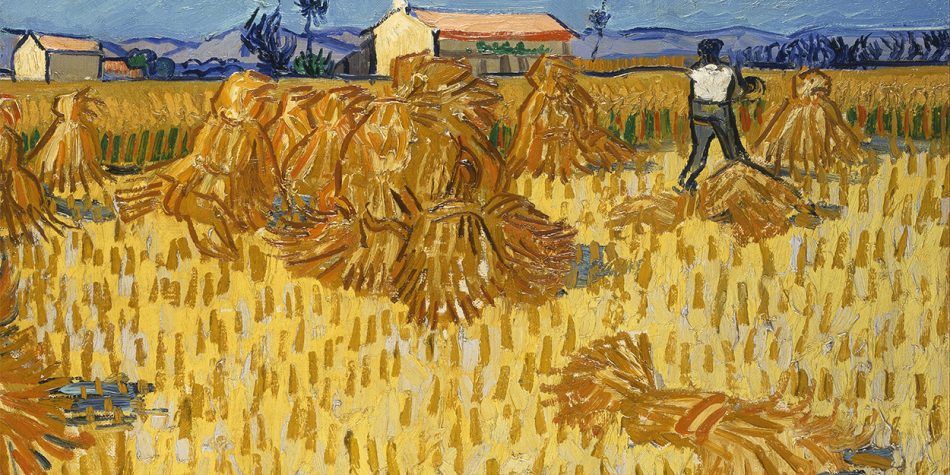
And maybe that’s the way it’s supposed to be. Maybe the Gospel in a Latter-day Saint life is like leaven—the flour and oil and eggs and water are all the same, and it’s not until the oven’s hot that you see the difference. And maybe our two brothers are like a stalk of wheat and a darnel weed; you can’t tell them apart until the field is white and ready to harvest. After all, if you’re looking at the two brothers from the outside, you don’t usually need to know whether you’re seeing grain or tares.

But what about when you’re looking at yourself?

About the author

Alan Hurst

Alan Hurst is a Latter-day Saint, husband, father, lawyer, and recovering academic. He is an editorial advisor to Public Square.
On Key

You Might Also Like

Mother Figurine Holding a Baby | Public Square Magazine | Meaning of the Lyrics Peace on Earth, Goodwill to Men

Now is the Time for Peace on Earth, Goodwill to Men

You’ve heard it before: “Peace on earth, goodwill to men.” Whether viewed as prophecy for a hopeful future, as rebuke to a fallen world, or as the deep aspiration of many human hearts, these words invoke wonder still today, especially at a time like 2020. I believe these words point towards legitimate reasons for great hope in humanity’s future, even in the midst of our current distress. A closer look at their meaning provides a glimpse into bright possibilities. The modern-day enshrinement of these words was penned by the hand of Henry Wadsworth Longfellow during a time of deep personal sadness and grief in his 1863 poem “Christmas Bells.” Subsequently, these words have been sung by millions as the hymn “I Heard The Bells On Christmas Day.” Sadly, few choirs will sing this popular carol during the Christmas season this year as many of our most cherished traditions are disrupted by the continuing, unprecedented epidemic.  Notwithstanding the familiarity of these words in the modern context, their first recorded rendering came anciently in a most unusual setting. It was one of the few instances in all of secular or religious writings where an entire host of heavenly beings—angels—came to deliver a message to a few lucky ones on earth. Their entire message as recorded in Luke 2:14 of the New Testament was “Glory to God in the highest, and on earth peace, good will toward men.” If there was more to the message or not, we don’t know. But this was the message that was recorded and handed down over thousands of years since that momentous event.  It was this short heavenly song of praise that Longfellow was referring to when he lamented that “hate is strong and mocks the song of peace on earth goodwill to men.” Then as now, we join Longfellow in observing a world stricken with contention, tragic death, and human suffering with no clear end in sight. As a bold counterpoint, however, his poem and the hymn conclude with a resounding proclamation of hope that indeed there will be yet “peace on earth and goodwill to men.” Is it possible to find for ourselves this same hope of which Longfellow wrote so long ago?    Some might assume that the author had somehow arrived at more pleasant circumstances and material conditions. Yet in describing his world that Christmas morning in 1863, Longfellow was feeling the weight of personal tragedy in the death of his wife and the strife of a hot civil war spreading devastating carnage across the land. In such a heavy time, he couldn’t help but underscore how much the surrounding hate he saw in the world seemed to mock the idea of peace and goodwill – a word that suggests to “tease or laugh at in a scornful or contemptuous manner.” The hate he was referring to, and which has the power to infect us in our own day, was between groups of people and between individuals who looked at each other with scorn and contempt. In an environment that fosters hate, any suggestion that feelings of scorn and contempt might be replaced with feelings of peace and goodwill can seem to be almost laughable (another reason it’s powerful to have a heavenly host delivering this message to the world).   We sometimes think of peace and goodwill as synonyms. They are not. In fact, they represent very different human conditions – either one by itself being incomplete. But together they weave a social fabric of heavenly dimensions. There are many examples of one without the other, but relatively few of both existing and being sustained for any great length of time.  In its simplest form, peace could be defined as the absence of conflict. When this kind of peace is voluntary, due to an underlying feeling of goodwill toward all, it is a wonderfully satisfying human condition.  However, a “peaceful” absence of conflict can also be achieved through coercion, even in the notable absence of goodwill. In that case, it comes at the obvious, and dear price of freedom and liberty and represents a most cruel form of the human condition. Coerced peace is usually a political construct as it requires overwhelming use of force to constrain human behaviors. There have been modern examples of peace without goodwill in the recent past. One can reflect on Yugoslavia, Libya, Iraq, and other nations. For example, Yugoslavia was created after World War II as a federation of six different ethnic regions. A strong central governing party ensured that conflicts were resolved emphatically and quickly. There was “peace,” but without the underlying goodwill among the different ethnic groups. Under Josip Broz Tito the country experienced an extended period of prosperity characterized by enforced peaceful interaction among the various ethnic groups. In many ways, it was considered a model of economic success.  But after Tito died in 1980, the ability to continue the peaceful climate through coercive means declined, and the unresolved conflicts among the different ethnic groups emerged with frightening consequences in human suffering for the whole country and region. In a relatively few years, the region completely lost both its peace and prosperity.  Similar events have unfolded in other countries where peace was enforced despite the absence of “goodwill toward men.” As the power to enforce coercive peace diminishes, people are subsequently often subjected to tragic suffering that can take decades and even generations to overcome to a point of regaining a semblance of stability. In short, peace without goodwill has a terrible historical record for producing great human suffering in the end.  Unlike “peaceful” conflict suppression, goodwill to men cannot be coerced. It is almost by definition an innate feeling of each individual human heart. It can be contagious, and it often seems to be either in large supply or in short supply in a particular family, community, or nation. It would seem that goodwill to other human beings is something that would be a universal good. However, once again we find that

Do We Still Need Religion+ Today’s Digest

Our daily rundown of the articles from around the web that we feel our readers would enjoy and appreciate. We hope to highlight the best of what’s around. Public Square Bulletin recommends: Do We Still Need Religion Robin Dunbar – The Guardian In our increasingly secular age, does religion still have a place? Robin Dunbar argues that a vibrant religious life is essential for society, and plays a foundational role in the arts and sciences. The Constitutional Roots of Ketanji Brown Jackson’s Public Faith Justin Collings & Hal Boyd – Religion & Politics Supreme Court nominee, Ketanji Brown Jackson’s faith played a prominent role in her recent confirmation hearings. Her answers, which echo the feelings of most Americans, place personal faith and religious freedom as among the highest of our civic virtues. The Rise of the ‘Umms’ Mike Moore – Christianity Today COVID-19 reshaped our national religious landscape. Mike Moore turns his focus on a group—individuals of strong faith who don’t currently have a church—and asks what happens to them next. Looking for God in Our Everyday Lives Wallace Goddard – Meridian Magazine One of the great promises of the Restoration is the accessibility of Heaven. Are we doing enough to look for God’s influence in our lives? Religious Liberty Tested in Finland Anders Lundberg – Law & Liberty Two Finish Christians have been brought up on charges for advocating for a traditional Christian view of marriage. Swedish lawyers, Anders Lundberg looks at how religious liberty is developing in the Nordic nations.