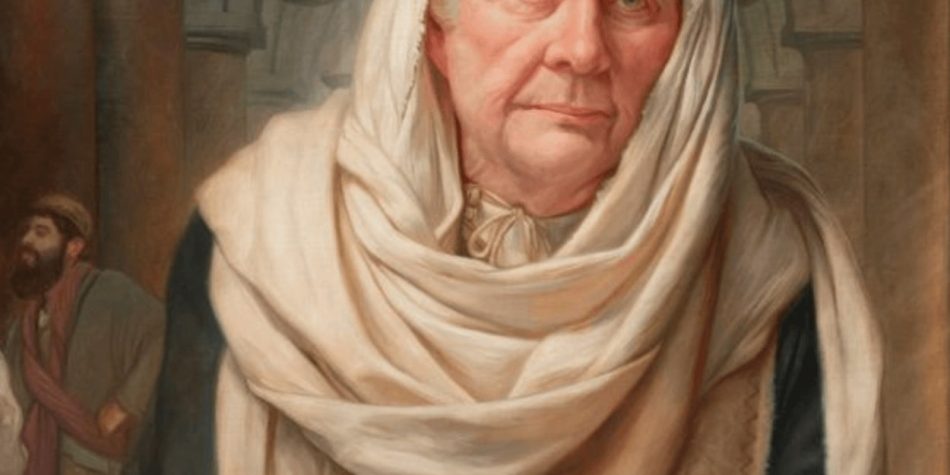
Renaissance Style Portrait of a Serious Elderly Women | How Can Wisdom Be Passed Down Through Generations?

Honoring the Wisdom of The Generations Who Came Before

We all know seniors are more at risk in our ongoing pandemic, with public expressions of concern and worry common. Do they know they are valued, cherished, and appreciated though?

I can still hear her voice. The melody was filled with sweetness and most often followed by a quip of playfulness—her most endearing quality. Her soft, wrinkled hands would hold tightly onto mine with a force that outweighed her small-framed body. The grace with which my great-grandmother, Ma, lived her life is one that will never be forgotten by those she left on earth three years ago. 

While this vivacious little Basque-Hispanic woman lived a storybook life with abounding love and high spirits for over 97 years—like even the greatest novels, her life came to an end. 

Watching Ma deteriorate was one of the most difficult experiences of my life. 

When the news came that Ma had only a few weeks left to live, we all wanted to hold onto the time we had left with her. She was quickly moved into her daughter’s home, and soon after surrounded by children, grandchildren, and great-grandchildren. Family members found themselves flying and driving in to enjoy some last precious moments with Ma. However, to all of the doctors’ surprise, this very act of familial love was the antidote Ma’s failing heart needed.

Human connection and love can be the saving grace for a fading mind.

Our sweet Ma went on to live many years after this, and I learned an important lesson. My young mind always viewed this matriarch as being robbed by the thief of age. I felt her loss of dancing, playing tennis, reading novels, quoting “Gone with the Wind,” and countless other favorite pastimes were all reasons for her to grow tired of life and wish it to come to an end. 

But this depressing notion of age as a thief changed for me as I watched Ma regain purpose when surrounded by her loved ones—each of whom considered themselves to be her favorite. Ma’s story, then, suggests something else—reminding us that human connection and love can be the saving grace for a fading mind. 

This spunky, 80-pound woman eventually moved on to the next life, gifting a great legacy of love behind her. Ma’s passing inspired a curiosity within me for the maturing adults around me. She gave me new insight into their will to live despite their hip pain, wrinkles, and exhausted bodies. I reflected on the way that each of them goes on, not for themselves, but for a greater purpose. Each of them has experienced a long life rich with life experiences that younger eyes often fail to see. 

In the past few years since losing Ma, I have since reflected on the value of respecting and revering our elders, which is sometimes a casualty of our fast-paced, individualistic American society and, for different reasons, can be lost especially on the younger generation. Now, I find it difficult to turn the other cheek when I hear people say dismissive things to older people, such as ‘Okay, Boomer.’ 

Isn’t it better to listen to their stories and learn from their years of life experience rather than dismiss them as out of date?  Each time an aged individual passes, we lose an encyclopedia of knowledge. Isn’t seeking out their jewels of wisdom even more relevant in a society where 27% of those aged 60 and older already live alone—many without family members to cherish their stories? 

We can learn much about respecting elders from the rich cultural traditions of other societies. In the Middle Eastern culture, for example, family systems are typically built upon intergenerational households and proximity to older family members. One Iraqi woman, Luma Simms, explains this norm within her culture as a result of their reverence and love for the aging generation. She described her community as one “where each member is valued and has an irreplaceable part, especially the elderly.” 

This valuing of the older generation is also vividly apparent in many Asian cultures, such as China, Korea, and Japan—all cultures rooted in this conviction, resulting in practices associated with filial piety. This cultural notion is deeply grounded in Confucian values and goes well beyond respecting one’s own family members to proactively teaching children to reverence the entire aging population. These cultures paint a beautiful image of embracing later life, rather than avoiding aging yourself or pushing away these aging adults in their culminating years of life in a way that makes them feel like unwanted members of society. 

Native American tribes also deeply respect their aging population, not for somehow retaining their youthful glow, but for their years of wisdom and life experience. Similarly, within Greek culture, referring to a person as an “old man” or “old woman” is not an insult, but a way to honor their wisdom and closeness to God. What if we were able to reimagine and culturally redefine aging in some of these same ways?

Interestingly, this heightened awareness for those in later life has been forced into the public eye in the wake of the devastating COVID-19 outbreak. It’s become tragically clear to all of us that the most at-risk population in terms of contracting and passing away from this virus are those older than 65. Because drastic measures have been needed to contain the spread of this virus, social distancing has been especially advised for older adults.

The stay-at-home order flooded my mind with images of seniors locked inside nursing homes, with no outside connection to family or friends. However, many of these initial thoughts sweetly melted into a greater faith in humanity as my social media feed flooded with wonderful examples of younger generations taking action for those in their later years. Rebecca Mehra’s recent tweet went viral as she recounted helping an older woman and her husband buy groceries because they were too “afraid to go in the store.” The seed of selflessness that Mehra planted that day was a critical message for this time.

Instagram and Facebook are now touting stories of “corona carolers” singing to maturing adults at their doorstep from six-feet away and grandchildren in car seats waving at their grandparents through the car window in a drive-by visit. These small acts not only spread love within the hearts of those served, but they spread awareness for this critical population of people so deserving of our love and admiration.

Perhaps it is about time we in America adopt this same level of caring amidst this pandemic.

As I saw so intensely demonstrated with my own great-grandmother, her need for human connection only deepened as her body aged and her mind began to fade. Eventually, I had to let go of her hand when her time on earth came to an end. Yet her passing and the life lessons she had shared only magnified my desire to bring joy into the lives of these experienced, mighty souls. I recognize this new reverence as a gift from my great-grandmother.

As we face these frightful circumstances of this global pandemic, we have the unique opportunity to not only serve—but perhaps also redefine some of our culture’s individualistic views through selflessly recognizing the needs of the aged, so especially vulnerable at this time. Cultures across the world have done this for centuries, carrying forward ancient traditions from their revered ancestors.  Perhaps it is about time we in America adopt this same level of caring amidst this pandemic and show them the appreciation they so deserve.   

About the author

Allie Sharp

Allie Sharp studies Human Development at Brigham Young University. She serves on the board of the BYU School of Family Life’s student journal, Family Perspectives. She lives in Provo, Utah, with her husband.
On Key

You Might Also Like

The Room Next Door Review

“The Room Next Door” is the latest example of arthouse social engineering.  The film is about a troubled woman, Martha, who in the midst of cancer treatments decides to commit suicide. If this bothers you, the film implies, it is because there is something wrong with you. This is all the more troubling, because the film, in many ways, is beautiful. It is directed by Pedro Almodóvar, one of the most acclaimed living film directors, in his first full-length film in English. And you can’t help but be taken by the beauty of it all. The film is suffused with the soft colors of the woods. Despite being an entire screenplay full of little except two friends talking, the camera work keeps the film alive and moving. And Julianne Moore and Tilda Swinton who play Ingrid and Martha once again give impeccable, engaging performances, that you can’t help but admire.  But all the beauty in this film is in service of a story that is decidedly ugly—but not self-awarely so. Our two main characters are old friends who met as young writers. Ingrid has published a best seller recently, where she writes about how she can’t accept death. On her publicity tour, she learns that Martha is in the hospital with cancer. She goes to visit her and reignite their friendship. We learn through the conversations that these characters aren’t bad people, necessarily, they just struggle to see a world outside of their own desires and consciousness. They have repeatedly avoided building relationships or having families. Martha does have a daughter. But she chased her father away, then lied to her about who he was her whole life, and then proceeded to be an absent mother so she could chase the romanticism of being a war correspondent.  Now that she is sick and dying, she notices that she has no one in her life. The movie comments on this like an unusual quirk, rather than the inevitable result of a life of bad decisions. We learn early on that cancer treatment can be a roller coaster with euphoric peaks, and miserable nadirs. During one such rut, Martha purchases a suicide pill, and decides she will kill herself. She reaches out to Ingrid and asks her to come on vacation with her, so that she will have someone in the house when she does it.  Ingrid agrees. And although she early on expresses some discomfort, she quickly respects Martha’s wishes to largely pretend nothing is happening. They have a lovely vacation in upstate New York watching old movies and reading books. While they are there, Ingrid reconnects with Damien (John Turturo) an ex-boyfriend of both hers and Martha’s. He is horrified at the state of the world, and seems to only live for sex (or to constantly talk about sex.) Damien is not a sympathetic character, and perhaps the audience is supposed to read that his unpleasant and helpless politics are akin to Martha’s helpless approach to life. If so the audience hardly has time to ponder it under a heavy heaping of affirmations about the power to choose, and the dignity to die.  Eventually, Martha does exactly what she promised to do. There is a brief police investigation where the officer (Alessandro Nivola) expresses concern that Ingrid would have knowingly not gotten help for her friend. A lawyer comes and helpfully tells the audience we can ignore that concern because he is a religious fanatic. This is the kind of movie that alludes to James Joyce not just once but three times. It is so pleased with just how artsy it is. And for a film with a message like “life isn’t worth fighting for,” the best comfort is that it’s so artsy not a lot of people will watch it.  The only people I would recommend watching this film is for those studying how society has devalued human life, and how good tools can be misused to harm people. The film is rated PG-13. It includes several normalized same-sex relationships, and some joking about polyamorous relationships. But obviously the biggest warning is the way it normalizes and glamorizes suicide. If you watch it with older teenagers, I would focus on questions about the choice that Martha made, and how family and relationships could have helped her make better choices. I might ask about how Ingrid could have been a better or more caring friend. One out of five stars. “The Room Next Door” will be released in theaters nationwide January 17, 2025.

New BYU Studies!

BYU Studies is out with its newest edition. https://byustudies.byu.edu/journal/61-1/ The entry, titled “The Restored Gospel and Good Government” includes an article from Thomas B. Griffith, one of the judges who recently testified on behalf of Ketanji Brown Jackson. Dieter F.  Uchtdorf, and Dallin H. Oaks, also contribute. Important scholars such as Melissa Wei-Tsing Inouye, and Susan Madsen add to the conversation. Among the topics are the legacy of the late Senator Harry Reid. And across the board, the pieces are provocative additions to the important conversation we also engage in at Public Square. We recommend reading it. The Mormon Women for Ethical Government have stepped in as guest editors for the issue. MWEG has played a tremendous role in amplifying the voice of Latter-day Saints in public discourse. And their steady call for increased civility comes at an important time. But the organization has often failed to create those kinds of conversations within its own community, which has often been described as rancorous and uncivil towards anyone but those within the center-left politics of the organization. And the organization has also been criticized for representing itself as being more representative of Latter-day Saint women than it is in fact, an issue that their role as guest editors here may amplify. Latter-day Saint commentator Cassandra Hedelius writes, “I’m a Latter-day Saint woman, anti-Trump, and I love ethical government. But I disagree with them.” Perhaps the most noteworthy criticism of the organization and issue is that MWEG sees itself as a neutral voice for political civility, and yet its positions are often explicitly left-wing. Ivan Wolfe, a rhetoric instructor at Arizona State University has said, “While on the surface this is fine, the links in the footnotes indicate a pretty solid and unwavering support for progressive, Democrat (capital D partisan) changes.” For example, the solutions posited for increased civility in this issue include reparations, praise for the Chinese communist school system,  and changes to voter laws entirely in line with proposals from the Democratic party. When viewed as a thoughtful, but largely partisan, call for increased civility from a non-representative group of Latter-day Saint women, the issue is a resounding success.