All four of Sandra’s grandparents had divorced at least once, long before she was old enough to understand what divorce even meant. In the case of one grandparent, the number of divorces would eventually reach 10. Complicit in those divorces were various forms of infidelity and addictions to drugs and alcohol. Sandra knew early on that she wanted something very different in her life.
Sandra began visiting The Church of Jesus Christ of Latter-day Saints when she was about 10 years old with her Grandma, a kind woman who was searching for something better after two painful divorces due to partner infidelity. What both Sandra and her Grandma found was not perfection, but they did find a context where two “peculiar” standards were explicitly named and idealized: (1) the law of chastity that required that sex be kept inside the bounds of traditional marriage, and (2) the word of wisdom forbidding the use of alcohol and illicit drugs.
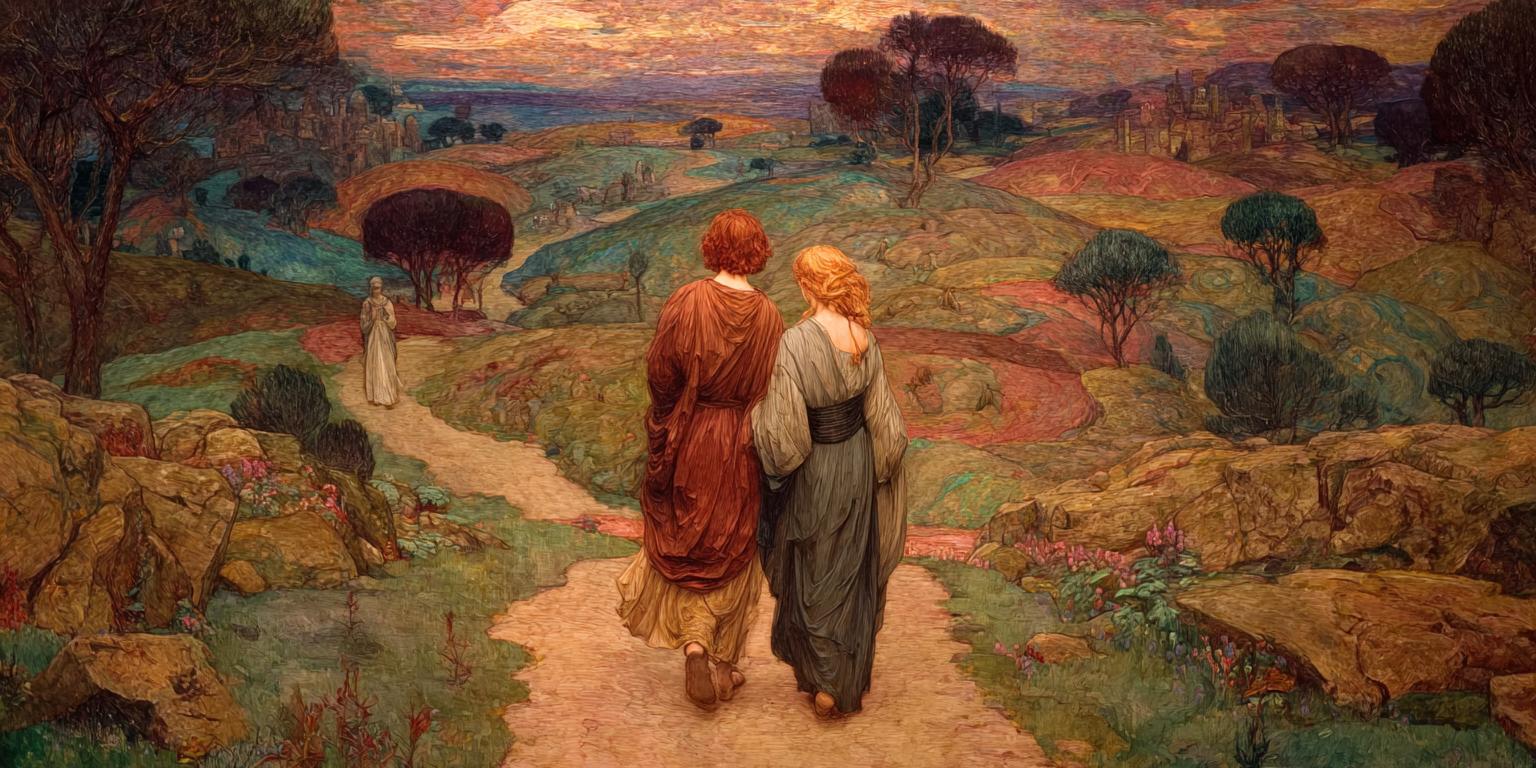
A path of pragmatic hope for the kind of life she wanted to build for herself.
At only 10 years of age, Sandra had found the faith she desired. She wanted to be baptized and become a member. Her Dad, a man of deep integrity and honesty who believed in keeping promises, asked her to wait to make baptismal covenants until she was 18. So, she attended church for eight years on her own with the help of her Mother, who lined up rides for Sandra with a friend who belonged to the faith.
Sandra applied to BYU while not yet an official member of the church she had come to love. She was admitted to BYU, then turned 18 and was baptized. With hair almost literally still wet from baptism, Sandra chose to attend BYU. As valedictorian of a large high school in Spokane, Washington, she had scholarship opportunities elsewhere, but she wanted to see and learn about how her new faith worked “up close.” Sandra remembers, “My first ever Family Home Evening was with other BYU students and included prayer, a devotional, and a fun activity.” It was a far cry from the sex, drugs, and booze scene she had witnessed at her Pacific Northwest high school. Referring to her Family Home Evening group and BYU Singles Ward, she asked, “Where else could you go school-wise and step into an immediate, organized, and socially structured group where college boys and girls serve each other and are served by each other?”
Upon arrival at BYU, Sandra remembers that there were a few BYU students she knew who did not honor the law of chastity and the word of wisdom. Sandra saw her share of both hypocrisy and self-righteousness. However, Sandra also saw roommates who imperfectly but honestly strived to live out their faith’s ideals and BYU’s aims. She saw roommates who studied their scriptures, prayed privately, and served others when they believed no one was watching. During her first week at BYU, one of her roommates, who missed her family prayers, recommended that the roommates have “apartment prayer” together each night. Sandra recalled, “At first, I thought it was peculiar and strange, but when I heard my roommates praying personally for me, I felt a closeness and a kinship that really lifted and helped me.” It would help set a pattern for the family prayers Sandra now has with her own children and husband each night.
During an early bout of homesickness while at BYU, Sandra said, “My Family Home Evening group of three guys and four girls asked me to go to Moab with them for some hiking and mountain biking. It was a platonic and uplifting experience.” A life-long friend named April, now a cancer survivor and mother of six, resulted from this group. While having a ball on the Moab trip with her Family Home Evening group, Sandra found herself asking, “How many college camping trips involve zero sex and alcohol?” Many young adults might yawn thinking about a G-rated adventure. However, given the significant fallout Sandra had witnessed from unbridled sex and alcohol abuse, the context was a peaceful contrast.
“When I heard my roommates praying personally for me, I felt a closeness and a kinship that really lifted and helped me.”
In BYU classrooms, Sandra had a few forgettable, lukewarm professors, but she also had some exemplary professors who “bathed” their respective subject in “the light of the Gospel” and then went further and learned Sandra’s name, some of her story, and strengthened her budding faith.
As a recent convert who had only one semester of Seminary (daily religious education for Latter-day Saint high schoolers), BYU’s religion classes were often meaningful for her. Sandra did not care for the occasional focus on pedantic details instead of on the expansive scope of the Gospel she had come to love. “I thought that approach was dumb then, and I still do,” she said. However, she loved Professor Camille Fronk Olsen’s “passionate” approach to faith in general and the New Testament in particular. Twenty years later, Sandra bumped into Professor Olsen, who recognized Sandra and warmly greeted her. It is something Sandra will always remember.
“Being a convert with no home-based religious experience and almost no Seminary experience, my religion classes taught me how to study and learn from the scriptures. My testimony of Jesus grew.”
In addition to Camille Fronk Olsen, another woman who had a lasting impact on Sandra was (then) head women’s basketball coach Sondra “Soni” Adams, who was inducted into the University of Utah Hall of Fame in 2023. “Soni did not just teach a ‘class,’” Sandra recalled, “she gave me personal feedback as a person, teacher, and coach and emphasized character above all else.” Sandra has since coached a number of teams ranging from six-year-old beginners to varsity high school squads, where the same emphasis on character has remained central.
Sandra has never forgotten that the vast majority of her undergraduate tuition and 100% of her tuition as a graduate student at BYU was paid for by tithing funds from her sisters and brothers in the faith—a truly unrepayable mountain of sacred debt.
How has Sandra tried to repay her unpayable debts? She has been able to serve in the lay-member-operated Church of Jesus Christ of Latter-day Saints in four states over the last 30 years, including service in Primary (Children’s), Young Women, and Relief Society (Women) presidencies at both local and regional levels. In these efforts and experiences, she has drawn heavily on organizational skills she saw modeled during her early and formative BYU years, by faculty and her peers, and by BYU ward members whose influence remains in her life three decades later.
Tuition paid by tithing funds … a truly unrepayable mountain of sacred debt.
“Why did I want to teach at BYU?” Sandra asked. “Because of the positive influence my teachers and peers had on me … I wanted to be a part of that again, this time from the teaching end. I wanted to pay it forward.”
The second Sunday of most months is “BYU Sunday” in Sandra’s kitchen, when Sandra serves up a home-cooked meal to anywhere between a handful to 30 students. These gatherings often include the children of her old BYU friends like April, who has had three of her own kids come to BYU from Oregon. Sandra explained, “I want to return the friendship to these students that their parents gave to me.” There are often other dinner attendees as well—students from her classes who may have had a rough week or month. “I want them to know that they are loved and belong.” She said.
In terms of ideals, Sandra finds it intriguing that the very ideals of the law of chastity and the word of wisdom that powerfully drew her initially to The Church of Jesus Christ of Latter-day Saints and then to BYU are the same ideals that often draw fire and ire from others. Sandra understands that her beloved church and school may not be the love or choice of others, but they have blessed her deeply, and she hopes that she can relay similar blessings to others.
Sandra’s life experiences have led her to be grateful that BYU does make some peculiar demands. She readily admits that is a university that asks a great deal—but as she has learned, so does excellence in any endeavor. Sandra holds a hope that students and faculty who come to BYU will remember and embrace its “Christ-centered and prophetically directed” mission and that they will be beneficially challenged in life-changing ways as she has been.
Sandra is not the only student who feels an “unrepayable debt” to BYU and to the faithful tithe payers who subsidize the vast majority of this educational experience. Of the nearly 700K alumni across BYU’s three campuses, most are grateful for their time in these unique and even sacred settings. Like Sandra, many present and past alumni have seen ripple effects in their own lives—and in the lives of those they “go forth to serve.”
Like her, its mission will beneficially challenge in life-changing ways.
As we finish our time with this remarkable convert student turned professor, we can justifiably ask for a confessed fatal flaw or two. “Well, my husband tells me that I am a BYU Creamery ice cream addict,” Sandra admits. Her rebuttal? “I tell him that ice cream is my osteoporosis prevention program … but you better not put that in the article.”