I will always remember Richard Dutcher as the Latter-day Saint missionary who dies after giving a blessing to a crippled man who is a new convert to the Church. In a spiritually soaring scene, that man is miraculously healed, and then Richard Dutcher, content but suffering from a terminal disease, passes away overnight.
That might be one of my favorite scenes in all of cinema—the climactic moment in the 2000 film “God’s Army,” still probably the best of Latter-day Saint cinema after all of these years. Richard Dutcher played “Pops,” the faithful Elder Dalton, who refused to leave his mission.
Artists like Richard Dutcher are given special gifts. They are able to synthesize the thoughts, emotions, and feelings of millions in powerful scenes that allow us to feel the urgency and clarity of God’s love for all of us. And when these artists direct, write and act in such personal and poignant movies, how can we not feel special empathy for them?
Most readers probably know that Richard Dutcher made another very good movie called “Brigham City” after “God’s Army.” He then went on to make several more movies…and during that period he announced he was leaving the Church. He gave what I considered to be a melancholy interview on one podcast, then he got divorced, and then there was a sad story about an ex-girlfriend filing a request for a protective order against him. Dutcher is quoted as saying the following: “These are very painful and worrisome allegations. I do feel the need to state publicly that I have never in my life hit a woman, never choked a woman, never kicked a woman—certainly never sexually abused a woman.” (I want to make it clear to readers that there are always two sides to every story, and we should all reserve judgment about Dutcher because we don’t know the full story of what happened with his ex-girlfriend—who has, herself, had two protective orders filed against her previously.)
The IMDb website gives more information on what Dutcher has been up to lately. A web search shows that in 2015 he filed a lawsuit that got tossed out.
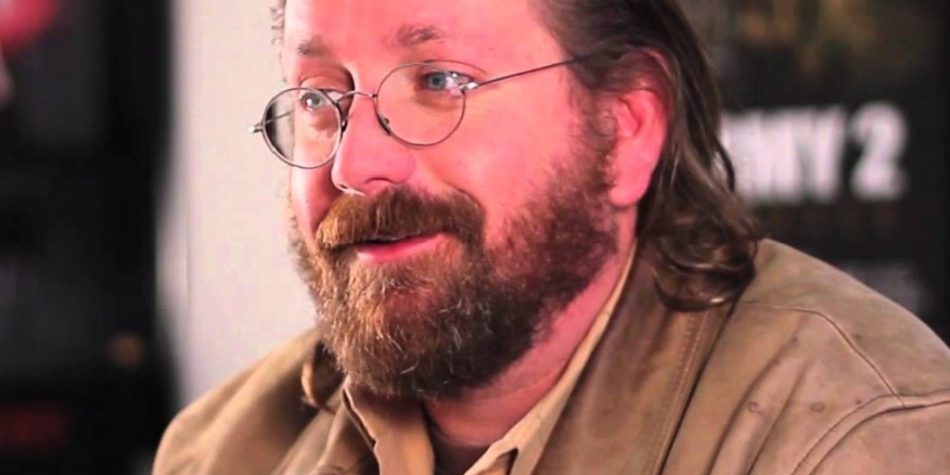
The big news for fans of Richard Dutcher is that in 2018 he gave a very interesting interview for Utah Film Studios. He looks quite happy, healthy, and upbeat in that interview, and I really enjoyed watching it. If you watch, make sure you watch parts 1 and 2, and 3.
In that interview, Dutcher says he no longer goes to Church but he still believes in God. He calls his faith in God a “gift,” but he says that the God he believes in does not necessarily correspond with the God many others believe in. He says that he does not want to tell other people what they should believe. He says that he “sees God in the death and the tragedy.” He says that God is not just happiness and life but also tragedies, because “God is everything.”
In the interview, Dutcher, talking about his movie career, says he has “faith that it will all work out” and that “giving up is never an option.” He points out that he has seven children and he wants to show them he will never give up.
He says: “As hard as it is to go through a period where you have no money, no prospect for money … where you have lost all your friends, all your support group, everything, you’ve lost your investors, you’ve lost your reputation … that’s awful, but worse than that would be giving up and sitting in an office selling insurance, and there’s nothing wrong with selling insurance, but if you are an insurance man who could be Victor Hugo, but you are selling insurance, that’s sad not only for you, but that’s sad for the rest of us.”
(I should point out here that earlier in the interview Dutcher says he does not compare his talent to Victor Hugo’s—his point is that some people are meant to be artists and to explore their artistic abilities.)
Dutcher says his favorite film project is “Falling,” which is an R-rated movie based on Dutcher’s life that is described as a drama that chronicles the mental and spiritual collapse of a Hollywood videographer. Dutcher says that he is doing a lot of writing for other producers. He says he is a “script doctor,” and mentions he has worked with several big names in Hollywood. He is also working on a pilot for a TV series. He also mentions he worked on a movie called “Boys at the Bar.”
I am not here to judge Richard Dutcher. As Elder Ulisses Soares pointed out so eloquently this last October: “Considering we still have a long way to go to reach perfection, perhaps it would be better if we sit at Jesus’s feet and plead for mercy for our own imperfections, as did the repentant woman in the Pharisee’s house, and not spend so much time and energy fixating on the perceived imperfections of others.”
I have plenty of imperfections that need attending. I am much more concerned about my own shortcomings than about Richard Dutcher’s shortcomings.
What I really want to do is send Richard Dutcher a message of love and support. We are about the same age. I have been through a very painful divorce. I am a very flawed man. But I have also found peace and solace in The Church of Jesus Christ of Latter-day Saints. I have dozens of very close friends there, and I know these people love me. I have seen incredible acts of self-sacrifice and charity. These people in the Church are the kindest, most loving people I have ever known.
Richard Dutcher, people in the Church still love you. There is room for you in The Church of Jesus Christ of Latter-day Saints, no matter what you have gone through. Despite my many shortcomings, I was welcomed with open arms when I joined the Church, and I know you would be welcomed also. Richard Dutcher, you can have the faith of Elder Dalton again. I have heard your testimony, and I know you believed it then. That testimony is still inside you someplace. Oliver Cowdery and Martin Harris left the Church, and they came back. You can too.
Who knows—maybe you have already returned to Church since that 2018 interview. If this is the case, then just let me say I still cry every time I watch “God’s Army,” and I have watched it at least a dozen times. Thank you for that.