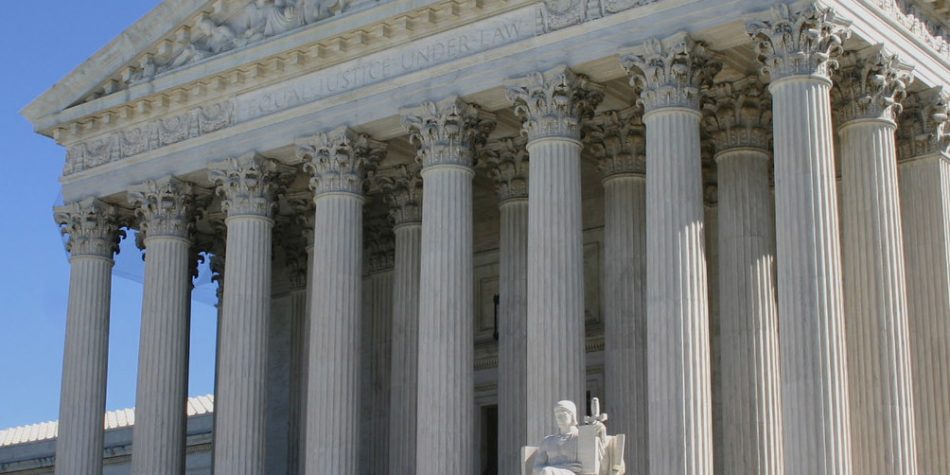
Loud has been the chorus of voices condemning the U.S. Supreme Court for its recent abortion decision: “Religious tyranny … an assault on women … rolling back core freedoms,” etc.
Some of these indignations even insist that the Justices have somehow violated the constitution and other founding principles of this country. I sincerely wonder when was the last time some of these people read these founding documents. I personally love this remarkable statement of foundational principles from the Declaration of Independence:
We hold these truths to be self-evident, that all men are created equal, that they are endowed by their Creator with certain unalienable Rights, that among these are Life, Liberty and the pursuit of Happiness. That to secure these rights, Governments are instituted among Men, deriving their just powers from the consent of the governed.
The foundational principles of government in America—unique in the known history of mankind—are that all men are created equal, that the rights they possess are natural and unalienable because they are endowed upon them by their Creator, and that the legitimate purpose of government is to secure those rights. With that in mind, the Founders then set about to design a government that would secure those rights, as circumscribed in the U.S. Constitution. This remarkable document delegated to the federal government very specific, enumerated powers to that end—powers necessary to secure the lives, liberty, and property of the people. The enumerations and limitations placed upon the national government were called by Thomas Jefferson “the chains of the Constitution,” and they were meant to restrain the federal government, not the people. To argue that the Constitution—which was designed and intended to secure the right to life —also guarantees the right to abort a child makes no sense.
Recognizing the specificity of powers granted to the federal government, Justice Samuel Alito, in the majority opinion of Dobbs v. Jackson, wrote:
In interpreting what is meant by ‘liberty,’ the Court must guard against the natural human tendency to confuse what the Fourteenth Amendment protects with the Court’s own ardent views about the liberty that Americans should enjoy. For this reason, the Court has been ‘reluctant’ to recognize rights that are not mentioned in the Constitution.
Abortion is not mentioned in the Constitution. And no power or authority in the Constitution can honestly be construed to guarantee a right to abortion. Therefore, there is no basis in the Constitution for the Roe v. Wade decision. The unfettered right to abortion was a policy preference in 1973 that certain justices on the U.S. Supreme Court wanted to see established. So, they contrived an argument for a guaranteed right to privacy— which is also not mentioned in the Constitution—and then extended that argument to conclude that the right of a woman to abort a child is guaranteed by the Constitution. But to argue that the Constitution—which was designed and intended to secure the right to life —also guarantees the right to abort a child makes no sense. The Roe decision was, in the words of Justice Byron White, the “exercise of raw judicial power.”
From Justice Alito’s opinion:
Roe found that the Constitution implicitly conferred a right to obtain an abortion, but it failed to ground its decision in text, history, or precedent. It relied on an erroneous historical narrative; it devoted great attention to and presumably relied on matters that have no bearing on the meaning of the Constitution; it disregarded the fundamental difference between the precedents on which it relied and the question before the Court; it concocted an elaborate set of rules, with different restrictions for each trimester of pregnancy, but it did not explain how this veritable code could be teased out of anything in the Constitution, the history of abortion laws, prior precedent, or any other cited source; and its most important rule (that States cannot protect fetal life prior to ‘viability’) was never raised by any party and has never been plausibly explained. Roe’s reasoning quickly drew scathing scholarly criticism, even from supporters of broad access to abortion.
Alito continued:
Without any grounding in the constitutional text, history, or precedent, [Roe v. Wade] imposed on the entire country a detailed set of rules much like those that one might expect to find in a statute or regulation. … Not only did this scheme resemble the work of a legislature, but the Court made little effort to explain how these rules could be deduced from any of the sources on which constitutional decisions are usually based.
Roe v. Wade was not judicial in nature. It was an act of legislation that courts have no business engaging in. It was a classic example of what many of us have come to recognize today: judicial activism.
The conclusions in Roe v. Wade were manufactured and contrived, but it was a narrative that many people ultimately embraced. Since there was no basis in the Constitution for a ruling on abortion, it should have been referred to the states and the people as the Constitution requires. But that is not what the previous court did. As the Supreme Court ruling continued:
As Justice White later explained, ‘decisions that find in the Constitution principles or values that cannot fairly be read into that document usurp the people’s authority, for such decisions represent choices that the people have never made and that they cannot disavow through corrective legislation. For this reason, it is essential that this Court maintain the power to restore authority to its proper possessors by correcting constitutional decisions that, on reconsideration, are found to be mistaken.’
And this is what the current Supreme Court has done in Dobbs v. Jackson. They have overturned the false narrative, reinstated Constitution principles, and restored authority to its proper possessors. In doing so, they defended and upheld the Constitution, which it is their sworn duty to do.
Just principles for the rights and protection of all flesh. Restoration scriptures state unequivocally that America was founded under His direction and for His purposes; that those we call the Founders were “wise men whom I raised up unto this very purpose,” and that “I established the Constitution of this land … for the rights and protection of all flesh according to just and holy principles.”
For those who accept these words as scripture but are dismayed that Roe has been overturned, I would ask: Are you willing to make the case that included among those “just and holy” principles established by the Lord “for the rights and protection of all flesh” is the right to vivisect his children in the womb? To tear them to pieces and discard them? Do you think the Lord considers abortion to be a “just and holy” principle?
Perish the thought. This is clearly far from being a “just and holy” principle.
Everyone acts, and everyone is accountable. Further, in the same scriptural text, the Lord says that the reason the Constitution should be maintained is so “that every man may act in doctrine and principle pertaining to futurity, according to the moral agency which I have given unto him, that every man may be accountable for his own sins in the day of judgment. The great moral questions of our day will not be decided by activist judges, but they will be laid at the feet of you and me. You and I will have to take a stand.
What the Supreme Court has done is precisely what the Lord calls for. By virtue of overturning Roe v. Wade, they have taken a ruling by seven justices in 1973—a ruling which they imposed on the country and which foreclosed on any input from the citizens—and they have returned it to the people. Now, each citizen in their respective states will have to take a stand on abortion, one way or the other, to exercise the moral agency God has given us. In this way, we may now “act in doctrine and principle pertaining to futurity” according to the moral agency that the Lord has given us. And we surely will be accountable to Him for what we have done, or not done, on the day of our judgment. I think that is as it should be.
The least of these. There is one other thing not directly connected with the Dobbs v. Jackson decision but which I think is germane to this subject. I am a man. I have been told many times in many different ways that a man has no business dictating to a woman what she may or may not do with her body. Those arguments would have us believe that the perspective of the mother is the only consideration, with no one else involved.
Yet when the cold, steel tube is inserted into the base of the skull to vacuum the brains into a medical waste bag, whose brains are vacuumed into that bag? Clearly, it is not the woman’s body that will be torn to pieces and thrown away. It is someone else’s. Should there be no compassion for that unknown and unnamed person? Should that someone else not be spoken for?
If we are encouraged to care for the rights of “all flesh,” would that not include the flesh of that person being vacuumed into the medical waste bag? Are we not under an obligation to stand up and speak for the child of God that is unable to stand up and speak for him or herself?
“And the King shall answer and say unto them, Verily I say unto you, Inasmuch as ye have done it unto one of the least of these my brethren, ye have done it unto me” (Matthew 25:40).
I reject the argument that I cannot stand and advocate for and attempt to defend “one of the least of these my brethren.”
Be not afraid. I close with an excerpt to a 2001 speech by Justice Clarence Thomas before the American Enterprise Institute, entitled “Be Not Afraid”—words that have special relevance in our mob-like American atmosphere today. In part, he said:
Judges do not cease to be human beings when they go on the bench. In important cases, it is my humble opinion that finding the right answer is often the least difficult problem. Having the courage to assert that answer and stand firm in the face of the constant winds of protest and criticism is often much more difficult … judges can be buffeted by strong winds that tear them away from the basic principles they have sworn to safeguard. Fulfillment of our oath requires us to have both a clear understanding of the principles that allow us to ‘call it as we see it’ and the fortitude to stand by those principles and the decisions that rest upon them.
He continues, “If we are to be a nation of laws and not of men, judges must be impartial referees who defend constitutional principles from attempts by particular interests (or even the people as a whole) to overwhelm them, in the name of expediency …”
In response to “vile” attacks on those who raise their voices today and repeated attempts (even 20+ years ago) to brand them as “mean-spirited, racist, Uncle Tom, homophobic, sexist, etc.,” Justice Thomas cautioned against the natural impulse to “censor ourselves,” stating: “This is not civility. It is cowardice, or well-intentioned self-deception at best.” He then continued, “In my humble opinion, those who come to engage in debates of consequence, and who challenge accepted wisdom, should expect to be treated badly. Nonetheless, they must stand undaunted. That is required. And, that should be expected. For, it is bravery that is required to secure freedom.”
Justice Thomas elaborates:
I do believe that we are required to wade into those things that matter most to our country and our culture, no matter what the disincentives are, and no matter the personal cost. There is not one among us who wants to be set upon, or obligated to do and say difficult things. Yet, there is not one of us who could in good conscience stand by and watch a loved one or a defenseless person—or a vital national principle—perish alone, undefended, when our intervention could make all the difference … If we think something is dreadfully wrong, then someone has to do something.
He then closes with these words: “I leave you with this simple exhortation: ‘Be not afraid.’”
It is bravery, among other virtues, that is required to secure freedom. The justices who voted to overturn Roe v. Wade have acted with bravery. They have done the morally right thing. They have restored, at least in this matter, the Constitution.
To the many out there who share this desire to defend a defenseless person—or one of the many vital truths today under fire in America—I say with Justice Thomas, be not afraid.