In his famous essay “Property,” James Madison declared that “Conscience is the most sacred of all property.”
Damon Landor, a Rastafarian and former prisoner, would likely agree.
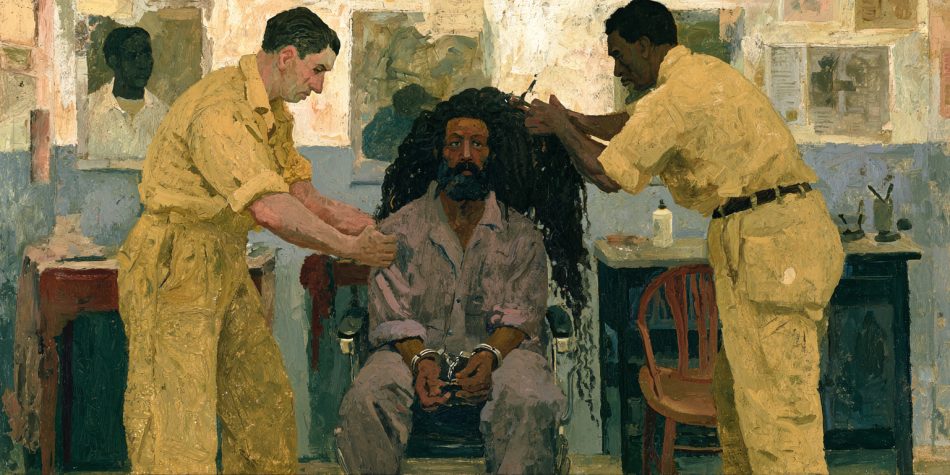
In 2020, Landor was finishing a prison sentence in Louisiana custody when two prison guards approached him, intent on shaving off his knee-length dreadlocks to align with the prison’s grooming policy. About two decades earlier, Landor had made a Nazarite vow to never cut his hair.
Prepared for the confrontation, Landor tried to show the guards a ruling from the U.S. Court of Appeals for the 5th Circuit that said prisons were generally barred from cutting male Rastafarians’ hair.
Despite Landor’s pleas that they respect his rights, the guards threw the court opinion into the trash and handcuffed him to a chair. They then shaved off his dreadlocks and put him into lockdown until the end of his sentence. While receiving a long-overdue haircut is a welcome experience for most people, Landor compared the forced breaking of his vow to being raped.
Prisoners in states across the country remain vulnerable to abuses by prison guards.
Imagine a prison guard denying an Orthodox Jew kosher food, forbidding Christian prisoners from saying a prayer over Christmas dinner, or preventing Muslim prisoners from performing Jummah. While these examples seem extreme and unlikely, these and similar abuses have occurred in prisons across the country for years. The forced cutting of Landor’s hair was of the same religious significance—a violation of conscience imposed by the state.
Most people probably agree that Landor and other religious prisoners like him should receive a remedy for the abuses they suffer at the hands of state officials, especially when they suffer irreparable harm. However, despite several justices recognizing the egregious nature of what happened to Landor, the Supreme Court ruled against him in his attempt to recover monetary damages from the offending prison guards for violating his rights under the Religious Land Use and Institutionalized Persons Act (RLUIPA).
Why? Understanding this ruling requires understanding the interaction between RLUIPA and the Constitution’s Spending Clause.
RLUIPA was passed in the wake of a battle over religious freedom protection between the Supreme Court and Congress. In the Supreme Court’s 1990 decision Employment Division v. Smith, the Court broke away from decades of precedent that had provided strong religious freedom protection under the Constitution’s Free Exercise Clause. Instead, it held that the free exercise of religion can be restricted or burdened if government laws or regulations are “neutral” and “generally applicable” (meaning that the laws do not target a specific religion’s practice and that they apply across the board).
In response to Smith, Congress passed the Religious Freedom Restoration Act (RFRA) to restore the pre-Smith standard of review for claims involving religious exercise at both the state and federal level. After the Supreme Court limited RFRA to the federal government, Congress passed RLUIPA in an attempt to restore the pre-Smith standard of review to additional state and local contexts, including the treatment of institutionalized persons. Under RLUIPA, when a state prison receiving federal funds places a “substantial burden” on an inmate’s religious rights, it must show that it is using the “least restrictive means” to accomplish a compelling governmental interest. In other words, the prison bears the burden of showing there was no other way to accommodate the prisoner’s religious exercise and still achieve the law’s purpose.
We are perceived by many to be a peculiar people with odd customs and unprecedented doctrine.
Congress used the Spending Clause as the source of its constitutional power to enact RLUIPA. While the Spending Clause allows Congress to attach strings to federal funds, it does not allow Congress to regulate conduct. However, according to the Court’s decision, Congress can ask the party receiving funds to accept liability for violating the conditions.
In this case, the Louisiana Department of Corrections (LDOC) received federal funding and agreed to answer certain suits, as a prison system, for violations of RLUIPA. Using RLUIPA, Landor sued LDOC and the offending prison guards in their official and individual capacities for monetary damages under RLUIPA’s provision that permits those who experience violations of their religious rights to obtain “appropriate relief” from the offending government (here, the prison). By the time the case reached the Supreme Court, only the damages claims against the prison guards in their individual capacities remained because lower courts had found that the monetary suit against LDOC and the guards in their official capacity was barred by the Eleventh Amendment’s sovereign immunity doctrine.
But why did the Supreme Court prevent Landor from being awarded damages from the prison guards in their individual capacities? Louisiana argued, and the Supreme Court agreed, that Congress lacked power under the Constitution’s Spending Clause to impose personal liability on state employees who had not consented to liability. RLUIPA conditions the spending of federal funds on prison systems’ compliance with the stricter standard of respecting inmates’ religious rights, not on individual prison employees’ adherence. Only the prison system itself had accepted the conditions and consented to liability.
In the Court’s eyes, prison guards are not privy to the prison’s acceptance of liability because they do not knowingly consent to it when hired and thus do not face individual liability for violating the religious rights protected by RLUIPA.
It should not matter whether a cross or dreadlocks symbolize deeply held beliefs.
As a result of this decision, prisoners in states across the country remain vulnerable to abuses by prison guards who currently lack adequate legal incentives to respect prisoners’ religious freedom as RLUIPA requires. In Landor’s case, the legal relief available to him under RLUIPA was entirely inadequate. Suing the state for an injunction to prevent the prison guards from cutting his already-shorn hair was a moot point! And with his other RLUIPA claims against the LDOC barred by sovereign immunity, his only hope was to recover damages from the prison guards by suing them in their individual capacities. He had a right without an effective remedy, which was no right at all.
Even though the Court’s decision in Landor v. Louisiana Department of Corrections and Public Safety was ultimately decided by the Court’s Spending Clause analysis, it highlights a glaring flaw in current religious liberty law: inmates like Landor who suffer harm from prison officials related to their religious practices in prison currently have no practical remedy available to them under RLUIPA.
This enduring vulnerability in religious practice for people of all religious traditions is highly concerning, especially in our increasingly diverse and secular society. Religion supports human flourishing and is an integral part of individual identity for many prisoners and everyday people alike. It is also an essential part of many prisoners’ rehabilitation.
Because of the Supreme Court’s decision, we should ensure that prisoners have a remedy when they endure abuses at the hands of prison officials and that guards have an incentive to respect the religious exercise of prisoners. This might include conditioning federal funding to prisons on guards accepting suits for monetary damages, or states implementing parallel protections to RLUIPA that allow these suits.
Whatever the solution, it will likely require that more Americans do the work necessary to understand the importance of protecting the free exercise rights of minority religious groups like the Rastafarians and then influence political officials to take the necessary steps.
Relative to other faith traditions in the United States, Rastafarians are a small fraction of the religious population. Their beliefs and practices—like Landor’s knee-length dreadlocks— might seem obscure or even strange to many.
As members of The Church of Jesus Christ of Latter-day Saints, we may not agree with many of Landor’s beliefs. But therein lies the beauty of true religious freedom and the right to conscience: the ability to believe and act in accordance with one’s beliefs should not depend on anyone else’s approval, and especially not upon majority approbation.
As Latter-day Saints, we are perceived by many to be a peculiar people with odd customs and unprecedented doctrine. In advocating for other faith traditions that face obstacles to true religious liberty, we also help protect the ability to share the message of the Restoration. As Joseph Smith said, “The same principle which would trample upon the rights of the Latter-day Saints would trample upon the rights of the Roman Catholics, or of any other denomination who may be unpopular.”
If we want religious liberty to endure, we cannot defend it only when our own beliefs are at stake. Indeed, caring about and defending the religious rights of the most vulnerable is a powerful way to shore up religious freedom for all, including ourselves. It should not matter whether a cross or dreadlocks symbolize deeply held beliefs.