man (3)

“I’m Not Going Anywhere.” A Tribute to Godly Men

My past taught me that men were dangerous, not to be trusted, and likely to hurt and abandon me. I learned otherwise from my husband and my new faith.  
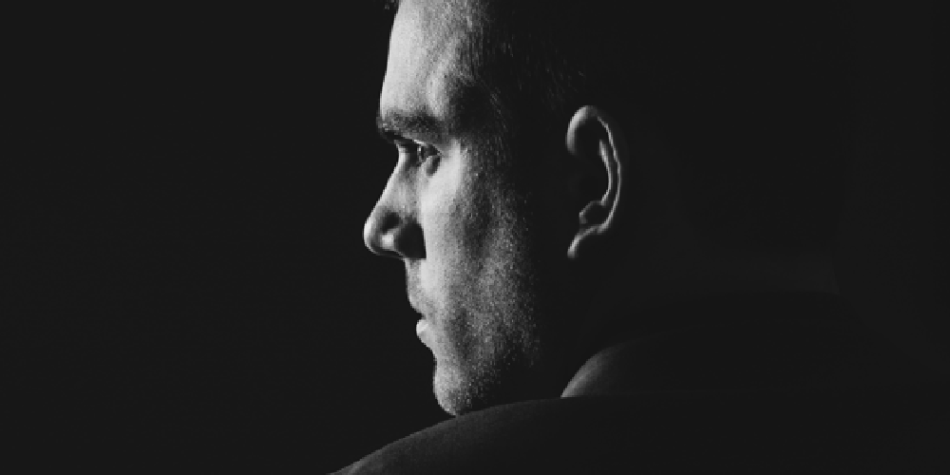
Photo by Drew Hays on Unsplash

Living with complex post-traumatic stress disorder or PTSD means sometimes life gets messy, especially in marital relations. 

My husband and I came from completely and entirely different childhood environments. He is the youngest son of six siblings, raised by a loving mother and father—and born into a family that belongs to The Church of Jesus Christ of Latter-day Saints. His mother is one of the most humble and meek women I’ve had the privilege of knowing, and his father is a hard-working, kind, and generous man. 

I was raised in a home with a lesbian mother who also taught me important things and showed me great love. Yet I was taught by example never to let even the smallest grievances go. The intent was to “keep things from festering,” but in reality, this meant frequent contention in our home. Sharing an opinion sometimes meant fists were flying—and nothing was ever “swept under the rug.” 

One of the greatest lessons since my turbulent childhood has come from observing my husband, who has shown me the value of silence and of keeping the peace. In a world that bombards us with the loudest voices, I have learned that being calm, mindful, and meek blesses the spirit of my home.

Our very different ways of communicating and problem-solving, compounded by my different upbringing, provide challenging learning experiences for us both. We’ve had a steep learning curve in understanding and anticipating each other’s needs. One especially stretching time happened in the midst of some extreme postpartum depression. Because of the immense pressure this put on our marriage, I found myself distraught on the bathroom floor. Through frantic sobs, I told my husband that I knew he would leave me one day—listing one important person after another who had abandoned me emotionally, physically, or both. I conveyed to him in desperation my sincere concern that he would not be able to endure my struggles with anxiety, depression, and being reactive.

At that moment, I was utterly convinced I would lose him.

I had no idea that this kind of man actually existed in real life.

When I met my husband, I thought I had met a real-life walking, talking, breathing angel on earth. I had never personally known a man who didn’t swear, drink alcohol, abuse drugs, and indulge in pornography. In addition, he made a choice to sacrifice two years of his life to teach others about Jesus Christ. He was hard-working and debt-free. He willingly followed the council of his religious leaders and attended church every week. I had no idea that this kind of man actually existed in real life. I am here to spread the word that this kind of man does exist. 

Fairytales can happen, and dreams can come true, but in that moment of my life, I felt mine was crumbling. In response to my traumatized fear and anxieties, my husband did something that had a lasting impact on me, something I can come back to if ever I begin to notice doubt creeping again. After I described the many others who had abandoned me, he held my face in his hands and looked into my eyes, saying, “None of those people went to the temple with you. But I did! I went to the temple with you, I knelt at the altar with you, I made covenants with you, and I meant them. I said yes to an eternity with you, in sickness and in health. I’m not going anywhere.

He went on to encourage me to give him more credit for the profound commitment I’ve made. There are other stories like this, and they always touch me. One Latter-day Saint father had a sweetheart with many health challenges. In sharing his experience supporting his wife, he related, “sometimes I do the right thing as a father and husband because I feel like it. And sometimes I do the right thing because I promised.” 

I know I’ve shared a glimpse into a deeply private moment. I recognize it may hurt if someone you love didn’t keep their promises. But these more encouraging kinds of stories need to be brought to light too. So please hold this space of gratitude with me; gratitude that there are men who keep their commitments, honor their priesthood, and bless the lives of their children and wives. These men are truly angels here on earth, and they deserve to be celebrated without apology.

I’m not going anywhere.

None of this was something I appreciated in my childhood and youth. I grew up feeling intimidated in the presence of men as my exposure to them was minimal at best. They were a mystery to me and were thought of as dangerous. In different ways, I was told they were “sexual predators,” “misogynist pigs,” or both. My solution to approaching half of the population back then was to simply ignore them. They were invisible to me, and, in turn, I made myself as invisible as possible in their presence as well. 

This began to change when a career path took me into the homes of hundreds of families. Over the course of a decade, I observed men who were becoming fathers. I assisted them as they ushered their unborn children into this world. I witnessed tender moments shared between husbands and wives. I saw men who deeply desired to learn and improve their ability to support their wives, men who weren’t afraid to ask questions or admit they weren’t the expert in the room. I found evidence in so many homes of men who dearly wanted to provide for and protect their wives and families. 

A colleague once drew my attention to the miraculous and visible change that takes place when a father holds his child in his arms for the very first time. Something settles over him, and he is transformed. At that moment, I’ve often witnessed men share these words, or something similar, with the brand new infant in their arms, “You’re here, you’re real, and I’m your father!” Their minds are captivated by this realization—something they could never completely comprehend until actually seeing their child on the outside of the womb. But once they enter that profound moment after birth, a tangible mantle seems to be placed squarely on their shoulders. Through these intimate and sacred experiences, I gained new trust in men and for men. 

At times I’m still guarded and recognize I have a journey of continued growth ahead. But because of experiences like these, I have gained a better understanding of what a true man is and what other men may become. Words fail in an effort to express gratitude for the good examples who have shown me such a thing exists, like angels on earth.


To learn more about Rachel Marie and her work, visit https://www.rachelmariespeaks.com/

About the author

Rachel Marie

Rachel Marie is a certified childbirth educator and Doula - and founder of SHINE SLC, an at risk youth nonprofit organization. She is a convert to the Church of Jesus Christ of Latter Day Saints and a mother of three.
On Key

You Might Also Like

Superman Revealing S-Shield Under his Suit | The Case for Heroic Masculinity | Public Square Magazine | In Praise of Heroic Masculinity | Male Heroism | Masculine Hero

The Case for Heroic Masculinity

The problem is not that masculinity is toxic. The problem is that we have abandoned the heroic and noble masculine virtues that the world so desperately needs today.

A reflection on violence in film

Gladiator II is a serviceable historical epic. If you loved Gladiator, you’ll like Gladiator II. Gladiator II opens as Rome is about to siege the “last free city in Africa.” Our nameless hero loses valiantly with his wife dying in the battle, and he is brought to be a slave in Rome. But if our hero can perform well enough as a gladiator, he can buy his own freedom. And with that, we’re off. The beats of this film will be familiar, with a massive twist only halfway through that changes the stakes for everyone. Our hero is really the son of our hero from the last movie! Which means he has a legitimate claim to the throne of Rome. The movie tries to follow three different stories. Our hero (Paul Mescal) is trying to win his freedom and avenge his wife’s death. Acacius (Pedro Pascal), the general of the armies, wants respite and time with his wife; he also wants to lead a coup against the emperors. Macrinus (Denzel Washington) wants to work his way up in Roman power through political scheming. And then on top of all of that, we are told that our hero must deal with his father’s legacy and discover who he truly is.  It’s a lot, even for an epic, and the screenplay is not nearly tight enough to keep all the storylines coherent and moving. We are led to believe that Macrinus is successful in maneuvering to the top of Roman society because of his exceptional political skill, and Denzel Washington’s delicious performance makes that believable, but all we actually see him do is win a bet and carry out an assassination. Pedro Pascal’s excellent work as the weary general does some of the work in helping reconcile the contradictions in his character, but a look on his face here or there has to carry a lot that a simple conversation could have fleshed out.  Perhaps the reason the script doesn’t have time to breathe is also its biggest contradiction. There is something grotesque about watching audiences cheer on the brutal violence taking place in the film. And yet, the entire film is centered on having us, the audience, watch one set piece of over-the-top violence after another. We don’t get to see Macrinus manipulate the Roman senate because, instead, we need to see our hero fighting with CGI rhinos or CGI sharks. There is a place for violence in a moral movie. It can be helpful to attune our senses to recoil from violence or recognize the rare places it is justified. But the violence on display in Gladiator II is so relentless and gratuitous that it dulls the senses instead.  This is not to diminish the craftsmanship that has been used to bring this world and its many battle scenes to light. Rome feels broad and alive in true epic fashion, and it’s easy to get swept away into its world—with the exception of a few uncharacteristic pieces of clunky CGI work. The opening battle sequence is perhaps the best ever put to screen.  The best part of Gladiator II was its opening. A 1950s style opening credits are shown over a lavish dreamy animated retelling of the first film. Everything about it screams that something epic is about to be shown. But throughout the movie I stayed fixated on what it could have been. What if it had been more focused on the characters I cared about? What if it didn’t try to connect so much plot to the previous film and let this story stand on its own merits? What if they had expanded it to a TV miniseries so that its many plot points had space to breathe? In the end, despite some good acting and a beautiful setting, the movie just left so much to be wanted.  Gladiator II is R-rated. It is not appropriate for children or, in my estimation, most adults. At its core, this film has a moral message: life is hard, but it’s worth fighting for. But the way it’s presented on screen does more to drag down the spirit than to lift it up. Two and a half out of five stars. Gladiator II opens nationwide November 22, 2024.

Subscribe To Our Weekly Newsletter

Stay up to date on the intersection of faith in the public square.

You have Successfully Subscribed!