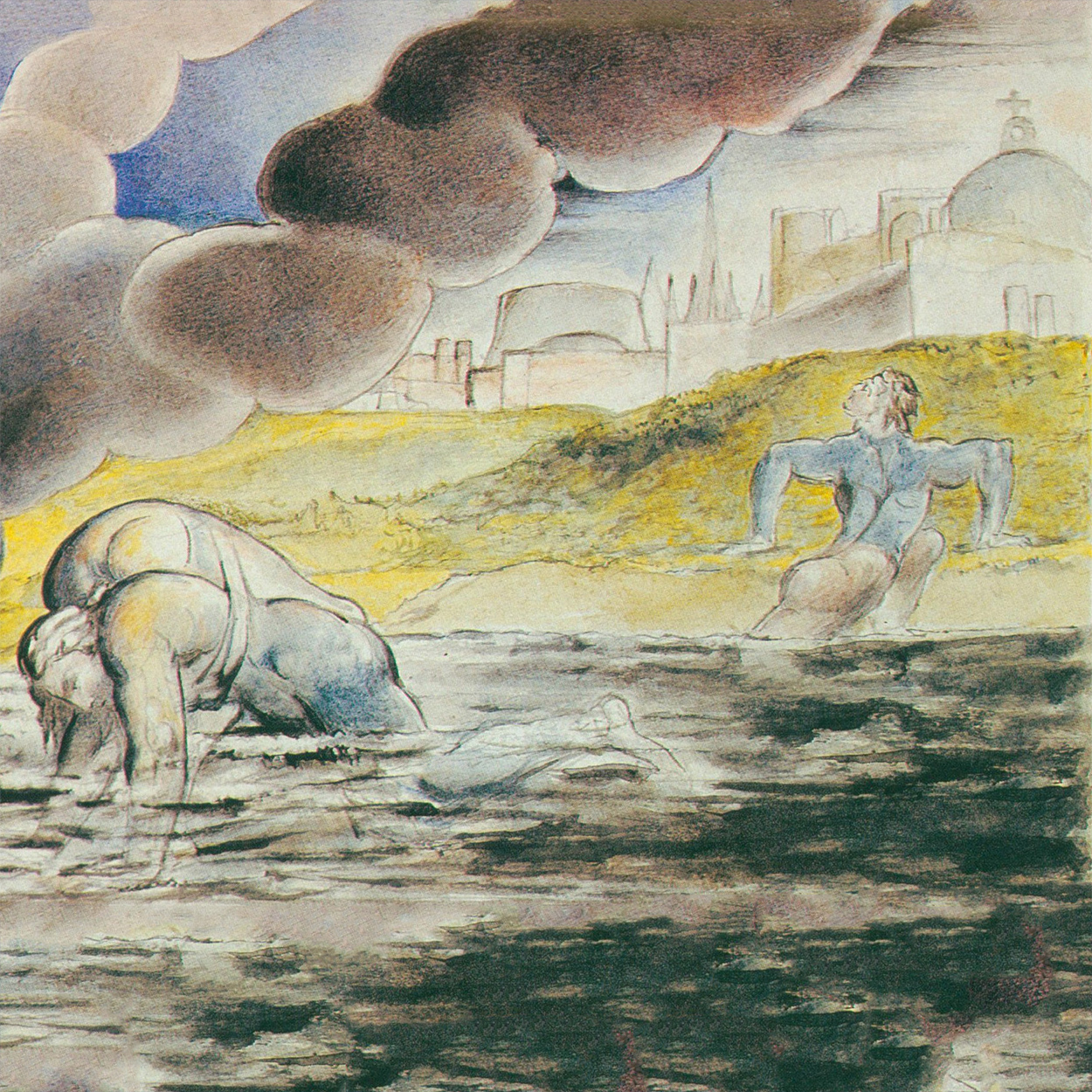
The Parable of the Sheep and Goats is an allegory for how the Lord will judge us. The text reads, “And before him shall be gathered all nations: and he shall separate them one from another, as a shepherd divideth his sheep from the goats.” This scripture specifies something with which I believe we should grapple: we are judged as nations.
We often speak of an individual judgment, but this scripture specifics a collective judgment that we will receive for whether or not we engaged in specific actions. While we have an individual relationship with God, that relationship does not exist isolated from the rest of our lives. Thus, the text famously continues, “And the King shall answer and say unto them, Verily I say unto you, Inasmuch as ye have done it unto one of the least of these my brethren, ye have done it unto me.”
Here and elsewhere, loving God is directly tied to loving our neighbor. Rather than an abstract theological system, Christianity is ministerial in nature. While followers of Jesus see their salvation as dependent on the atonement of Jesus Christ, they err when living life solely for themselves. As Christian believers, we find ourselves when we live a life for Christ, which is a life for others.
This underscores an obligation of charity towards each other. When Jesus began His ministry after a forty-day fast, He opened up the scriptures and read, “The Spirit of the Lord is upon me, because he hath anointed me to preach the gospel to the poor; he hath sent me to heal the brokenhearted, to preach deliverance to the captives, and recovering of sight to the blind, to set at liberty them that are bruised.” This transcends partisan politics straight to the core of Christianity.
Christians onlookers to Ukraine’s siege. Putin invaded Ukraine without any proven provocation. While some have defended Putin as having Christian values, Putin has clearly gone directly against the core Christian commandment: love for neighbor which is like unto love for God. When we love our neighbor, do we without justified provocation launch missiles at them? Do we force them to flee from their country out of a justified fear of violence? Do we dismiss or excuse or ignore this violence? Do we look away and ask “am I my brother’s keeper?”
Do we see someone on the side of the road wounded and walk on by? Do we refuse to help people who are a different tribe than us? Do we refuse to humble ourselves and try to distract from the situation by engaging in hypotheticals about it? Do we forget the humanity of others? Do we use our strongly held beliefs as an excuse to not help our neighbor?
If we do any of these things, we do not love our neighbor. Especially in a situation where the moral questions are this obvious, and where people are being violently oppressed by a clear aggressor, we have an obligation to do what we can to relieve the oppressed and liberate the captive.
Our failure to do so would have dire consequences. If we justify or excuse the evil of Putin through direct defenses of Russia or using this invasion as a way to make a partisan jab, we trample on the sacred lives of fellow brothers and sisters in Ukraine. Our action (and inaction) during this invasion have an impact upon each other directly, while also signaling something to God.
We are told to “do justice to the afflicted” and to “look not every man on his own things, but every man also on the things of others.” In this moment, we need to take seriously our obligation unto the “least of these” by relieving the oppressed as scripture commands us to do. Neutrality does not suffice because we cannot be neutral about an autocratic ruler violently and without real provocation invading an innocent country. We cannot see a brother in need and close our hearts. To be neutral in such a way would render our discipleship meaningless and make us hypocrites.
This transcends partisan politics straight to the core of Christianity: do we put our love for God and our love for neighbor before anything else or do we have politics, ideologies, pride, material goods, whatever it may be that we have elevated higher than our obligation to love God and love our neighbor?
We know that this life is a test to see if we can do what God commands us to do. If we have reached the point where we are willing to step back and watch innocent people die brutal deaths and a country be destroyed rather than have charity, justified by our political beliefs, we are not Christian. If we watch evil unfold before our eyes and do not have compassion for those who are harmed, we are not Christian. If we remain puffed up in pride and use an evil situation to further our political agenda, we are not Christians.
Discipleship allows a spectrum of belief on a variety of issues, but we cease to be disciples of Jesus, at least, when we do not love each other. If we possess every Christian virtue except charity, we have entirely missed Christianity.
If we are to not just draw near to God with our lips but have our hearts close to him as well, then our hearts must be close to the children of God, especially when they are oppressed. In the case of Ukrainians, may we feed their hunger, may we give them drink, may we welcome them in, and may we clothe them.
Our life is a performance of Christian discipleship. May we make it count.