stephen-picilaidis-JHVUl-n8W2A-unsplash (1)

Tyre Nichols and The Price of Excuses

When we seek to blame others for tragedy, it ultimately coarsens our souls and destroys our peace. The antidote is to take responsibility and reject blame.

A few weeks ago, I took my kids to the playground. There were quite a few other kids. After a bit of playing, one of the kids came over and told me that my son had flicked his ear. 

I had seen that this kid had been rough on the playground and often spoke rudely to the other kids. So I listened patiently but didn’t do anything about it.

Over the next several minutes, I kept my eye on him. Every new interaction that I observed, I would scoff and conclude that this kid was trouble. After a few minutes, I was pretty upset. 

Then I watched my son flick this kid’s ear again. I’m embarrassed to say this, but my first reaction was, “What did he do to my son?”

I literally witnessed with my own eyes my own child’s bad behavior, and yet my first instinct was to assume that the other kid must have done something to deserve it. 

Fortunately, I came to my senses, and I pulled my kid out for a few minutes.

The danger is our humanity will be frayed.

But that first reaction was a powerful one. This was my son. I had raised him. He had my values. And he couldn’t just have flicked his ear unprovoked, I thought. Because what would that say about my parenting? What would that say about me?

Because my son is my responsibility, when he did something wrong, my instinct was to figure out how to blame it on someone else. 

As understandable as this defensive instinct may be—and it was once described as “as common as breathing air”—if left unchecked, it can coarsen our souls and destroy our peace.

If every time we (or someone we’re responsible for) do something wrong, we end up blaming it on others, we’re left with this gnawing need to prove it’s all their fault. That can leave us bitter and accusatory. 

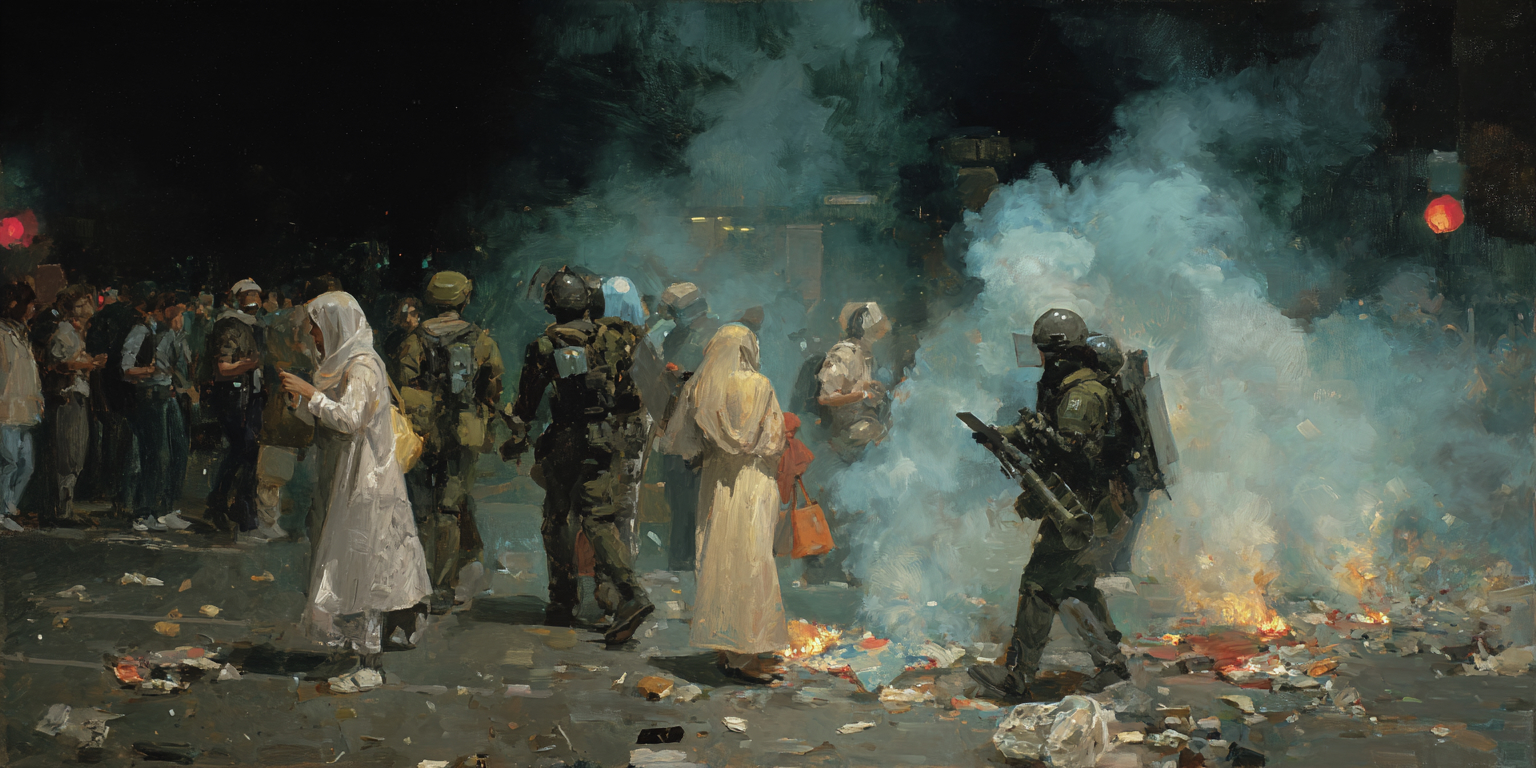
I tell this story because of the disappointing details released late last week about the murder of Tyre Nichols. 

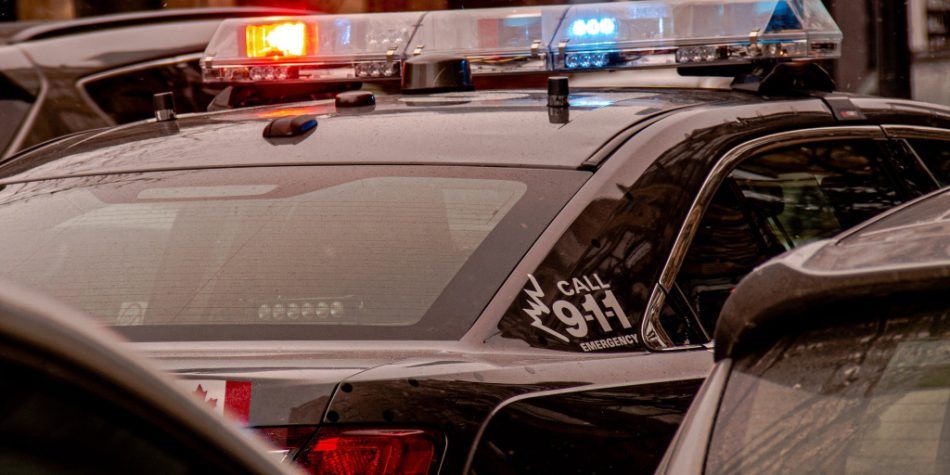
Tyre Nichols was a FedEx delivery driver who was pulled over by police and beaten to death.

Police claimed that Nichols had been driving erratically and tried to reach for their gun, neither of which was confirmed by the recently released video. Although Nichols did try to run from the officers, he was completely apprehended and under control when the beating took place. And there appeared to be no point where the officers were in danger from Nichols.

What happened was a tragedy. 

The danger is not in an isolated tragedy, although every tragedy is exactly that on some level. But as tragedies like this continue to enter our public consciousness, the danger is our humanity will be frayed.

Not simply by their frequency. But by the way we may be inclined to respond to them.

These officers were our representatives, representing “we the people,” presumably to help ensure domestic tranquility. It would be all too easy at a moment like this for us to respond in the same callous way I did when I saw my son flick that boy’s ear. What did he do? 

The influential Arbinger Institute, in their seminal book The Anatomy of Peace, writes, “Whenever we need to be justified, anything that will give us justification will immediately take on exaggerated importance in our life. Self-betrayal corrupts everything.” 

To hold a man down while his head is kicked is a profound betrayal of who we are as a people. But if we aren’t careful, and we find ways to deflect or justify, it can become who we are as a people. 

Leo Tolstoy explained the process like this “For the justification of sins, there exist false arguments, according to which there would appear to be exceptional circumstances, rendering the sins not only excusable but even necessary.”

If we are confronted with this kind of violence regularly and find excuses not to repudiate it and change, then that is who we are. We may shrug our shoulders and conclude that this is just the way it is—or worse, the way it should be. 

Some commentators have gone so far as to suggest it’s already who we are. Alex S. Vitale, a professor at Brooklyn College who focuses on policing, has argued that over the last forty years, we have seen a “fundamental shift in the role of police in society” and that if we are to see improvements, we must change the entire culture.

So in a real way, while Tyre Nichols was the first and primary victim of those officers, if we aren’t careful, we can become their victims too, allowing their actions to coarsen our souls. 

What is the antidote? Well, today is a time for grief, a time for indignation. It’s not yet a time for policy. That time will come soon. When it does, we would do well to keep in mind the lessons of Fleet Maull, who founded the Prison Mindfulness Institute while serving a 14.5-year prison sentence for drug smuggling. Reflecting on the same basic scenario as Tolstoy and the Arbinger institute, he calls it a “Victim Mindset.”

His philosophy might best be described by the pithy title of his book Radical Responsibility, which reflects a philosophy that “transcends blame.” For him, the path to peace is to reject blame and accept ownership.

If we are to move beyond this senseless killing enacted on our behalf and by our agents, we must start with responsibility. We must avoid the emotional shortcut of pointing the finger of blame. And it’s through that ownership that we can start the path of ensuring that this tragedy remains only a tragedy and not a new normal.

About the author

C.D. Cunningham

C.D. Cunningham is a founder and editor-at-large of Public Square magazine.
On Key

You Might Also Like

Under the Banner of Heaven Episode 5, “The One Mighty and Strong”

Summary – Pyre is interrogating Sam, who shouts scripture at him about the “one mighty and strong.” Pyre uses false details about the murder to trick Sam into revealing that he isn’t the murderer. The police chief is getting ready to release the brothers, so Taba stalls him while Pyre talks to Robin about his brothers’ involvement in the “School of the Prophets” and gets him to reveal two names: Bernard Brady, a Provo businessman, and Prophet Onias. The detectives follow up with Bishop Low and his wife, located at the end of the last episode, asking them about the excommunication of Dan and Ron. The bishop is reluctant to reveal details because of clergy confidentiality but eventually reveals that Dan was excommunicated based on the testimony of his daughters that he attempted to forcibly take them as polygamous wives. We get a flashback to a heartbreaking scene where Matilda has sex with Dan to distract him as her daughters escape out a window in the middle of the night. Dan was excommunicated, and the girls were placed with a family in the ward (as the bishop refused to call CPS) but later ran away, and now they and their brother are missing. At his daughter’s baby blessing, Ron confronts the bishop about his brother’s excommunication, not knowing about Dan’s attempted polygamy and thinking that it’s about his political beliefs. Brenda has a conversation with Sister Low and Diana, indicating that both know that Ron is abusing her but only Brenda is willing to do anything about it. In fact, Sister Low feeds Diana a line about how her only duty is “creating a home and environment to sustain and support our Priesthood holder.” To Detective Pyre, the bishop claims to have followed church procedure but eventually encouraged Diana to leave and gave her money to do so. The detectives follow up on Robin’s lead about Bernard Brady by arriving at his house in the foothills of Provo with a warrant. We find out that the Bradys sheltered Ron when he was having a hard time. In a flashback, Ron receives a summons to a church disciplinary court and blames Diana for it. He punches her in the face and begins throwing the food she’s preparing on the floor, saying he’ll starve her into obedience. Diana grabs a kitchen knife and drives Ron from the house, telling him not to come back. Back in the present, Bernard admits to being in the School of the Prophets study group and driving miles to pick up Prophet Onias and the Laffertys but denies being further into the group than that. But when he sends his wife out of the room to make lemonade, he produces a notarized letter he sent to himself with details of the Laffertys’ hit list, including that Diana is on the list because she wrote a letter that got Ron excommunicated. The detectives rightly chastise him for not taking this information to the police earlier. Brady reveals that he knows the location of “the farm,” a Lafferty compound. With Allen’s help in drawing a map, the detectives plan to stake out the property in the morning. Detective Pyre returns home for FHE and finds that his wife and kids have been invited to the bishop’s house for the evening and are spending the night there. Pyre believes this is an attempt to keep an eye on his family and control the narrative about the case. The next morning on the way to the raid of the farm, Pyre questions Brady about the details of Ron’s excommunication, which we see in flashback. He is indeed excommunicated after lashing out at the church leaders about them not following the “correct” doctrines of the church. When Ron returns home, he finds that his teenage daughter has cut the markings out of his garments, which he puts on anyway with only a sports coat and jeans over the top. He says goodbye to his kids and leaves the home. When the farm is raided, the only people inside are three teenage girls, who we learn are from a polygamous compound in British Columbia and were brought down by Prophet Onias to be Ron’s wives. The girls show the detectives a cupboard they had been forbidden to touch, which the detectives open to reveal a single shirt belonging to Ron with some papers in the pocket, a hit list, and a revelation directed at Diana commanding her to repent and return to him. Allen is in disbelief that Ron could have written these things, but Brady confirms that Ron is a violent man. He explains that Ron fled to his parents’ home after his excommunication, where his mother confirms his calling as “the one mighty and strong” and says he’s only a heartbeat away from his rightful place. His father is lying sick in bed and asks Ron to call a doctor, but Ron recalls his cruelty to them as children and refuses. It’s implied that he indirectly caused his father’s death in order to take over the leadership of the family. Church History—This episode contains the most fabricated piece of church history in the show. When Bernard Brady reveals that Diana’s information led to Ron’s excommunication, he makes an analogy to Joseph Smith’s martyrdom. He claims that while Joseph was in hiding after destroying the press of the Nauvoo Expositor, Emma wrote a letter to Joseph encouraging him. John Taylor intercepts this letter and adds a line meant to make Joseph turn himself in, thus indirectly causing the prophet’s death. Taylor’s motive is to put Brigham Young at the head of the church, instead of Emma’s young son, in order to continue the doctrine of polygamy, which he and Brigham are already heavily involved in. Reputable historians both in and out of the church say there is no evidence to support this interpretation of events, though the succession crisis between Brigham Young and the ten-year-old Joseph Smith III is real and

Statue Of Green Angel Holding a Red Rose | Angels All Around Us | Public Square Magazine | Mine Angels Round About You, To Bear You Up | Angels Are All Around Us

Angels All Around Us

A Christmas present from our team to the many who are grieving the loss of a loved one this holiday season. May you rejoice to know what is coming and feel peace at what is already here.  

Subscribe To Our Weekly Newsletter

Stay up to date on the intersection of faith in the public square.

You have Successfully Subscribed!

Pin It on Pinterest

Share This