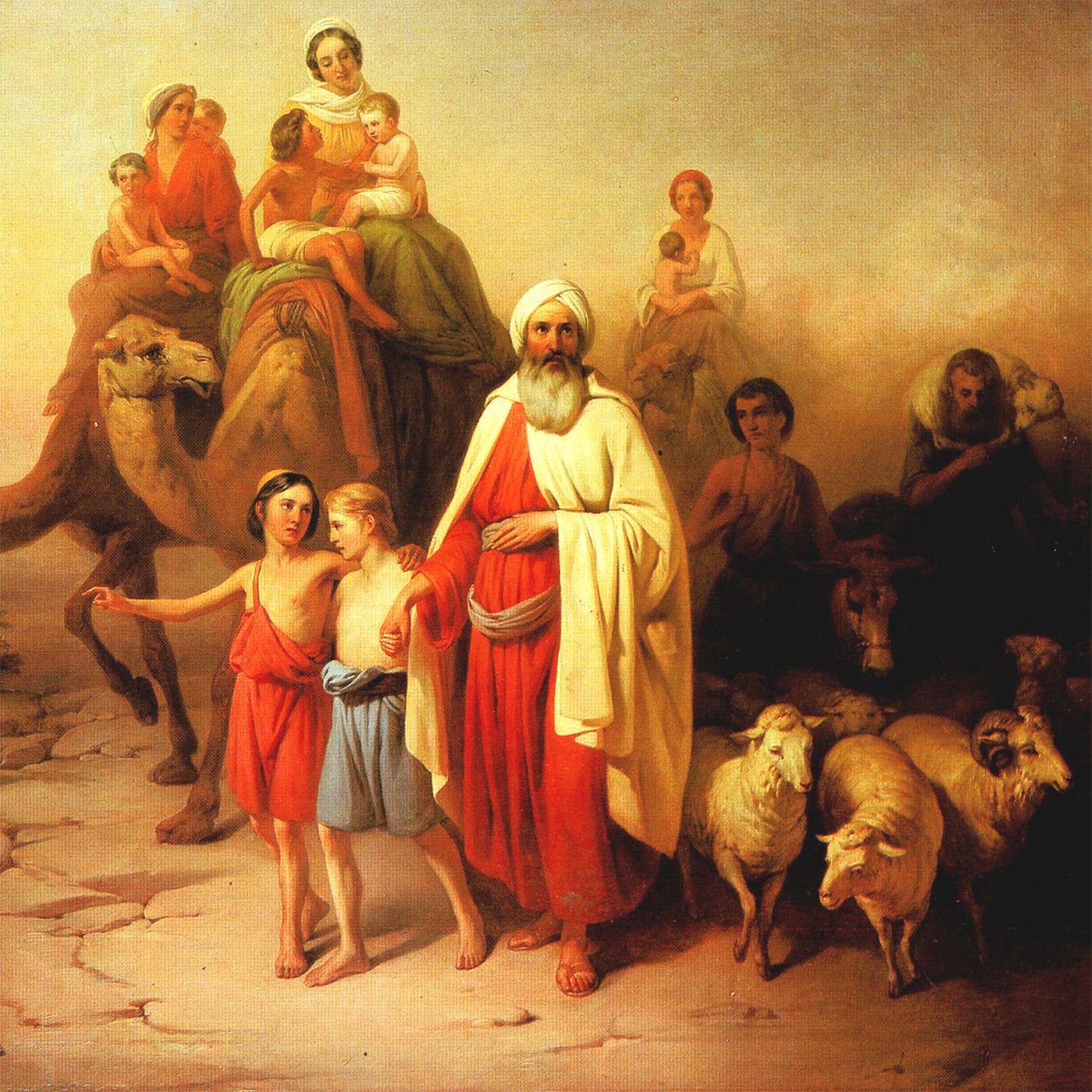
On their long, difficult, and sometimes discouraging journey far from the comforts of the Shire, Tolkien’s Samwise Gamgee told Frodo Baggins to remember the old stories: “Folk in those stories had lots of chances of turning back, only they didn’t. They kept going. Because they were holding on to something.” Those of us walking together on the long, difficult, and sometimes discouraging journey of faith may each ask ourselves the questions: “Why should we refuse to turn back?” or “How can we encourage others to continue the journey?”
For a devoted person of faith in a contemporary culture that tends to view such folks with mild derision if not contempt, it becomes clear that numerous sacrifices are required that are not typically expected of most people. Accordingly, members of society can reasonably pose questions about highly religious individuals who give both time and money for their faith. Two of the leading sociologists of religion, Rodney Stark and Roger Finke, have stated the biggest question of all regarding the highly religious: “Why do they do it?”
In this brief article, drawn from an in-depth study published in Psychology of Religion and Spirituality, entitled “Why Do the Devout Remain Devoted?” we will discuss the most common themes about the demands and costs of religion and note the explanations that highly religious participants offered regarding “why they do it.”
As relational scholars interested in the ways religion and family relationships influence each other, we interviewed 198 racially diverse and religiously devoted families in the American Families of Faith project. Participants reportedly viewed the required costs of religion as “worth it” for various reasons, including the relational benefits they perceived as a result. Below we summarize some of those findings.
Research on Required Costs of Religion
Many participants did not report the costs of religion as a sacrifice but tended to discuss their efforts to fulfill the expectations of their religion as something that they felt they should inherently do. For such persons, the “demands” imposed by religion were not burdensome loads to bear. Instead, these demands were often viewed as noble aspirations that participants wanted and that religion structurally outlined and then facilitated. Three related themes involved: (a) marital expectations, (b) parent/child expectations, and (c) individual expectations. We will discuss each of these, along with illustrative participant quotes.
Marital expectations included many participants reflecting on their firm desire to marry someone within their own religious denomination. A Conservative Jewish husband named Daniel talked about the importance of marriage within Judaism; he said,
Being Jewish within a family of Jews was really important, and marrying Jewish was real important to me. I wanted to be married to someone who had as much in common with me as possible…. There’s a certain framework for life and marriage in Judaism.
Other expectations consisted of conduct within the marital relationship. The meaning of marriage was expressed by a Christian husband named Mark, who said, “We believe that the marriage is created through vows. Vows are a covenant before God. Therefore, we have vowed before God that we would stay married.” For participants, such vows and covenants made were expected to be upheld and honored with fidelity, along with expectations to care for children born into the marriage. Yes, these are responsibilities … but they were welcomed ones.
Parent and child expectations, in most cases, consisted of the responsibility a parent felt to raise their children in the faith. Mahmoud, an Arab Shi’a Muslim father, expounded, “I think as parents, we should take care of the kids because there are rules that we have in our religion that parents are responsible to raise their kids [with] both morals and religion. It is [the parents’] responsibility.”
Children in these families were also reportedly taught to follow the commandment to “Honor thy father and thy mother.” Jing, an Asian Christian husband, explained,
We br[ought] our kids to church and Sunday school. We read the Bible to them when they were young. This summer, my father was ill. I went back to China to take care of him. I have this responsibility to take care of my parents. Like the teachings in the Bible: “respect your parents” …. [My] children would learn and know how to treat their parents later. We should [always] respect our parents.
Religious expectations, however, are not only familial or marital. Individual expectations were often discussed in “shoulds” and “supposed to(s)” among participants. An Orthodox Jewish husband, Saul, said,
[T]here’s a conduct you have to maintain, and there’s a modesty you have to maintain. And there’s ethics … this is how you are supposed to be, and you know in your heart and your mind that it really is G-d’s way; it’s the intended way. It’s the right way, that you’re doing the example, of living the example you are supposed to be.
In summary, some of the costs of religious devotion were alternately framed by devotees as lofty expectations or noble aims worthy of pursuit. Our research found that many religious individuals embrace these “expenses,” not as costs but as a pathway to a higher way of living and relating.
Research on Relational Benefits from Religion
We will now further discuss reported motivations behind why some highly religious individuals desire to uphold these expectations. Relational compensators (or benefits) were the most apparent “blessing” that participants reported. The most frequently identified blessings from devotion included improvements in (a) family relationships, (b) their relationship with God, and (c) relationships in the faith community. Jocelyn, a Black Baptist wife and mother, said,
[B]eing involved in church has strengthened my family [and] my marriage…. [T]he most important thing that [church] has done is helped us as a family and with our marital relationship, our raising of the children and bringing them, leading them, to Christ. There’s just no way that would have happened outside of a relationship in the church.
A Christian father named Andy also talked about how his relationship with God provided him comfort and peace. He disclosed,
I think … [our faith] provides a security blanket. You know that no matter what’s going on around you, there is some constant that’s there, and that’s God. You know that He’s never changing, and He’s going to be there. And we can bring all of our problems and cares to Him. And there is that foundation that … it’s unmovable. It’s not going to be shifted around with whatever is going on in the rest of the world.
Many participants emphasized that their religious community provided deeply supportive relationships that they compared to extended “family.” Aaliyah, an Arab Muslim wife and mother, remarked how she viewed her faith community,
That’s a special bond. You … feel like you are part of an extended family, [a] much bigger family … because when it comes down to [it], when we have a death in the family [or] somebody gives birth, they come together. They come and visit you. They’ll come and cook for you, that support is there…. With the community, when you are involved in the community, and you participate, and when you are in a time of need, then they come to you and give you that support.
Not only did participants receive these benefits, but they also reported providing these benefits to others inside and outside their families. A Catholic husband and father named Malcolm illustrated this point beautifully,
We have a motto in our community, “Make a friend, be a friend, bring a friend to [Christ].” And if you open yourself up and you are aware, and you try to be there when somebody needs help, then usually it does start friendship, and it usually grows.
Many participants felt that when they chose to serve in their faith community, they were more than equally reimbursed for their time and effort in new or fortified relationships. Timothy, a nondenominational Christian, said, “We need each other to bless each other and build each other up and encourage each other and support each other and teach each other and all that stuff…. The unity, that’s what [God] wants.” Timothy’s reflection illustrates the Christian ideal that “Greater love hath no man than this, that a man lay down his life for his friends.”
Again, a sense of increased unity with family, God, and the faith community reportedly strengthened many study participants in ways that were found to be worth the sacrifice of religious “costs.”
Expectations and Benefits Build Each Other
One complex finding from our study leads us to believe that both religious expectations (costs) and relational compensators (benefits) do not function alone, but in tandem. Specifically, many religious demands or expectations also allegedly served as relationship strengtheners and fortifiers. Tucker, a father and husband from The Church of Jesus Christ of Latter-day Saints, offered examples of expectations that lead to relational benefits. He stated,
Whether it be keeping our [religion’s] “Word of Wisdom” which [tells us to] avoid alcoholic drinks and tobacco, [harmful drugs], coffee, tea, etc., [or] whether it be in [paying] tithing and keeping the Sabbath day holy and all these principles that are [not in line with mainstream] culture, you have to make some pretty serious commitments in order to be an active Latter-day Saint. [But] as a result of those commitments … you can go anywhere in the world as a Latter-day Saint and go into a congregation, and you will be welcomed as a family member, a long-lost family member. Someone will put their arm around you and welcome you.
For Tucker, the difficult demands and “pretty serious commitments” of his faith seem to be the dues to a cherished community that serves as a “family.”
A Seventh-day Adventist wife, Carmen, talked about her purpose in life and articulated, “You’re not here for yourself. You’re here to do, to live your life for God’s service and for other people.” Carmen struck a chord that related to the experience of the other families of faith. Many participants reportedly felt how the weighty expectation of providing service and support to others was directly correlated to the benefits that they witnessed in their own lives.
One father we interviewed allowed us to step onto his sacred ground by discussing his beloved daughter Megan who had passed away at age six following an extended battle with leukemia. Her father recalled:
[My wife and I] went to give blood at a blood drive [at our church], and our [Bishop] was there giving blood. He’d visited Megan in the hospital a couple of times and prayed with her. … Megan went over and held his hand while he had that blood drawn, because she knew what it was like to have needles poked in your skin, and she felt for him. She couldn’t do much, but she could hold his hand, and she did that. The impact that has on me just tells me that a little bit of loving concern for others goes a long way, not just in the life of either person in the interaction but in the people who see that. It makes you want to go forth and do likewise.
Like this father, inspired by his daughter, many American Families of Faith participants did not see service solely as a burden but rather as a source of meaning. Indeed, many reportedly viewed these religious expectations of serving others through giving money, time, and energy as an effective avenue to give blessings to others and also to themselves. We are reminded of the words of Dorothy Dix, “Make no mistake about it, responsibilities toward other human beings are the greatest blessings God can send us.”
Tolkien’s wizard Gandalf said, “Some believe it is only great power that can hold evil in check. But that is not what I’ve found. I found it is the small things. Everyday deeds by ordinary folk that keeps the darkness at bay.” These “small things” and “deeds” of service seem to have helped many of the highly religious individuals we interviewed to find deeper purpose.
Conclusion
In closing, we return to Stark and Finke’s burning question about the highly devoted: “Why do they do it?” From some participants, enriched relationships with family, God, and their faith community were seen as compensators or blessings that were well worth the sacrifice, the trouble, the labors of the journey, and the “fight” with the world. Such persons and families, like Samwise Gamgee, believe “that there’s some good in this world, Mr. Frodo. And it’s worth fighting for.”