Note: This is the second article in a three-article series on The Family: A Proclamation to the World.

Mothers are not as appreciated as they should be. Not yours, not ours. One low point of ingratitude that many readers will recall is the melodic line from Saturday’s Warrior that intones, “Zero population is the answer, my friend.”
However, we first-world nations are getting a rude wake-up call. A primary and ever-worsening concern in most developed countries is “below-replacement level” population rates low enough to weaken the base of the population pyramid in nations like the United States. Harvard-trained economist Catherine Pakaluk recently summarized in her book-length study Hannah’s Children,
The political and economic consequences of these trends cannot be overstated. Below- replacement fertility in the United States imperils every New Deal-era entitlement program, every state pension program, and the future of economic prosperity as workers become scarce.(1)
So, given that zero population growth is not the answer but the problem, what is the answer? Pakaluk demonstrates that social policy has little power to push the fertility needle upward and posits that significant commitment to “religion [is] the only effective family policy”(2) that can promote measurable change in some families. Indeed, social science has repeatedly found that religiously involved women are more likely to remain married, to become married mothers, and to have more children.(3) Perhaps we should go back to the beginning—Genesis, to be precise.
At the Beginning: Eve as the Mother of All Living
In connection with God’s command to “Be fruitful, and multiply, and replenish the earth” (Genesis 1:28), President Dallin H. Oaks has taught that Eve’s act was “a glorious necessity to open the doorway toward eternal life” and that we are to “celebrate Eve’s act and honor her wisdom and courage in the great episode called the Fall.”(4)
Former counselor in the General Relief Society Presidency, Sheri Dew, observed, “Of all the words they could have chosen to define her role and her essence, both God the Father and Adam called Eve ‘the mother of all living,’ and they did so before she ever bore a child. … Motherhood is more than bearing children. … It is the essence of who we are as women.”(5)
Writing about Eve and her decision to partake of the fruit, Professor Valerie Hudson said, “Only a daughter of God could open the door to mortal life for God’s children. … Eve was perhaps the most courageous and wise of all God’s daughters … .”(6) Hudson also posited that as one “who would bear the responsibility of bringing all of the children through the doorway, and risk [her] life in this task, [she] had the right to make that decision.”(7) How grateful we are for our own mothers who made “that decision” in their own time and welcomed us into mortal family life with courage and at a sacrifice beyond price.
Motherhood is “Too Expensive”: A Cultural View
Motherhood involves significant time, effort, and forgoing of various personal freedoms. It is perhaps the most profound expression of personal sacrifice for another. In a world in which autonomous pleasure-seeking is considered “the good life,” motherhood can appear far too expensive. Given this considerable, perhaps inestimable, expense, many wrestle with the Proclamation’s statement: “Mothers are primarily responsible for the nurture of their children” (para. 7).
Feminism in the United States and The Church of Jesus Christ of Latter-day Saints have an intriguing history. The roots of the women’s suffrage movement are a rich starting point. Lisa Reeves, currently doing graduate work at Harvard, recently “verified with the church history department that on her death bed Susan B. Anthony took off her ring and instructed for it to be sent to her dear friend, fellow suffragette, and General Relief Society President Emmeline Wells.”(8) It is important to note that significantly preceding the 19th Amendment in 1920, the first four states to grant women the right to vote were Wyoming and Utah (1869-70), then Colorado (1893) and Idaho (1896). Each of these states had relatively heavy Latter-day Saint populations and influence.
However, as feminism broke into additional “waves” (in the 1960s and 1990s), the distance between first- and second-wave feminism and the Church began to grow over core issues, including motherhood, marriage, and family.
For many first-wave feminists, the needed push for greater equality between men and women meant that motherhood itself compromised the progress of women. The work of caring for another dependent soul meant that women had to “subordinate their personal objectives” in doing the non-prestigious work of feeding, clothing, and cleaning another dependent life again and again and again. Such work was clearly not a path to power and success. So why should women have to do it?(9) Caregiving labor became identified with women’s oppression. Children came to be viewed as a liability—expensive, inconvenient, and an encroachment on personal fulfillment. In the eyes of some, fairness seemed to demand her liberation from such work and the family responsibilities associated with it.
But rather than challenge the attitudes that had devalued women and call men into greater participation in this most important work of nurturing life, the new woman advocated for by radical feminists ironically looked more like “the old man” they had criticized.(10) By crossing the line into contempt for motherhood, feminist ideas that had intended to elevate women became self-defeating. The “new woman” meant embracing a view of life that rejected the world of the traditionally feminine. Only achievements measured by public recognition, financial remuneration, and prestige (those markers that had defined success in a “man’s world”) had meaning. Caring for the vulnerable, including children, was viewed as a transition of loss for women.
Certainly, women have benefitted from feminist efforts to secure educational, professional, and political opportunities. But an honest look at the increased feminization of poverty, out-of-wedlock childbearing, and decreased happiness among women also reflects the challenges resulting from dismantling the protections of the institutions of marriage and family that had been identified as women’s “enemy.”(11)
In the decades since, with a world awash in an epidemic of loneliness and a crisis in meaning, identity, and purpose, we witness why the core relationships of life that we call family are not the enemy, nor is it merely the “backdrop” for the Plan. The family is the Plan—for women as well as men.
Motherhood is So Expensive It Requires Consecration: A Gospel View
Former Relief Society General President Sister Julie B. Beck taught that “without the family, there is no [eternal] plan; there is no reason for mortal life.”(12) In the Proclamation, prophets testify of all three elements Sister Beck outlined: 1. the Family, 2.“the Creator’s plan for the eternal destiny of His children,” and 3. the “sanctity of life and of its importance in God’s eternal plan” (para. 5).
If life matters, then a mother matters, for without her, there is no life. If eternal life matters, then a mother matters eternally, for without her, there is no eternal life. Giving mortal life, however, is profoundly expensive—so expensive that it is not merely a sacrifice but something more. Elder David A. Bednar affirmed: “The word consecrate means to develop and to ‘dedicate to a sacred purpose.’ …The best application of the principle of consecration that I can think of, being developed and dedicated to a sacred purpose, is motherhood.”(13)
In Latter-day scripture, the relationship between “light” and “life” is especially close—with Jesus being called “the light and the life of the world; yea, a light that is endless, that can never be darkened” (Mosiah 16:9).(14) It is therefore both fitting and beautiful that “the Spanish phrase for giving birth, dar la luz [means] ‘to give the light’” (Hudson & Miller, 2012, p. 39). This may also add greater insight into the divine calling of a mother when Jesus Himself says, “And whoso shall receive one such little child in my name receiveth me,” the light of the world (Matthew 18:5). Again, how grateful we are for the mothers who “received” us and gave us light and life.
A Social Science Look: Righteous Mothers Not Only Give Life, They Make It Better
A 1942 First Presidency statement proclaimed, “Motherhood is near to divinity. It is the highest, holiest service to be assumed by mankind. It places her who honors its holy calling and service next to the angels.”(15) President David O. McKay declared: “Motherhood is the greatest potential influence either for good or ill in human life. The mother’s image is the first that stamps itself on the unwritten page of the young child’s mind. It is her caress that first awakens a sense of security, her kiss, the first realization of affection; her sympathy and tenderness, the first assurance that there is love in the world.”(16)
These gifts of a first “sense of security,” first kiss, first touch, and “first assurance that there is love in the world” referenced by President McKay were later packaged into the phrase “maternal sensitivity” by attachment theorist and psychologist Mary Ainsworth. Ainsworth and colleagues found that this essential “maternal sensitivity” and mother-child attachment mattered well beyond infancy.(17) One leading family therapist and researcher summarily emphasized that “The first six years of life are when the template for later life is set down.”(18) Even so, potent influences and connections are also evident during the teenage years:
Studies consistently indicate that adolescents who report telling their mothers where they are going and what they will be doing after school and on weekends also report lower rates of alcohol misuse, drug use, sexual activity, and delinquency. Children’s academic success and healthy behaviors have also been tied to their mothers’ involvement in talking with them, listening to them, and answering their questions.(19)
A recent Wheatley Institute Brief Report(20) further highlights the following four social science findings regarding mothers’ influence not only in childhood but “throughout life”:
1 – “Maternal sensitivity to their infants has been identified as the strongest, most consistent predictor of a child’s cognitive, social, and emotional development” (p. 2).
2 – “Mothers are the foundational influence on children’s emotional capacity, and typically the preferred source of comfort in times of stress” (p. 2).
3 – “[M]others draw on their emotional connections to their children as the source of their authority, using more reasoning and flexibility in carrying out discipline” (p. 3).
4 – “A mother’s early attachment to a child through responsive, consistent bonding has been repeatedly shown to shape personality development, behavior, and social capacity, including the ability to form healthy attachments with others throughout life” (p. 3).
“Circumstances May Require Individual Adaptation”
With respect to various work arrangements and life challenges that mothers face, former counselor in the General Relief Society Presidency, Sister Cheiko Okazaki, urged and encouraged the “women of the Church to be supportive and sharing, to refrain from judging one another, and to remember that circumstances often constrain choices.”(21)
President M. Russell Ballard similarly emphasized,
Each of you must come to know what the Lord wants for you individually, given the choices before you. Once you know the Lord’s will, you can then move forward in faith to fulfill your individual purpose. One sister may be inspired to continue her education and attend medical school. For another sister, inspiration may lead her to forego a scholarship to a prestigious institution and instead begin a family much earlier than has become common in this generation.
Is it possible for two similarly faithful women to receive such different responses to the same basic questions? Absolutely. What’s right for one woman may not be right for another. That’s why it is so important that we should not question each other’s choices or the inspiration behind them.(22)
Mothers, “This is Your Great Day”
Whatever our context, Sister Marjorie P. Hinckley has reminded mothers to “have joy in your mothering … don’t wish away your days of caring for … children. This is your great day.”(23)
We conclude this article with the following thoughts of the first author, who is a mother herself:
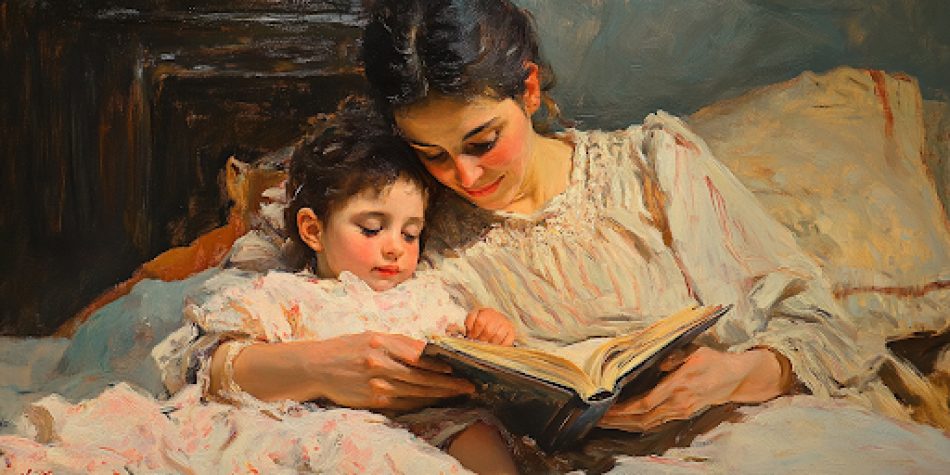
Who could measure the privilege of creating within one’s own body the body of another? Where in all the world can there be greater power than this? I recently sat beside a new mother. Her infant, just 6 weeks old, was still struggling to nurse and bottle feed. His utter dependence struck me. He gazed directly into his mother’s face, locking his eyes on hers. In spite of having no real capacities, it was clear that he recognized her. I could see in his eyes that she was his entire world. For a second, his mouth broke into a smile, and I watched her exhaustion give way to radiance. Can we possibly measure what it means to the expansion of our own purpose, meaning and identity, to bring another life into being and to be their entire world? To quite literally enter eternity, becoming part of the past and the future forever? To have the privilege of knowing and witnessing the divinity of another and to make possible their eternal life? This is what motherhood means.
References:
(1) Pakaluk, C. R. (2024). Hannah’s Children. Regnery Gateway. (p. 30).
(2) Ibid, p. 337
(3) Marks, L. D., Dollahite, D. C., & Freeman, J. J. (2012). Faith and prayer in family life. In A. J. Hawkins, D. C. Dollahite, & T. W. Draper (Eds.), Successful marriages and family life (pp. 185–195). BYU Studies.
(4) Oaks, D. H. (1993, November). The great plan of happiness. Ensign, 32, 72-75. (Quote from p. 73). See also Hawkins, A. J., Spangler, D. L., Hudson, V., Dollahite, D. C., Klein, S. R., Rugh, S. S., Fronk, C. A., Draper, R. D., Sorensen, A. D., Wardle, L. D., & Hill, E. J. (2000). In D. C. Dollahite (ed.), Strengthening our families: An in-depth look at The Proclamation on the Family. Bookcraft.
(5) Dew, S. L. (2001, November). Are we not all mothers? Ensign, 96-97.
(6) Hudson, V. M., & Miller, R. B. (2012). Equal partnership between men and women in families. In A. J. Hawkins, D. C. Dollahite, & T. W. Draper (Eds.), Successful marriages and family life (pp. 38-48). BYU Studies (p. 39).
(7) Hudson, V. (2010). The Two Trees. Speech delivered at the 12th Annual FairMormon Conference. Salt Lake City, UT; as cited in M. W. Brown (2020), Eve and Adam. Deseret Book, p. 91).
(8) Personal email communication to the second author, January 19, 2025.
(9) Polatnik, M. R. (1983). Why men don’t rear children: A power analysis. In J. Treblicot (ed.), Mothering: Essays in Feminist Theory. Roman and Allanheld (p. 35).
(10) Elshtain, J. B. (1982). Feminism, family, and community. Dissent, 29, 442-449.
(11) Erickson, J. J. (2014). Motherhood: Restoring clarity and vision in a world of confusing messages. In B. L. Top & M. A. Goodman (eds.), By divine design (pp. 161-191). BYU Religious Studies Center/Deseret Book.
(12) Beck, J. B. (2011, March). Teaching the Doctrine of the Family. Ensign.
(13) Bednar, D. A. (1999). Your Whole Souls as an Offering Unto Him. Ricks College Devotional, January 5, 1999. Retrieved November 15, 2012
(14) See also Doctrine & Covenants 88:13; Doctrine & Covenants 93:9.
(15) The First Presidency (1942, October). The message of the First Presidency in Conference Report 759, 761.
(16)McKay, D. O. (1983). Gospel ideals: Selections from the discourses of David O. McKay. Deseret Book (p. 452).
(17) Ainsworth, M. D. S., Blehar, M. C., Waters, E., & Wall, S. (1978). Patterns of attachment. Erlbaum.
(18) Doherty, W. J. (2000). Take back your kids. Sorin.
(19) Erickson, 2014, (p. 175).
(20) Erickson, J. J., & Carroll, J. S. (2024). It takes two: What we learn from the social sciences about the importance of mothers and fathers and divine complementarity in parenting. Wheatley Institute; See also full-length article: Erickson, J. J. (2023). It takes two. BYU Studies Quarterly, 62: Iss. 1, Article 2.
(21) Okazaki, C. N. (1994, November). Rowing your boat. Ensign, 24, 92–94. See also Hawkins et al., 2000, p. 73.
(22) Ballard, M. R. (2019, July 23). Women have remarkable influence [Status update]. Facebook.