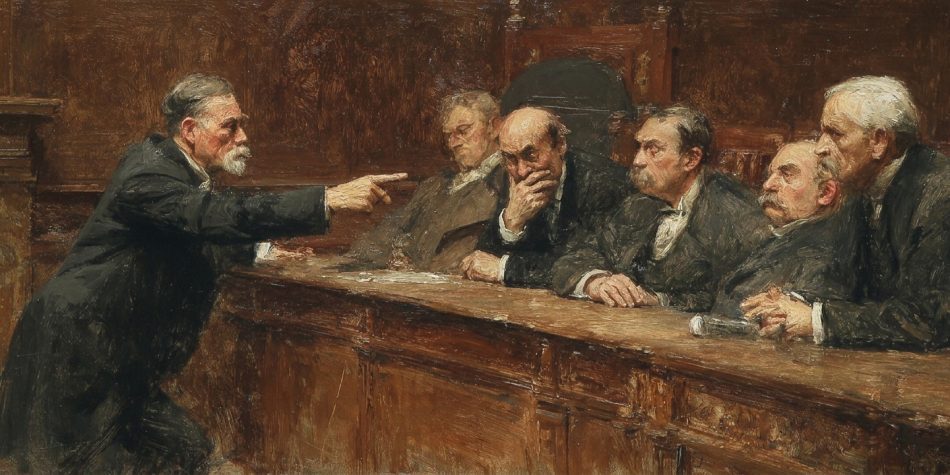

Dignity. That’s what’s missing from our politics.
Leadership isn’t just about what you do; it is about how you do it. At the core of our humanity lies a profound longing for our dignity to be recognized—for the inherent worth of each of us to be acknowledged. As scholar Donna Hicks has written in her book Dignity: Its Essential Role in Resolving Conflict, “When we feel worthy, when our value is recognized, we are content. When a mutual sense of worth is recognized and honored in our relationships, we are connected.” Effective leaders facilitate relationships by cultivating recognition and respect for the dignity of others. Unaddressed dignity violations destroy connection, smothering progress and development.
The Constitution of the United States is built for disagreement. It not only expects conflict but channels it: elections instead of coups, courts instead of tyranny, justice over arbitrariness, and persuasion over coercion. But no amount of constitutional design can substitute for a culture where people choose to recognize one another as fully human. Dignity is not the opposite of conviction. It is the opposite of contempt.
Leaders set in patterns of disparagement and contempt damage this culture. If we want a healthier political culture, we need to name the patterns in political leadership that are harming us and seek leaders who implement principles of dignity in their leadership styles.
Why Dignity Collapses in Politics
The tendency to aggrandize oneself and demean others is, ironically, rooted in a lack of self-confidence. As Hicks further describes in her book, “The temptation to save face is as powerful as our fight-or-flight instinct … The dread of having our inadequacy, incompetence, or lack of moral integrity made known is enough to … do whatever it takes to protect ourselves.”
That instinct shows up in politics as a familiar set of moves: avoiding, deflecting, dodging, and attacking instead of taking responsibility. It shows up as blaming rival administrations, condemning entire organizations or groups of people, and ostracizing opponents. It shows up as othering.
While “othering” enemies is an oft-used war tactic, promoting dignity is a more effective approach to leadership because it harnesses individuals’ excellence. Honoring dignity promotes the self-respect necessary for proactive and practical greatness. You change people by introducing them to their goodness rather than demeaning them. Perceiving and appreciating the dignity of others helps to unlock their creative potential.
I share five ways that politicians—and anyone, really—can emphasize the dignity of others in their leadership. For additional ideas, check out some of the resources provided by Project UNITE.
Principle 1: Lead by Recognizing Inherent Value, Especially in Your Opponents
If dignity is the acknowledgment and recognition of every individual’s inherent value, then the first test of leadership is simple: Do you talk about political opponents as fellow citizens, or as inferior people who must be shamed, crushed, or erased?
Dignity-honoring leadership sounds like speaking to the whole country, not just to your coalition.
Notice that neither party has a monopoly on contempt or on dignity. It isn’t about ideology; it’s about integrity of character. On the left, dismissive rhetoric tossing entire communities into a moral rubbish heap has become a shorthand example of what it feels like to be written off. On the right, language declaring opponents “enemies,” “traitors,” or “enemy of the people” functions the same way—less as a critique of behavior than as a declaration that the other side is illegitimate. Dignity collapses when leaders use labels that convert people into caricatures, treat disagreement as proof of moral inferiority, and popularize contempt as entertainment.
This matters because contempt is contagious. Once leaders model it, followers feel permission to practice it.
Principle 2: Sidestep Shame and Blame to Get to Problem Solving
The strongest leaders are able to sidestep shame and blame in order to problem-solve. Rather than wasting energy on contempt, the most effective leaders focus on taking responsibility for what they can control and drawing out the goodness of others.
Dignity-honoring leadership, here, looks like owning mistakes without theatrics and naming trade-offs and limitations honestly. It means replacing scapegoats with solutions. Both parties have had their moments of success and failure.
In the frantic days after Sept. 11, 2001, Republican Rep. John Cooksey of Louisiana suggested pulling over anyone who looked “Middle Eastern,” including anyone with “a diaper on his head” with a “fan belt wrapped around” it. In 2018, Democratic Rep. Maxine Waters of California urged supporters that if they saw members of the Trump administration “in a restaurant” or “a gasoline station,” they should “create a crowd” and “push back,” telling them they were “not welcome anymore, anywhere.” In both cases, these are politics of humiliation that smother problem solving.
Dignity-violating leadership like this makes a sport of blaming. It treats every setback as proof that others are incompetent, corrupt, or inferior. It assigns villain status to whichever target is useful that week: the previous administration, the media, the courts, the bureaucracy, immigrants, corporations, extremists, woke elites, or religious fanatics. The labels change. The psychological pattern does not. Shame and blame feel powerful in the moment, but they suffocate progress and development. The strongest leaders are able to sidestep shame and blame to get to problem-solving rather than wasting energy on contempt.
Principle 3: Resist “othering”—because it builds fear, not strength
Some leaders believe that “othering” rhetoric promotes unity among the in-group. It often does—briefly. But it actually and ultimately engenders fear. And when our psychological safety is at stake, we are, as Hicks describes, thrust into “a frozen state of self-doubt, preventing us from accessing the positive power that is at our disposal once we see and accept our value and worth.”
The fear isn’t limited to outsiders. I’m part of the in-group now, but what if I’m the next one to be cut out? It seems fine until you are the one getting “othered.”
Consider how President Trump othered his rivals, complaining that he had to fix “disasters” and “failed policies” inherited from a “totally inept group of people.” President Trump went on to say that “President Biden totally lost control of what was going on in our country.” Perhaps his task was difficult, but by claiming it was others who caused or failed to solve problems, he suggested he was somehow above them.
Shame and blame feel powerful in the moment.
Dignity-violating rhetoric treats entire groups as suspicious, disposable, or beneath respect. It publicly humiliates opponents in an attempt to signal dominance. It turns politics into a permanent purge: who’s in, who’s out.
Principle 4: Negotiate and Govern by Acknowledging Dignity First
Politics is negotiation—between regions, classes, generations, cultures, and moral codes. An effective negotiator acknowledges the dignity of any leaders’ attempt to protect their people, then moves forward to interest-based solutions.
Honoring human dignity begins with a basic posture: You are a human being with worth; now let’s argue honestly about what is right. In practice, this means starting with shared goods—safety, opportunity, freedom, flourishing—and treating opposing concerns as real, not fake. It means keeping criticism tethered to actions and ideas. It means arguing about ideas instead of attacking people.
Contempt can’t do this work. Emphasizing weakness, antagonizing, and enflaming hatred may feel like strength, but it is often simply avoidance veiled in camouflage. The alternative is the discipline of honoring dignity up front, and then digging into the substantive work of negotiating interest-based solutions. You can see flashes of that discipline when leaders refuse the cheap thrill of televised dunking and instead build coalitions around shared goods like stability, safety, and opportunity. Sometimes that looks like cross-party pairs who learn to argue honestly without degrading—think of bipartisan efforts like McCain–Feingold’s campaign finance work, or the strange-bedfellow coalitions that produced criminal justice reform in the First Step Act. Sometimes it looks like the unglamorous willingness to split credit and share blame, like the 1983 Social Security compromise shaped by Speaker Tip O’Neill and President Reagan’s team.
Both parties have been tempted by the cheap thrill of televised dunking. But doing the substantive work turns the theater of humiliation into governance.
Contempt doesn’t negotiate; it escalates.
Principle 5: Praise The Good In Others More Than Emphasizing the Negative
Honoring dignity will always be more effective than fostering disparagement and contempt. Honoring dignity promotes the self-respect necessary for proactive and practical greatness.
Contempt can’t do this work.
Leaders from both parties have had rare, powerful moments when they described the other side’s voters as understandable—neighbors motivated by real fears and hopes—even while fiercely disagreeing. You can hear it when Joe Biden, in his 2020 victory speech, told Americans to “lower the temperature,” reject the language of “red” and “blue,” and treat one another not as adversaries but as fellow citizens. You can hear it, too, when Republican Gov. of Utah Spencer Cox’s call to “disagree better” warns Americans not to slip into the habit of treating one another—especially our political opponents—as enemies.
And leaders from both parties have had destructive moments when they spoke as if the other side’s voters were beneath respect. The difference is not cosmetic. It is structural. Their language either builds trust in institutions and the rule of law, or it erodes it.
The Good News
The good news is that violations of dignity can be named, tamed, and healed; this rebuilds the civic trust on which strong communities are built and unleashes the inherent power of dignity.
Don’t be fooled by righteous indignation masquerading as political victory. Leaders (and each of us) can build this dignity dimension by praising the good in others rather than overemphasizing the negative, accepting responsibility for our actions, and choosing to popularize dignity validation.
Although I have focused on broader principles of dignity, there is no question that there are politicians today who have violated these norms with increasing frequency and severity. The sanctity of holding political office has been tainted by demeaning nicknames, dehumanizing political opponents, and contempt filled with shame and blame, both domestically and internationally. These behaviors are not the sole domain of one party or ideology. But having the most powerful leaders in the world disregard the dignity of others so often and so severely undoubtedly has a coarsening impact on our entire national discourse.
Elected officials take cues about dignity from those who elect them. It is time for every responsible voter to pause in a moment of deep introspection and ask: Do I really value the inherent dignity of my fellow human beings?
The incentives we create will determine the leaders we get. If we reward humiliation, we will get more humiliation. If we reward dignity, we may yet recover the kind of political discourse where disagreement does not require degradation—and where progress and development are not smothered by contempt.