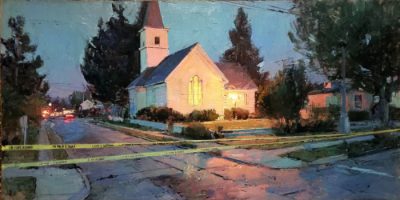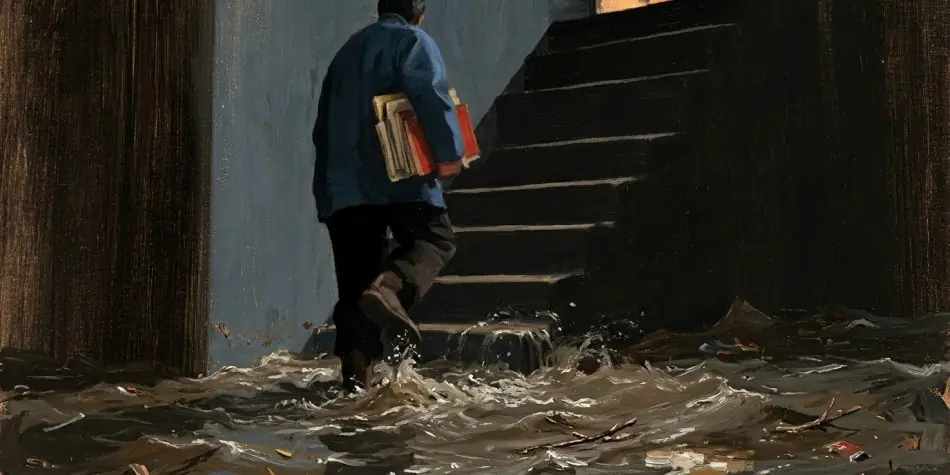
One summer night in 2014, while I was away at a youth camp, the creek running through my family’s backyard began rising with alarming speed. Soon, it spilled over the bank and gushed toward our house. As water burst through the door, my dad ran to my basement bedroom to rescue my journals. At the time, I had kept a daily journal since I was 10, so I had quite a collection. While my bedroom eventually had to be gutted and rebuilt, and many of my belongings did not survive, my most prized possessions—the journals—did.
I was reminded how valuable preserved journals are when I recently attended the Wilford Woodruff Papers conference. Wilford Woodruff was a prolific journal writer who kept a record of each day for 63 years. He began his journal shortly after joining The Church of Jesus Christ of Latter-day Saints, so his records span from the 1830s through the issuance of the Manifesto and beyond. He knew the Prophet Joseph Smith personally and experienced many significant developments in early Church history. Without his documents, later generations would have much less insight into the development of temple doctrine and practices, as well as many other aspects of the Restoration.
Unlike Wilford Woodruff, I am no longer the consistent journal writer of my youth, but I still love writing when I can. While I used to see writing mainly as an obligation for the benefit of future generations, I have come to believe that keeping a journal can also profoundly bless the writer in the present. It is an underemphasized method for building faith that, when combined with practices like prayer and scripture study, can strengthen our relationship with Heavenly Father and Jesus Christ, regardless of how regularly we write.
To Recognize God’s Hand
When I was 9 years old, President Henry B. Eyring delivered a general conference address that changed my life. Titled “O Remember, Remember,” the talk described how journaling each day about the way he had seen the hand of God in his life strengthened his testimony.
For some reason, this talk lit a fire under me as a young fifth grader. I resolved that I, too, would record the Lord’s hand in my life every day.
Around the same time, I finally took up my parents’ invitation to read and study the Book of Mormon. The text was challenging, and I did not always understand it clearly. But as I read stories of God’s dealings in the past and recorded stories of God’s dealings with me in the present, my testimony began to grow. The practice of journaling helped me see that God was not just a God who worked with the Nephites or the Lamanites; He was a God who worked with Anna.
Wilford Woodruff also believed it was important to record the Lord’s blessings. He said, “Should we not have respect enough to God to make a record of those blessings which He pours out upon us and our official acts which we do in His name upon the face of the earth?”
When my younger sister recently left on her mission to Brazil, I told her the one piece of advice I give all departing missionaries: “Record how you see God’s hand in your life every day. If you do that, you will always have confidence that the Lord is in the work with you.”
He was a God who worked with Anna.
Over time, journaling about these individual encounters helped me maintain a sense of wonder in the work. The Spirit often brought to remembrance a deeper understanding of what had happened that was not always apparent in that moment. I saw small ways things fell into place throughout the day. I recorded when we pushed ourselves to be bolder or to act on a prompting. Writing those moments down gave me courage to do the same the next day.
My daily journaling practice helped me see that the Lord was with me in missionary work every day. This meant that difficult days or weeks without the “success” we wanted and worked for did not feel like God’s abandonment. Knowing He was in the work made it easier to face each day with faith and enthusiasm.
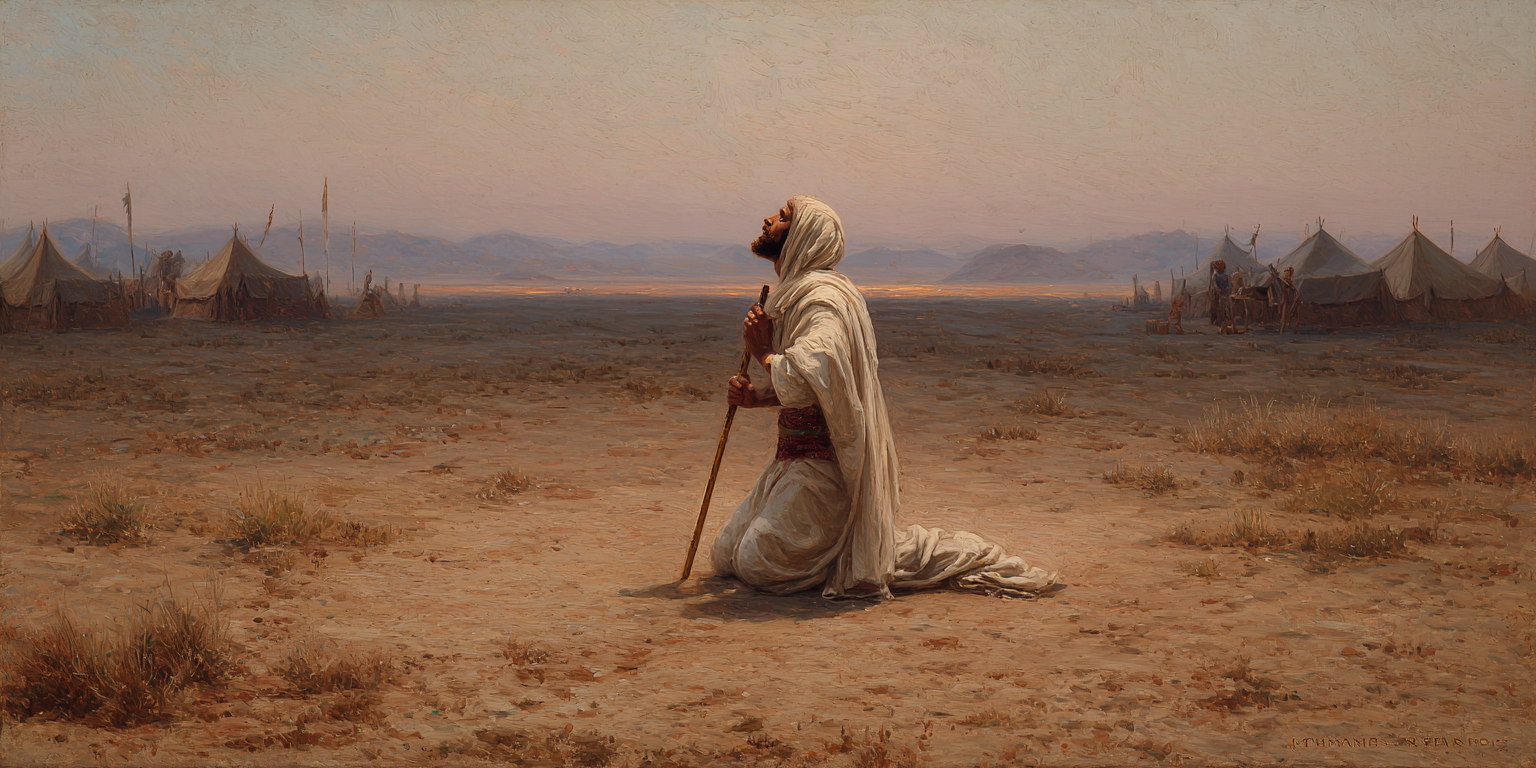
In the years since my mission, I have been much less consistent in my daily efforts to journal about the Lord’s hand in my life. But when I face life’s challenges and sometimes feel that I don’t see or understand God’s hand in my story, I try to return to this practice. It brings me back to the assurance that He is present in my life, giving me daily bread, even if I remain in the wilderness.
Study It Out
I also believe that journaling can be a conduit to revelation. In the early years of college, I remember that my scripture study started to feel flat compared to the powerful spiritual experiences I had as a teenager. I wanted to get more from the scriptures but was struggling to know how.
That changed when I took a religion class where the professor asked us to write for a set amount of time after our study of the Old Testament. We were simply to write freeform thoughts, reflections, and commentary on what we had learned.
At first I was skeptical. What was I going to say? But in time, this practice opened the door to greater insight and revelation. I found that lifting the pen (or sitting down at the keyboard) was itself an act of faith, and that as I did, not just words but insights came to me. I often found it helpful to isolate a phrase or a story from what I had read, then write down a series of my own questions about it. I would then start writing answers to those questions, prompting further reflection. Often, we think we need to receive inspiration before we can write it down. While this can be the case, I also believe that revelation sometimes comes from just starting to write while we ponder (perhaps a corollary to the principle of “open your mouths and they shall be filled” in Doctrine and Covenants 33:8).
We are accustomed to talking about speaking by the Spirit, but I think we sometimes miss the importance of writing by the Spirit as well. In Doctrine and Covenants 24:6, the Lord tells Joseph Smith that “it shall be given thee in the very moment what thou shalt speak and write.” After Joseph and Sidney Rigdon’s vision of the kingdoms of glory recorded in Doctrine and Covenants 76, the Lord commanded them to “write the vision” while they were “yet in the Spirit” (D&C 76:28). To Moroni, who worried about his “weakness in writing,” the Lord still asked him to do it, assuring Moroni that His “grace is sufficient for the meek” (Ether 12:23–26).
In my experience, writing in a journal can open revelation for decision-making. When making a decision, the Lord tells us to “study it out in your mind” (D&C 9:8) and invites us to “reason together” (D&C 50:10; see also Isaiah 1:18). I find that journaling helps me to “study it out” and reason. When I’m trying to make a decision, my mind usually fills with many considerations, and they often point in different directions. Journaling helps me make sense of the many thoughts in my head, honor and weigh each one, and ultimately bring them together. It facilitates reasoning, allowing me to reach an intended course of action and take it to the Lord for further direction.
The Story We Tell Ourselves About God
Finally, I believe that journaling can help us rewrite the stories we tell ourselves about God’s role in our lives, leading to spiritual healing. In recent years, I have often been struck by how Laman and Lemuel talked about leaving Jerusalem. What we see as a journey of deliverance to the promised land was to them a time of painfully missed expectations—a time in which, they said, “we might have been happy” (1 Nephi 17:21).
Suddenly, one thing after another came to me.
I have noticed that I sometimes tell myself my own version of an I-might-have-been-happy story. This kind of story can quickly strain a relationship with God. Instead of seeing how He is working for our good and deliverance, we can easily focus on what is hard and seems unfair. All too easily, this descends into the narrative—even if subconscious—that God wronged us or took away our happiness, creating dissonance in our faith.
For me, journaling has been a powerful way to reclaim my life’s story from the natural man’s story of robbed happiness. It has been a way to put trials in proper context. On one Christmas Eve, during my first year of law school, I was at home alone, in pain and exhausted as I recovered from surgery. The year had been full of difficult mental and physical health challenges, in addition to a very demanding first semester of law school. I questioned why the Lord would lead me to law school when I (at the time) disliked it and was going into debt to pursue it. It had been a mostly miserable year, and now I was spending my break too sick to celebrate with my family at Grandma’s house.
As I lay there feeling sorry for myself, a thought came to me: I should journal about how I had come to know Christ that year. I wanted to push it away because, honestly, I wasn’t sure I had improved at all. But sitting down at the keyboard as an act of faith, I began to write. Suddenly, one thing after another came to me. I saw tremendous growth I had never noticed. I felt humbled as I considered that I had come to know Him better that year, even in a time of great suffering.
More recently, Sister Tamara W. Runia’s general conference talk “The Sculpting of Our Souls” touched me. She talked about reconciling the stories we wished for ourselves with the stories we live:
But what if you had a beautiful story you thought your life was going to tell, and instead you’ve had to surrender that story? That sting is real, and that wound is wide.
It will take your finest faith in Christ to keep putting together the pieces—the ones that make sense but also the ones that don’t.
After general conference, I had the impression to write about several deeply challenging years of my life. I felt inspired to evaluate the story I had been telling myself about those years, then to rewrite my story with greater faith. While journaling, I realized that I had subconsciously told myself that God had let me suffer greatly, that the pain I experienced was unfair for someone trying so hard to be faithful, and that He had arbitrarily withheld certain blessings from me.
But He also comes to us in the depths of it.
As President Camille N. Johnson taught in her October 2021 conference talk, it is hard work to surrender the “comfortable version of our story unedited by the Master Author.” We all form certain expectations for our lives, often for very good things. It can be deeply painful when we realize the story we wrote for ourselves is not the story we are living—and may never be the story we get to live in this life.
But that is where journaling can be a beautiful way to find healing in Christ. It can help us learn, as President Johnson taught, to “[l]et Christ be the author and finisher of [our] story.”
We don’t have to dismiss the painful realities of our lives. Christ does not minimize our pain; He knows its depths. But He also comes to us in the depths of it. Journaling, for me, has played an important role in deepening my sense of that reality and helping me find hope in the One who can make “all things new” (Revelation 21:5).