In 1916, Ernest Shackleton and his men accomplished a seemingly impossible feat requiring complete unity. Their once proud ship had been smashed by the ice flows around Antarctica, and the tight-knit crew was stranded for months on the ice and later on Elephant Island with little hope of rescue.
Shackleton resolved to take five men from his crew to risk the 720-nautical-mile journey back to the South Georgia whaling stations, where he knew he could find help. So they set off through the Drake Passage — the roughest patch of water on Earth. And they did so in a 20-foot open boat — sometimes with oars and others times by sail. The adventurers fought through mammoth waves, screaming winds, crushing ice, and powerful currents with a leaky hull, a lost anchor, and foul drinking water.
When the bedraggled sailors finally entered the small South Georgian cove and hauled the boat onto the rocks, they were heavily bearded, their hair was almost to their shoulders, their faces were black with grime, and their clothes were ragged. They were parched, weak, and pained with frozen blisters, but remarkably, they had successfully returned to South Georgia 521 days after their departure from the island — in a miraculous feat of united courage.
Accomplishments like Shackleton’s simply don’t happen without the principles that produce unity, which is a shared perception of “we-ness” — that we are all in this together. This elusive concept is connected with community, sacrifice, and a responsibility we have as humans towards each other, along with a deep-seated need to strive as a group toward a common goal. At a very basic level, we want to harmonize with those around us — and implicitly recognize its benefits.
Yet unity seems to be increasingly difficult to come by in America today. In an age where we’re literally forgetting why unity matters, it can be valuable to reflect again on what unity actually means — and what brings it into reality. Below, I take up three foundational underpinnings of unity that Shackleton and his men possessed: a shared vision, strong leadership, and mutual acceptance. As simple as they might seem, these patterns work, whether talking about unity in teams at work or unity in our community or nation. So, why not embrace principles so plain and precious? To close the essay, I’ll dig into why unity seems to be unraveling at accelerating rates and what we can do to preserve it in America.
Crucial Building Blocks for Precious Unity
A shared vision. The word “community” comes from the Latin communis, meaning “shared by all” and “in common.” Through social support and the combination of skills from different members of a community, united teams can create products and services of complexity and scale that a talented individual alone could never achieve. Research unsurprisingly shows that cohesive and united teams outperform non-cohesive ones. And choral singers, rowing crews, and work teams are happier, able to withstand more pain, and push themselves harder for others than those out of sync.
Of course, if members of a group have no shared purpose, there is little reason to unify. They are like strangers thrown together in an elevator where everyone will soon exit on a different floor because they see little to no reason to stay with the group. If you want to destroy unity, highlight trivial differences between group members and then use those differences as justification to banish everyone associated with the other side.
Drug cartels aside, unity doesn’t require that group members agree on everything — only that they embrace some kind of an overriding vision or underlying commonality. Even with this shared vision, however, unified team members can still have meaningful differences in how to move towards higher aspirations. Other fundamental differences may also remain, including nationality, religion, ideological beliefs, education, and so on.
But none of this needs to be feared as long as team-members practice respectful contestation — which can prompt everyone to grow. And since no one person has all the gifts and capacities necessary for success in complex matters, unified teams are benefited by people with diverse skills, perspectives, and interests.
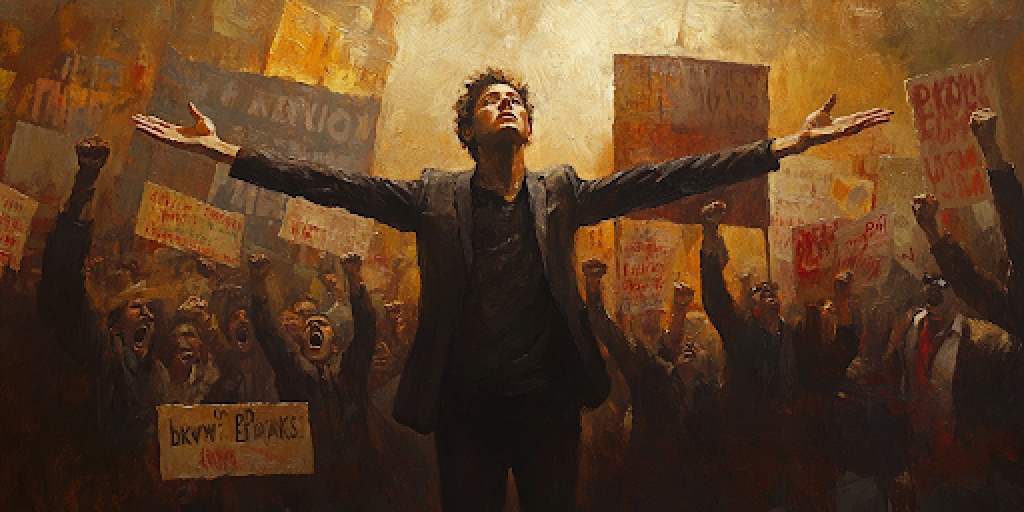
Committed leadership. Effective teams need a unifying vision, but they also require a visionary — someone to clearly articulate why the group matters, convince others to join, actively participate, and not walk away. This includes pointing to past leaders and visions from the past. A Christian leader, for example, might urge others to adopt Jesus Christ’s vision of goodness in the world and embrace that aspiration in their homes and communities.
As the environment and dynamics of a group evolve, successful leaders will adjust a group’s purpose to meet current needs. Without ongoing leadership, group unity left on its own will decay.
Mutual acceptance. Even with strong leadership and a shared vision, without genuine acceptance at a personal level, unity will be hard to come by. Instead, we experience the squabbling and contention increasingly common around us.
Mutual affection and acceptance are conducive to unity because teammates see each other as part of a broader whole — and not just on a conceptual (“vision”) level — at an emotional one. In groups with this kind of cohesion, when one member of the team takes a step toward the shared objective, the teammates rejoice and view it as a shared victory.
How to Disrupt Unity
If unity is fostered through devoted leadership, shared purpose, and mutual acceptance, undermining any of these factors will naturally disrupt group cohesion. If someone were purposefully trying to create discord in American society, they would undoubtedly have success doing the following:
Attack the foundational vision. If you can convince individual team members that their shared purpose is unreachable, pointless, or evil, then at that moment, they are arguably severed from the group. Rather than seeing opportunities for worthwhile effort in exploring ways to improve a flawed vision, often individuals conclude that foundational vision is worthless and move on to some new purpose.
I’ve seen the change in coworkers’ eyes and demeanor when they decide the objective is no longer worth fighting for. It’s a kind of blank aimlessness and the end of unity for them.
The larger consequences for the group are obvious. Regardless of the sport, a team that expects to lose every game will unravel. And if the rising generation never comprehends the vision or never has a chance to accept it, unity will perish as the older generation moves on.
Undermine the leaders. Our news cycles are filled with stories of current and historical political leaders who are under attack — including both national and state leaders — and those leading individual faith communities and organizations. It’s true that not all leaders are seeking the public good — with some seeking genuine unity and others for political dominance under the guise of political unity. Yet, in an atmosphere where all leaders are constantly under fire, we shouldn’t be surprised to see fewer and fewer people trusting all leaders of any kind.
Persuade group members to reject each other. Groups can accept or reject members for reasons that have nothing to do with the shared vision. For example, a church congregation could ostracize someone because of their dress, manners, or reputation, and that rejection could occur even if the congregants and the stranger share the same core beliefs. We may unknowingly or even maliciously exclude others from our group, so conscious effort is always needed to ensure we are sending a message of acceptance from others interested or looking on from the outside.
In sum, if you want to destroy unity, highlight trivial differences between group members and then use those differences as justification to banish everyone associated with the other side. That’s a recipe for unity to collapse and be replaced with nasty, brutish war.
The Urgency of Promoting Unity Today
Like most people in the world, I love my country — my people. I hear the talk of civil war, see the images of discord online or in the news, and feel the loss of those who no longer consider themselves, or me, American. When I look past the inconsequential (and consequential) disagreements constantly encircling us, I still find the core vision that we can strive toward together. The vast majority of US adults (87%) are proud to be American. We still believe the nation should protect our lives, our liberty, and our property from those who would take them away. And the large majority of Americans still support the rule of law and the precepts found in the constitution, the Bill of Rights, and about half of the ten commandments.
To preserve and defend our foundational unity as a country, we must look for additional ways to give our children a chance to learn and internalize a vision of what it means to be an American while supporting leaders who can articulate this for a new generation. And we all need to continue practicing patience with those who share much of this core vision but differ in other insignificant ways.
In doing so, we will be bound in unity and affection and receive the power to accomplish more than a fragmented nation could ever hope to. Much like Ernest Shackleton’s team of adventurers, we can then overcome difficulties and come together to accomplish more than any independent bunch of individuals could ever achieve alone.