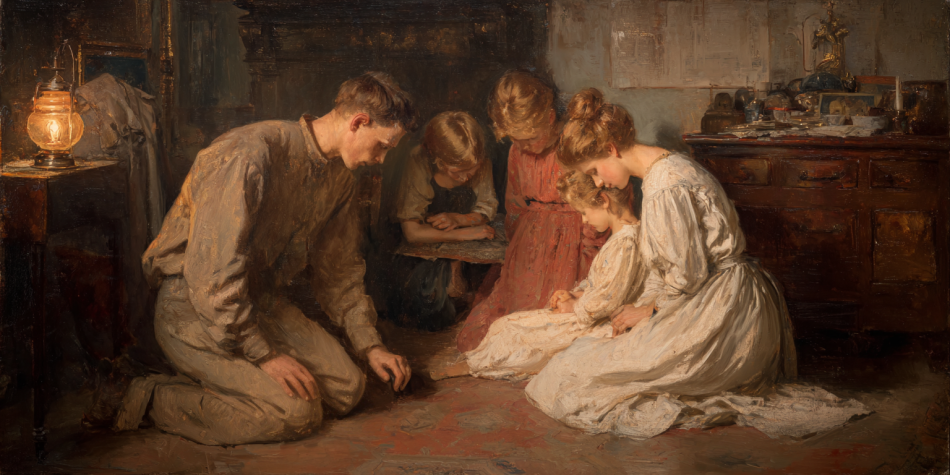
A family kneels in prayer by lamplight, reflecting russell m nelson’s call to peace through devotion and unity.

As Extremism Roars, the Prophet’s Final Word Was Peace

What should believers do amid extremism and grief? They choose peacemaking, refuse contempt, and honor every soul.

Download Print-Friendly Version

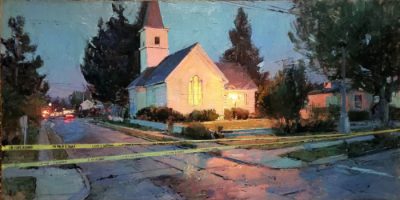
President Russell M. Nelson passed away Saturday evening at age 101. News of his death reached Latter-day Saints worldwide even as many of us were preparing for Sunday worship. Hours later, our community woke to shocking reports from Grand Blanc Township, Michigan, where a gunman rammed a meetinghouse of The Church of Jesus Christ of Latter-day Saints, opened fire, and set the building ablaze. Early counts vary—as is common in breaking news—and investigators are still determining a motive.

These two headlines—one of a prophet’s passing, another of senseless violence—land side by side with painful irony. Only weeks ago, President Nelson offered what now reads like a valedictory charge in TIME: “We All Deserve Dignity and Respect.” He called the world to remember two enduring truths: the divine worth of every person and the duty to love our neighbors with compassion. That was his last public message to the broader world; it is also the right response to the spirit of our age.

We strive for radical civility and moral clarity following Christ. That is our commitment at Public Square, and we try to keep, especially on days like this.

The Prophet’s Consistent Plea

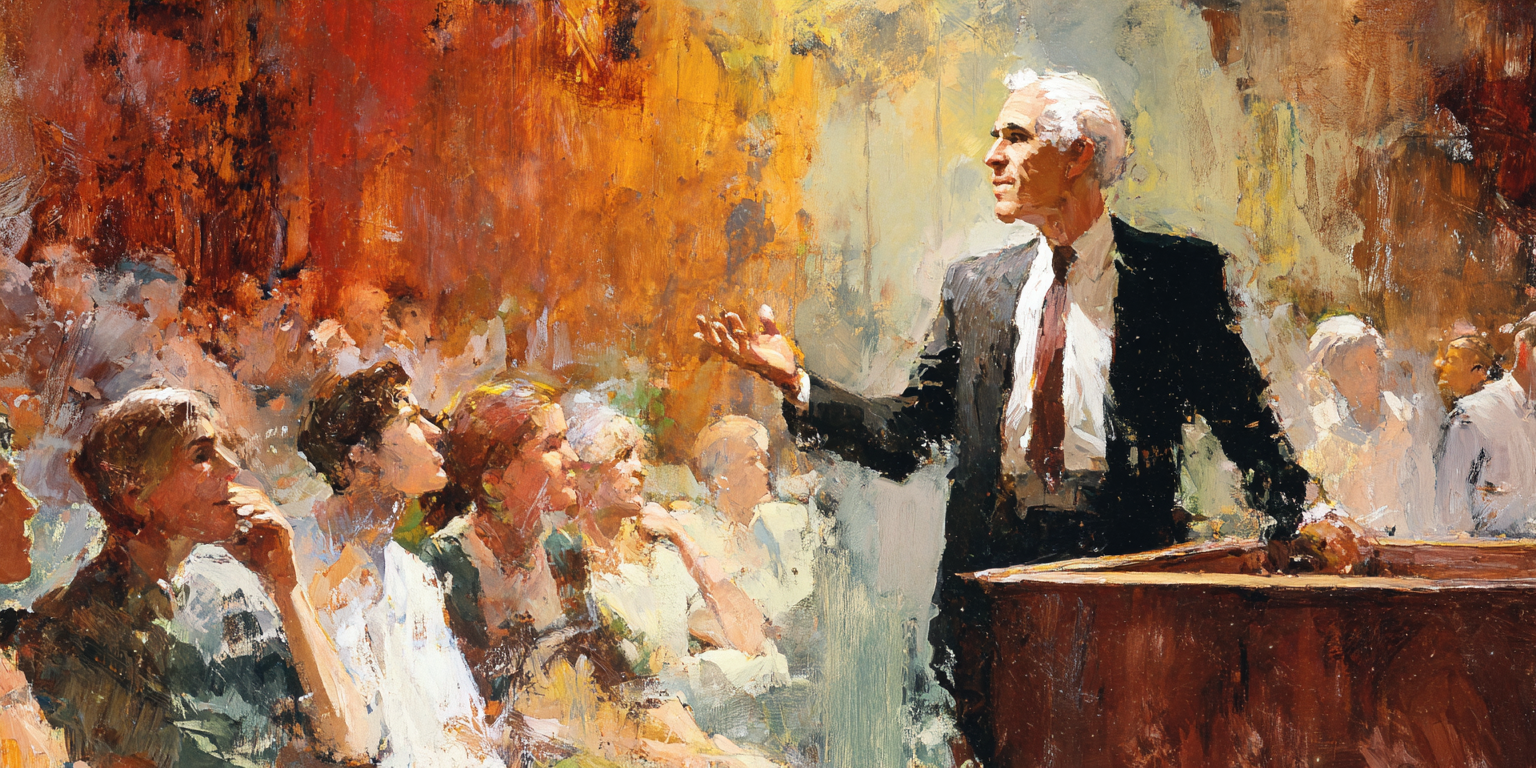
President Nelson’s ministry consistently pressed toward peacemaking. In April 2023 he pled, “I urge you to choose to be a peacemaker, now and always.” That appeal was not sentimental; it was covenantal—an invitation to practice the discipline of charity in a time addicted to outrage.

He called the world to remember two enduring truths: the divine worth of every person and the duty to love our neighbors

His TIME essay extended that same ethic beyond our chapels to the public square. He grounded dignity in divine identity and insisted that respect for persons should govern our speech and our politics. In a moment when “extremism” can be weaponized to mean “whoever strongly disagrees with me,” President Nelson re-centered the term where it belongs: dehumanization that licenses contempt, and—at its ugliest edge—violence. 

Peace Without Evasion

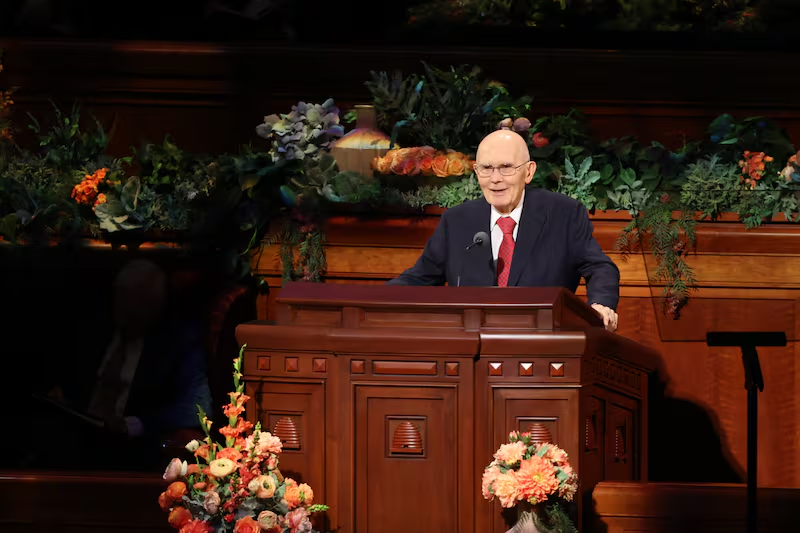
Peacemaking is not evasion; it is the discipline of rejecting contention while standing firm in truth. Few voices have framed this more clearly than President Dallin H. Oaks, who served alongside Nelson in the Church’s presiding body, the First Presidency. Oaks has asked forthrightly what followers of Christ “should teach and do in this time of toxic communications,” and answered by calling us to mirror the Savior’s way as peacemakers. His counsel does not retreat from moral conviction; it refuses to let bitterness be our strategy.

For Latter-day Saints, this is more than conflict-avoidance. It is anchored in scripture’s warning that “contention is not of [Christ], but is of the devil” (see 3 Nephi 11:29–30). The covenant path trains our tongues and tempers—not to silence our witness, but to purify it.

By that standard, moral clarity requires us to name the Michigan attack for what it is. Driving a truck into a house of worship, firing on congregants, and torching a sacred space desecrates everything the restored gospel teaches about the sanctity of life, the dignity of worship, and the inviolable worth of souls. Whatever investigators eventually conclude about motive, such violence is the opposite of discipleship and the antithesis of President Nelson’s final public appeal. Reports are still being updated; early accounts indicate multiple victims and a deceased assailant. We mourn with those who mourn and condemn the assault without reservation.

Whatever investigators eventually conclude about motive, such violence is the opposite of discipleship

“Extremism” has become a catch-all for people we don’t like. That linguistic slippage is its own kind of problem. When we say extremism, we mean the posture—on right or left—that justifies contempt, licenses cruelty, and treats persons as obstacles. This mentality thrives on apocalyptic rhetoric, algorithmic outrage, and the narcotic of group purity. It confuses zeal with righteousness and mistake-making neighbors with existential enemies.

The restored gospel offers a counter-formation. Covenants teach us to see persons first, to confess the limits of our knowledge, and to prefer persuasion over coercion. That is why President Nelson’s repeated focus on dignity, respect, and peacemaking should not be read as soft-pedaling doctrine. It is a strategy for faithful influence in a pluralistic nation—one that refuses false choices between courage and charity.

What Peacemaking Looks Like Right Now

On a day of grief and anger, what can ordinary believers do that is not merely performative?

  • Pray by name. Pray for those killed and wounded in Michigan, for families newly navigating trauma, for first responders, and for local Church leaders shepherding devastated congregations. If you are nearby, listen for concrete needs—meals, blood donations, childcare, transportation—and meet them quietly. (Details are still emerging; follow local guidance.)
  • Refuse contempt. In your home, group chats, and timelines, retire the demeaning one-liners. President Oaks warned about “toxic communications”; treat them as a spiritual hazard.
  • Tell the truth, tenderly. Truth without love can become a cudgel; love without truth becomes sentimentality. The Savior calls us to both. President Nelson modeled that balance in his final essay and throughout his ministry.
  • Practice presence. Visit a neighbor who grieves. Check on the Latter-day Saints—and the Catholics, Baptists, Muslims, and Jews—down the street. A community that shows up is a community that heals.
  • Break bread across difference. Host a meal with someone whose yard sign irritated you last cycle. Eat, listen, and learn. The table is where enemies become neighbors and neighbors become friends.

A Closing Appeal

President Nelson’s final public word to the world was peace rooted in divine worth. Even as we mourn his passing—and the violence visited upon a Latter-day Saint congregation in Michigan—we can honor both moments by the way we live the next one.

Gather your families and your congregations. Kneel together tonight.

So we ask, as a staff and as fellow disciples: Please join us in thoughtful prayer. Gather your families and your congregations. Kneel together tonight. Pray for the wounded and their caregivers. Pray for the bereaved. Pray for the Michigan Saints who will rebuild a chapel and, more importantly, a sense of safety. Pray for the perpetrators’ family, too, who now carry a different kind of grief.

And then break bread with your perceived enemies. Pull up an extra chair. Learn a name. Hear a story. In a season when extremism shouts, let our witness be the quiet, stubborn courage of peacemakers. That was the prophet’s parting invitation. May it be ours.

Editorial updated as of September 29, 2025; facts in the Michigan incident remain preliminary and may change as authorities release confirmed totals.


About the author

Public Square Staff

Our core team, including our Editor, Managing Editor, Communications and Media Directors, Visual Display Director and Copy Editor.
On Key

You Might Also Like

On Costly Grace and the Space to Grow

While freedom of expression will always be important, perhaps we shouldn’t be so quick to provide defensive cover for those making serious errors—especially if that forecloses opportunities to learn and grow.

The Ordinary Saint’s Guide to Under the Banner of Heaven

In an age that claims to value “own voices” media, it is sad that Under the Banner of Heaven is probably going to be the biggest story that the public sees about members of The Church of Jesus Christ of Latter-day Saints this year or this decade. While the tale it tells is based on an actual occurrence and about some actual problems within the broader movement of people hearkening back to Joseph Smith, one thing that can’t be said for either the book or the show was that they were written by a member of our community. The producer may have “grown up” as a Latter-day Saint, but he left the faith before he was an adult. If you’ve never had the experience of holding a calling, making temple covenants, or negotiating the relationships that make up a ward (Latter-day Saint congregation), are you really the best person to interpret our community? So I’m stepping in to offer my perspective. I am not a historian or theologian. So, though I try to be informed about the difficult parts of our religion’s past, I can only give you the perspective of what an average member would know or believe about these situations. I undoubtedly will get some of the nuances wrong. This will not be the best place if you’re looking for information about the historical accuracy of the show. (Consider checking FAIR’s guide or Book of Mormon Central.) However, I am an active participant in the larger Latter-day Saint literary community. I’ve written essays about my own life as a woman in the Church and fictional stories about others. I studied Latter-day Saint literature in college and continue reading contemporary Latter-day Saint literature. I am on the board of the Association for Mormon Letters, an organization that promotes literature written by, for, or about those who tie back to the prophet Joseph (including members of The Church of Jesus Christ of Latter-day Saints, but not exclusive to our denomination). So you might say I have some experience with portrayals of the Latter-day Saints and separate fundamentalist communities. The purpose of this series of recaps is two-fold. First, I want to summarize the series for ordinary Latter-day Saints who don’t intend to watch it so they won’t be surprised around the metaphorical watercooler this week. Second, I will catalog the series as it compares to Latter-day Saint literature more broadly. As a writer, reader, and advocate of Latter-day Saint literature, this is my home turf. I am interested to see where the show gets things right and wrong. Granted, my experience isn’t the experience of every member; like any community, Latter-day Saints are not a monolith. But I will compare the show to my personal knowledge of our community and talk about what sticks out. Without further ado, here are my impressions of the first two episodes of Under the Banner of Heaven. Episode 1, “When God Was Love”  Summary—The episode opens with Detective Pyre being called away from his family’s Pioneer Day celebrations to visit a crime scene. At an ordinary suburban house, he finds a scene of chaos with a mother (Brenda Lafferty) and her 15-month-old daughter (Erica) murdered in a gruesome way. (Luckily, we are only shown large quantities of blood on the floor and walls; the show shies away from showing the bodies, though we will get hints through dialogue about the exact method of killing.) Soon the husband (Allen Lafferty) is taken into custody, his clothes soaked in his wife’s blood. The killer claims that his wife was murdered by men with beards like “Mormon prophets” and continually ties his wife’s murder back to early church history stories, particularly Joseph and Emma marrying against her father’s will. We then get a flashback to a young Brenda. She is an energetic and ambitious young woman who transfers to BYU after being tired of “holding girl’s hair back while they puked” at her party school in Idaho. Allen introduces Brenda to his family at a large family dinner. His brothers seem both strangely attracted to her and judgmental of her for her ambition and less strict faith (caffeinated soda is mentioned). The Lafferty family band together to clear a neighbor’s land to prevent it from being seized by the federal government to build a highway. In the present, Detective Pyre’s partner Bill visits Allen’s brother Robin’s home and finds the house abandoned and papers burning. They arrest Robin after a chase through a motel. This episode depicts the First Vision. It shows Joseph going to the woods to pray and a light shining down on him. The script draws parallels between Joseph’s prayer and Robin’s prayer in the woods before he is caught by the police, which doesn’t really make much sense except that they are both kneeling in a natural setting. We also get a scene of Joseph and Emma discussing whether to marry against her father’s wishes. The show tries to make a big deal of them choosing between “God’s will” and her father’s authority, implying that the problem is that they can justify almost anything as God’s will. I found this assertion pretty strange, given that Joseph and Emma were hardly the first couple to marry against a parent’s wishes. It seems a thin justification on which to hang a condemnation of trusting God. Shibboleths—It’s apparent that the showrunners have made an effort to try to include jargon of Latter-day Saints in the dialogue. Sometimes this works: the Pyre family prayer scene feels exactly like the ones that take place in my family. Others make it apparent that the writers are not members of the community. While we do refer to God as Heavenly Father, particularly in prayer, we don’t use this term exclusively like the characters in the show. I regularly hear members refer to him as “God” or “the Lord,” and a brief search of the church’s 1980’s general conference talks shows that this isn’t a new innovation. While there is