
The Supreme Court tackled some significant religious freedom issues in its most recently concluded term.
Parental Rights
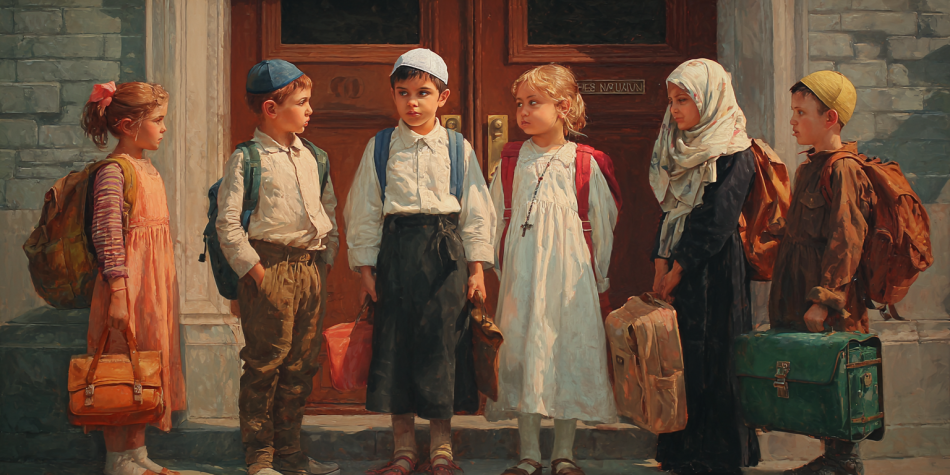
The most publicized religious freedom case asked this question: What rights do parents have for their children’s education when public schools insist on teaching things that are contrary to the religious teachings the children are taught at home?
The case, Mahmoud v. Taylor, arose when a Maryland school district told parents they no longer had the right to opt their children out of book readings that promoted views of sexuality and gender that conflicted with the religious beliefs of many families in the district. The Mahmouds, a Muslim couple for whom the case is named, joined with two Christian couples to ask the Court to restore their rights as parents to opt their children out of the book readings.
The Court said yes: Parents have the right under the Free Exercise Clause of the Constitution to direct the religious upbringing of their children—and not just in their own homes. The right also extends to public education. The Court said yes: Parents have the right to direct the religious upbringing of their children—and not just in their own homes.
The Yoder Court allowed the Amish to withdraw their children and declared that parents have a First Amendment right to direct the religious education of their children. But the extent of that right remained unclear. Many lower courts downplayed Yoder, emphasizing the unique nature of the Amish faith and its unusual religious command that necessitated the outcome in that case. As a result, Yoder’s broader principle—that parents have First Amendment rights to direct the educational upbringing of their children—became a casualty.
But post-Mahmoud, the right can no longer be downplayed. The Court affirmed that parents’ right to direct their children’s religious education receives a “generous measure of protection from our Constitution,” including “choices that parents wish to make for their children outside the home.” Although the extent of the right remains dependent on the facts of each situation, Mahmoud shows that Yoder was not a one-off decision; rather, it espoused a core principle of Free Exercise law.
Disputes like the one in Mahmoud are likely to continue, and the answers are not always easy. Public schools have to be able to function, and they cannot cater to every possible religious objection. Often, the best solutions may involve accommodations to objectors. For example, the Court has protected the right of those who object to participating in the Pledge of Allegiance rather than removing the Pledge from schools. The situation in Mahmoud was similar. The parents did not ask the school district to remove the books from the curriculum—merely to allow their children to sit out for their reading.
As the nation navigates future tensions in this area, Mahmoud makes clear that just because parents send their children to public school does not mean they relinquish all of their rights to direct their children’s upbringing.
“Religious” Organizations
Another important victory for religious freedom this term came in a case where a Wisconsin law ran into a religious liberty problem.
In Catholic Charities Bureau v. Wisconsin Labor & Industry Review Commission, Wisconsin law granted certain religious organizations an exemption from paying unemployment compensation taxes. But Wisconsin told Catholic Charities it didn’t qualify because it wasn’t “religious” under the Wisconsin law. Why? Because Catholic Charities serves non-Catholics and doesn’t engage in proselytization.
If that sounds wrong, the Supreme Court agreed. Why does the government get to determine that a group that serves people outside of its own faith is nonreligious? Or that a religion must proselytize to be a religion? Indeed, for many religions, serving those outside of the faith or abstaining from proselytizing are religious tenets themselves. It is constitutionally precarious for the government to be too prescriptive in defining what’s “religious.” It is constitutionally precarious for the government to be too prescriptive in defining what’s “religious.”
Here, the Court said, there was no reasonable justification for Wisconsin to impose theological guardrails—such as only serving those of your own faith—to determine whether an organization was religious for the purpose of a tax break. As a result, Wisconsin’s law was religiously discriminatory because it preferred some types of faith over others (e.g., those that proselytize)—a violation of the Establishment Clause. The law could not be enforced to prevent Catholic Charities from being considered religious under the statute.
While tax exemptions might not seem exciting, the implications of the case are significant. Ensuring that the government stays out of overly defining what counts as “religious”—unless it can meet the high bar of strict scrutiny—is vital for protecting religious freedom in all contexts where the government makes law affecting religious organizations. Because religious freedom by nature implies the protection of diverse beliefs and practices, serious Establishment Clause concerns emerge when the state gets too prescriptive about what is religious.
The issue is not a new one. Just a few years ago, Yeshiva University in New York City did not recognize a number of applicant clubs that it found inconsistent with its religious mission, including a fraternity, a gambling club, and a pride club. As a religious organization, Yeshiva is constitutionally entitled to recognize only the clubs that align with its religious mission, including its interpretation of Torah and Jewish law.
However, the pride club argued that Yeshiva could not reject its approval because Yeshiva failed to meet the strictures imposed by New York City law for religious corporate form. Therefore, the argument went, Yeshiva was not religious and did not have an exemption from a New York City human rights law to make decisions consistent with its doctrine.
That theory, if it had prevailed, would have achieved a strange result: Yeshiva University would have been deemed not religious and would have been compelled by the government to take actions inconsistent with its religious doctrine.
The ruling in Catholic Charities is likely to help in such situations. The Court made clear that it doesn’t fly for the government to consider obviously religious groups nonreligious absent a compelling reason and a narrowly tailored policy scheme for doing so.
To be fair, it’s true that the government often has to impose some guidance on what counts as religious under a statute to distinguish plainly non-religious actors from the religious. But nobody doubts that organizations like Catholic Charities or Yeshiva University are religious. When the effect of a government’s law is to call the plainly religious non-religious, that’s a problem. Because of Catholic Charities, governments know that their attempts to define what’s religious must avoid becoming religiously discriminatory by getting too specific about what it means to be religious.
On What the Court Didn’t Say: Religious Charter Schools
The Court also heard a second case about religious freedom and education in St. Isidore of Seville Catholic Virtual School v. Drummon. The case involved a novel situation in Oklahoma where the state contracted with St. Isidore to form a first-of-its-kind Catholic charter school. As such, the school would receive some amount of public funding and be subject to certain governmental requirements, yet still operate as a religious school. Tension between the Religion Clauses of the First Amendment because of this thorny legal question: Is a charter school a public or private school?
The Court did not decide the case due to a 4-4 tie, a result of Justice Barrett’s recusal. Justice Barrett declined to participate in the case due to a conflict of interest—perhaps due to her personal ties to the faculty at the Notre Dame Law School, who represented the Catholic charter school.
Because a tie goes to the winner at the court below, the Oklahoma Catholic charter school remains blocked from coming into existence. It’s possible the Court may have more to say if a similar scenario makes it back to the Court and no justice has to recuse. Clearly, the Court is quite split on the issue, though the reasons why remain unknown. Because the religious charter school model is quite novel, it’s not clear that others will follow suit in light of this ruling. For now, Oklahoma’s almost-first religious charter school remains a no-go.
Religious Freedom’s Trajectory at the Court
The Court’s recent docket of religious freedom cases seems to signal an emerging appetite to address religious freedom cases again. Although the Court has heard a few cases touching on religious liberty issues in the past few years, it has been relatively quiet after the blockbuster religious liberty term that concluded in the summer of 2022. The Court has several cases petitioning to be heard in the term that begins in October.
For now, religious parents can celebrate that the Court has protected their constitutional right to direct the religious upbringing of their children—and the right is not limited to the confines of the home. Religious organizations can celebrate that the government cannot impose arbitrary definitions of what is “religious” when defining religious exemptions. For religious people and organizations, these are key religious liberty wins to celebrate.