1148px-Young_Girl_Reading_by_Jean-Baptiste-Camille_Corot_c1868 (1)

The Importance of Prophetic Fallibility

Although understandably unsettling to many believers today, the idea that prophets can be wrong points toward some of the hidden beauty in the gospel plan.

Prophetic fallibility is a controversial concept because it’s an unmistakably orthodox principle that is far more useful in critiques of other Latter-day Saint principles than their defense. After all, every (internal) criticism of past or present teachings relies on it. Naturally, this can lead to frustration among apologists when it comes up again and again and again in debates. To them, it can seem as though prophetic fallibility does more harm than good as a concept. It’s almost as though it were a kind of theological fifth column (“a clandestine … faction of subversive agents who attempt to undermine a nation’s solidarity by any means at their disposal”). 

As a result, there’s a strong temptation to quietly get rid of prophetic fallibility without admitting to it (since it’s unmistakably orthodox, after all). The usual route is to admit prophetic fallibility in theory but argue that it’s never relevant in practice. This is just the old joke that Catholics claim papal infallibility, but they don’t act like it and Latter-day Saints claim prophetic fallibility, but they don’t act like it either.

Of course, on Twitter, even that argument is too complex and so we end up with “[fill in the blank] did nothing wrong” memes.

The reality is that prophetic fallibility is not just some unfortunate defect in the Plan of Salvation. There is a reason for it. Well, because God is the master multi-tasker, there are probably many reasons for it. But there’s at least one that I can think of, and it’s worth highlighting. Because properly understood, prophetic fallibility is not a threat to orthodoxy or orthopraxy, but part of a system that protects them. It needn’t drag people off the covenant path. It can help keep Latter-day Saints safely on it. In a nutshell: prophetic fallibility is not about whether we should obey prophetic counsel but how we should heed it.

The inescapable burden of freedom. The thing to understand is that much as people think they love freedom, we all (as a rule) detest responsibility. This is a problem because freedom and responsibility are inseparable. That’s why we get quotes like the famous one from Sartre: “Men are condemned to be free.” Condemned. It’s not actually a pleasant condition, because when you are free/responsible, it means that you are subject to the consequences of your actions.

This is a core aspect of our theology. Alma in particular takes great pains to articulate that mercy can’t rob justice. He describes an Atonement theology that leaves justice—and his view of justice is basically a kind of karma where people end up with the consequence of their actions—intact. The reason for this emphasis on justice is that we, as God’s children, came to Earth to grow up. Which means: to be responsible. To be free.

In the attempt to be kings without law, we end up slaves.

And we’re very, very bad at it. This is why Christ’s Atonement is necessary. We want to grow up (become like God) and that entails becoming free/responsible, but—unlike Christ—we all mess it up. My point is not to do a deep-dive into Atonement theology here, just to point out how the concept of responsibility/freedom is deeply linked to Christ’s Atonement, which is at the very core of our faith. This isn’t a tangential concept. Responsibility/freedom—what the scriptures and modern prophets call agency—is a bedrock principle.

Obscuring real consequences. Now, there are two basic paths to evading responsibility. One is to deny the cause/effect relationship. This is the most common approach, and it’s why Alma had to explain that “wickedness never was happiness.” It was because his son, Corianton, was trying to do what so many of us do, which is to try and find happiness by satisfying our desires without realizing that the very act of breaking commandments guarantees that we are ultimately choosing misery instead of happiness.

This attempt to try and choose the cause and choose the consequence is a form of pride. We are trying to become “a law unto ourselves.” The effort is doomed to failure. In the end, the only thing that results from trying to pridefully erect our own laws is that we end up mired In chaos. In the attempt to be kings without law, we end up slaves. God’s universe is one of order, and if we want to be truly free, we have to embrace that order. 

I think this is pretty well-understood, at least among orthodox Latter-day Saints. But there’s another way in which people try to wriggle out of responsibility. Instead of by breaking commandments, it’s by keeping commandments but in the wrong way.

The purpose of obedience. Superficially, obedience is about conforming your behavior with rules. And you certainly can’t be obedient without this first, elementary aspect of it. But just following rules is a shallow conception of obedience. If we think there’s nothing more to it, then we might as well be circus animals instead of children of God.

Remember, we were sent here to grow up. And we can’t grow up by only behaving in accord with rules. If that is all we’re trying to do, then we’re not disciples striving to be more like Christ, we’re just misguided fools trying to be more like robots. 

Obedience is a means to an end. It is the path by which we come to understand the nature of mercy and justice, to have those rules written on our hearts, to make them part of who we are. Obedience is about what you do, but it’s not only about what you do. It’s also about what you understand, what you love, and—ultimately—about what you are.

The quest of a lifetime. What does this have to do with prophetic fallibility? It’s simple: if the prophets are never wrong, then you never have to think for yourself and in this way, you can short-circuit the whole obedience-as-growth thing and never get past obedience-as-compliance. Now, I’m using the word “think” here, but I’m not talking about a purely intellectual exercise. When the prophet asks you to do something hard—whether it asks you to sacrifice something you want or puts you in a moral quandary—this is not a strictly mental problem. Wrestling with guidance and commandments we find difficult is a whole-person endeavor. You feel it in your mind but also in your heart and in your very soul. This isn’t about intellectualism. It’s about accountability. It’s about freedom and responsibility. It’s about agency.

If you believe in prophetic fallibility, then every single time a prophet asks you to do something you are involved. You have to put yourself, your judgment, your values, your whole self, on the line. This can be very, very stressful and even painful. That’s because it’s how you actually grow.

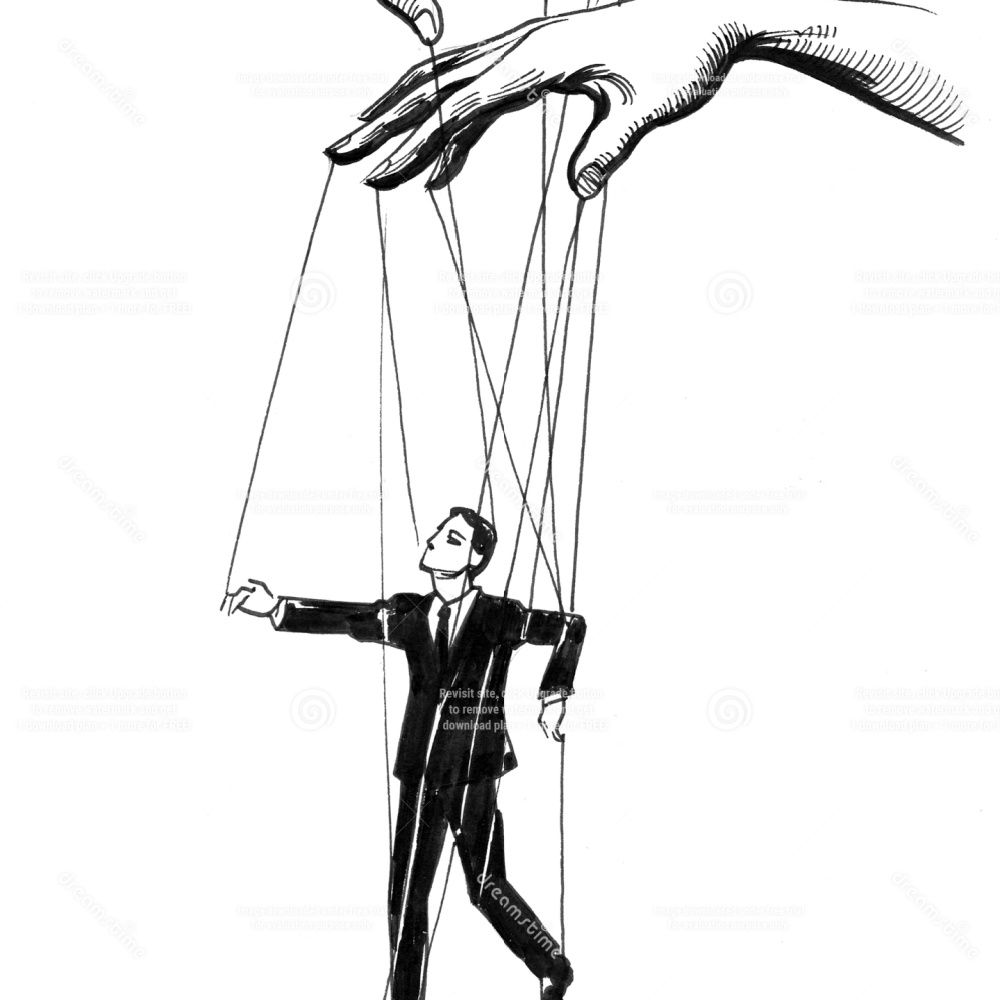
If you reject prophetic fallibility, then whenever the prophet asks you to do something you can just “follow orders.” This is not the only way that religion can be reduced from the quest of a lifetime to a series of checklists, but it is a great way.

Note that the kind of quasi-infallibility that is so tempting to some orthodox apologists (myself included) works just as well as the real article. If you say that prophets can theoretically be wrong but that in practice you never have to worry about then … you won’t ever worry about it. 

Hidden ego. The final piece to the puzzle here is to realize that this kind of hardcore obedience (founded in de facto prophetic infallibility) is also a form of pride. Because here’s the thing: even if prophets were infallible, you aren’t.

Human communication depends on both the sender and the receiver getting it right. Any time someone talks about prophetic fallibility (or scriptural inerrancy, for that matter), they are forgetting this. Worse, intentionally or not, they are presuming that their end of the equation will be flawlessly executed. That they will never misunderstand anything that prophets or the scriptures say.

It’s worse than that, of course. Even if you were to ignore the issue of communication, there’s still the fact that you have to apply what you hear from prophets. Even more than the ability to correctly understand and interpret what is said, the ability to flawlessly apply it to real-world circumstances entails a staggering degree of self-assuredness, i.e. pride.

Towards a deeper discipleship. In short, there are two ways to fail at obedience. The worst and most obvious way is to simply disobey. To reject even the basic level of obedience—conforming our behavior—and seek happiness in wickedness.

But there is a second and more insidious way to fail at obedience, and that is to accept conformity of behavior and then stop there. I’m not drawing any equivalence between these two, but if we want to be real disciples of Christ we’re going to want to avoid both of them.

Prophets are there to guide and direct us, but they can’t walk the covenant path for us.

And that is where prophetic fallibility helps. Because when we know that prophets are imperfect, it is much easier to avoid the temptation of trying to outsource our religious journey to them. And when we see concrete examples of their failures, as distressing and depressing as they can be, that’s an even stronger reminder that prophets are there to guide and direct us, but they can’t walk the covenant path for us. We have to do that ourselves, one foot in front of the other, shouldering the burden of agency as we do.

If you were hoping that this essay would take a position on the controversial issues where prophetic fallibility is being (mis)used: tough luck. This isn’t that essay. The reality is, prophetic fallibility should have nothing to do with those debates because it should be baked into the conversation from the outset. Yes, a prophet could be wrong. Done. Now the question of whether or not they actually are/were … that’s a whole separate issue.

My point here is to remind everyone that we are children of God. Not pets to be trained. Not robots to be programmed. We are children, and as children, the work of our Heavenly Father and Heavenly Mother is to raise us to be like them. Prophetic fallibility may seem to make that task harder. Scriptural errancy and the veil that prevents us from remembering the pre-mortal existence seem to make it harder, too. You’re right: they do. That’s because the difficulty is intentional. It’s the challenges that give us the opportunity to truly seek to become like Christ and—with His grace and through His Spirit—to eventually arrive at that glorious destination.


About the author

Nathaniel Givens

Nathaniel Givens is a writer and blogger. In addition to Public Square, he has written for Meridian, Real Clear Religion, First Things, and Square Two. He blogs at Nauvoo Neighbor, Times and Seasons, and his own blog: Difficult Run.
On Key

You Might Also Like

Soldier Movie Doesn’t Uplift

A contemporary set movie, “Valiant One” follows a US military unit in South Korea when they are blown off course and crash across the border in North Korea with a civilian tech specialist aboard. The film is putatively about the growth of Brock, who is thrust into commanding the unit after the crash. As the opening title cards tell us, “Heroes’ Aren’t Born. They Are Made.” And the  We see him as he changes from struggling with his major decisions to beginning to make one. In one well-structured scene, the farmer catches them hiding in the barn. After a standoff, Brock approaches the farmer and de-escalates the situation.  We see him and his soldiers as they recognize the humanity of their enemies, and make tough decisions. Ultimately, though, the areas he’s growing in don’t have a deep resonance because they aren’t Christ-like attributes. And the broader moral universe of the film is nihilist. It’s taut and well-structured and manages to tell a complete story in less than 80 minutes. It clearly is influenced by the years of experience director Steve Barnett has spent on the studio side of things. But it’s also clear that he lacks the artistic vision that elevates those essential storytelling blocks into an actual story. In some ways, the film reminds me of a paint-by-number before it’s been completed. Everything is in the right place, but it’s clearly not art or even particularly interesting to look at yet.  The characters fall flat, particularly the two leads. Which keeps the story beats from ever coming together into a coherent whole. They have the kind of tragic backstories you’d expect, but they feel disconnected from the actions and motivations we actually see them enact. Eventually, even the plot feels like it’s doing circles, revisiting the same moral dilemmas and crises, without enough new character growth to warrant it. I can imagine there’s an audience for this movie. For those who love war movies, this one is clear and comprehensible. And if you are automatically invested in the uniforms, you have clear stakes that give the film energy and a through line that is enhanced by an aggressive hip-hop score. The film will probably most resonate with those with a similar backstory as Brock, who can see themselves as him. I imagine watching his growth would make this movie particularly meaningful to them.  The film is R-rated. It is not particularly gory, but there is certainly war like violence, and we see many deaths, including executions. And the screenwriter went to lengths to capture the authentic pitter-patter of the way soldiers speak. But this means lots and lots of over-the-top pointless never-ending crassness and profanity. The larger moral of the film is pretty bland, and so by the end I felt degraded rather than lifted up. War movies can certainly uplift when they tell the right stories. This is not one of them. I wouldn’t watch it with my children, even when they were grown. If someone did, I would suggest asking them questions about the ethics of survival and the nature of leadership.  One and a half out of five stars. Valiant One releases in the theaters January 31, 2025.

Sean Astin & Ke Huy Quan Reunite, But “Love Hurts” Doesn’t Deliver

My son asked me what “Love Hurts” was about. I told him it was about how we can’t just move on from our past. “Oh,” he looked concerned, “That’s a bad movie.” Unlike my son concluded, “Love Hurts” isn’t a bad movie, but it’s not a Christian one. The theme repeated over and over is that we cannot move on from the past until we conquer it. Our main character desperately works for redemption, but the film keeps telling him he can’t have it. His aw-shucks charm in “Everything Everywhere All at Once,” combined with the nostalgia for his 80s career has combined to make Ke Huy Quan Hollywood’s “it” man of the moment. And “Love Hurts” is the star vehicle to determine if he can top the marquee of a nationwide opening.  It’s a bit of a mixed bag. The film is set over a Valentine’s Day weekend. Quan, plays Marvin Gable the regional realtor of the year. His upbeat attitude endears him to his clients and coworkers alike. Marvin used to be the enforcer for the local mob run by his brother. His brother ordered him to take out Rose, his unrequited crush, for stealing. But Marvin let her live and started a new life. Rose has decided to come back, delivering Valentine’s to the major players, dragging Marvin back into the life he tried to leave behind. The film, which runs a brisk 85 minutes, is mostly a series of choreographed fight scenes interspersed with just enough exposition to explain the plot and three love stories. So it’s worth mentioning that the fight choreography is very focused on creating tableaus showing off the imagination of the designer. And this does work to create some eye-popping visuals.  But I’m not sure if the trade-off to get those moments was worth it. To get to the visual moments it wants to show off the fights vacillate wildly between grounded brutal realism and physics so implausible it would make the Avengers blush, with no real explanation or meaning between the two. The pacing of the fights was often awkward and halting. And I never felt any stakes in the scenes because I never knew how much risk my protagonists were in.  The film uses a series of intermittent voice-overs from both Marvin and Rose to explain their attraction to one another. But the chemistry between the two never takes off. And while the film explains why Rose would be attracted to Marvin’s kindness and power, we never figure out why Marvin was willing to throw his entire life away twice at an outside chance with a woman who isn’t that interested in him.  The two grunts in the film played by André Eriksen and Marshawn Lynch, spend the time between their fights figuring out how to write a text to repair one of their marriages. The most amusing romance is between Raven, who breaks into Marvin’s office to fight him, and Ashley, the real estate assistant who finds his unconscious body and falls in love with him while reading his poetry in his notebook before he wakes up.  The movie is surprisingly funny. It leans into the cliches of the Asian mob film, and then juxtaposes it next to a bunch of odd things: suburban model homes, an all-American black belt, a poet, a pull-over sweater. It’s mostly just the one joke, but it’s enough for the film’s brisk run. My favorite part of the film was Sean Astin. Astin plays Marvin’s boss, and older brother figure who gave him the job when he escaped the mob. Astin and Quan famously shared the screen in “Goonies.” During the scene early in the film when Astin gives Quan the real estate award, you could feel the dialogue transcend the characters. It felt like Astin was so proud of the success of his old friend Quan, and this was his moment to tell him.  Quan, for his part, does everything right but doesn’t take the material to another level.  If you love fight choreography, there will certainly be some interesting things to look at here. And if you want a classic action romp with a few laughs and a Valentine’s twist this might be the film for you. But for most people, I don’t think it all comes together. It’s too gory without meaning. And while the movie seems to think it has a happy ending, I can’t imagine that most of the people watching will agree. It’s got R-rated content with no compensating uplift to make it worth the experience. Two out of five stars. “Love Hurts” opens nationwide on February 7, 2025.

The Paradox of Porn Concealment

In hopes of avoiding disappointment and contention, many of us conceal what we feel might harm our partner or relationship. Yet working through these difficulties together may be the very thing that strengthens and saves us.

Statue Of Green Angel Holding a Red Rose | Angels All Around Us | Public Square Magazine | Mine Angels Round About You, To Bear You Up | Angels Are All Around Us

Angels All Around Us

A Christmas present from our team to the many who are grieving the loss of a loved one this holiday season. May you rejoice to know what is coming and feel peace at what is already here.