pexels-photo-6238119

Rabbi Sacks, the Snow, and Our Common Humanity

As the election dust settles and the snow falls, some thoughts on something deeper than our many differences - a witness born most eloquently by the remarkable and recently deceased Rabbi Sacks.

Sometimes weather matches the mood of the day. While a winter storm softly drops several inches of snow outside my home on November 8, I encounter in my inbox the unexpected news of the death of Rabbi Jonathan Sacks. Suddenly my warm and well-lit house feels colder and dimmer.

I did not have to meet this prolific religious genius to be educated by his mind.

This is what happens in the inner recesses of our souls when people we admire and love leave us.

I never met Rabbi Sacks, who died from cancer on November 7 at age 72. But thanks to the gifts of his books, op-eds, lectures, speeches, and interviews, I did not have to meet this prolific religious genius to be educated by his mind, inspired by his faith, and lifted by his wit.

Rabbi Sacks was a graceful, winsome, even humorous ambassador for the importance of faith in God and respect for our many differences. Once, while accepting an award for his defense of religious freedom, he told the story of attending a soccer game in the early 1990s with George Carey, the newly installed Archbishop of Canterbury. Both Rabbi Sacks and the archbishop, it turned out, were fans of Arsenal, who that night was playing Manchester United.

“They had the public address system announce that, ‘Tonight we have with us the Archbishop of Canterbury and the Chief Rabbi [of the United Kingdom],’” he said. “And you could hear the buzz go around the ground that whichever way you played this particular theological wager, one way or another, that night, Arsenal had friends in high places. They couldn’t possibly lose. That night, Arsenal went down to their worst home defeat in sixty-three years.”

As Rabbi Sacks tells the story, a journalist with a national British newspaper mused the next day about what the loss said about the existence of God. If the support of the archbishop and the chief rabbi couldn’t bring about a victory for Arsenal, then what could? 

“The next day, they carried my reply, which said, ‘It proves that God exists. It’s just that he supports Manchester United,’” Rabbi Sacks said.

He then drew from this lighthearted story a profound insight: “What if God is not only on my side, but also on the other side? What if God cares about the game, not just the team?” In other words, he said, “Our common humanity precedes our religious differences.”

On another occasion, Rabbi Sacks noted one important way to honor this common humanity while staying true to our beliefs.

“How do you get from intense religious faith to liberty of conscience, doctrine of toleration and human rights?” he asked. “The answer is, it is a very short step from saying ‘My faith is the most important thing there is, therefore everyone must share my faith,’ to ‘since faith is the most important thing there is, everyone should be free to pursue his or her own faith.’ It is one small step” (emphasis added).

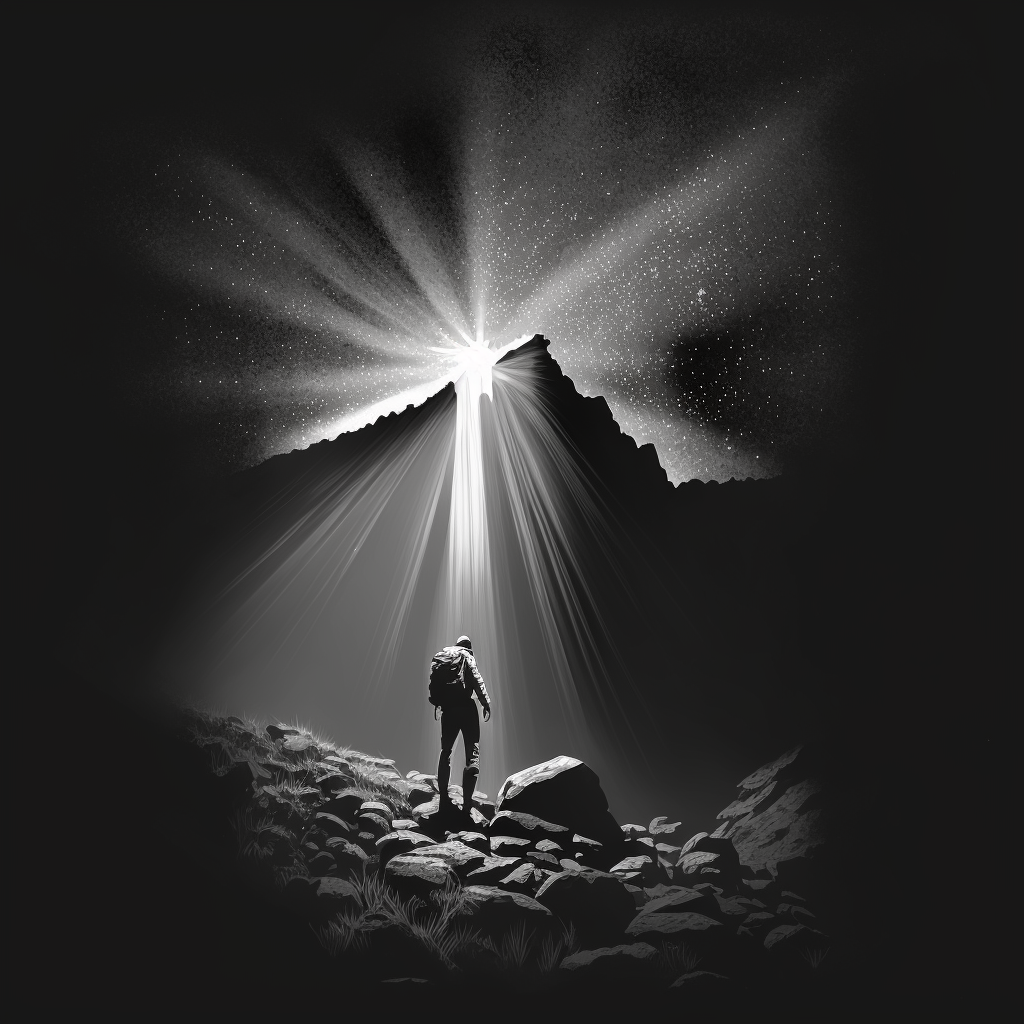
My soul senses a message from the rabbi in the snow covering my yard.

These ideas are delicious to me—perhaps more so because of the helpful tension they add to my own beliefs as a member of The Church of Jesus Christ of Latter-day Saints. Like some other churches in the world, the Latter-day Saints believe they belong to the true church. And yet we also believe, as our founder Joseph Smith taught, that we cannot become pure Latter-day Saints if we do not “get all the good in the world,” regardless of its source. “When we see virtuous qualities in men,” Joseph said, “we should always acknowledge them, let their understanding be what it may in relation to creeds and doctrine. For all men are, or ought to be free; possessing unalienable rights, and the high, and noble qualifications of the laws of nature and of self-preservation; to think, and act, and say as they please; while they maintain a due respect to the rights and privileges of all other creatures; infringing upon none. This doctrine I do most heartily subscribe to, and practice.”

It isn’t hard to imagine Joseph Smith and Rabbi Sacks striking hands in heaven.

With these thoughts warming me, my eyes turn back to the window to watch the snow fall. Instead of cold and dark, I feel warmth and light. My soul senses a message from the rabbi in the snow covering my yard. Snow, the great lawn equalizer. It’s interesting, isn’t it? Some neighbors of mine maintain beautiful lawns. Their grass is a dark, luscious green, watered thoroughly by expensive sprinkler systems. Their landscaping is immaculate. But when the snow comes, everyone’s lawn—even my parched, yellow quarter acre—looks essentially the same. 

Our differences are real. Our gifts vary. Our understandings are imperfect. But the snow reminds us that something precedes all of that. As Rabbi Sacks would say, “our common humanity precedes our religious differences” and clearly, our political differences too. 

I guess I shouldn’t be surprised. Rabbi Sacks—a man who wrote more than 30 books—is still sending out prophetic missives from his well-deserved resting place in the heavens above.

About the author

Samuel B. Hislop

Samuel B. Hislop is a writer in Utah.
On Key

You Might Also Like

Under the Banner of Heaven Episode 5, “The One Mighty and Strong”

Summary – Pyre is interrogating Sam, who shouts scripture at him about the “one mighty and strong.” Pyre uses false details about the murder to trick Sam into revealing that he isn’t the murderer. The police chief is getting ready to release the brothers, so Taba stalls him while Pyre talks to Robin about his brothers’ involvement in the “School of the Prophets” and gets him to reveal two names: Bernard Brady, a Provo businessman, and Prophet Onias. The detectives follow up with Bishop Low and his wife, located at the end of the last episode, asking them about the excommunication of Dan and Ron. The bishop is reluctant to reveal details because of clergy confidentiality but eventually reveals that Dan was excommunicated based on the testimony of his daughters that he attempted to forcibly take them as polygamous wives. We get a flashback to a heartbreaking scene where Matilda has sex with Dan to distract him as her daughters escape out a window in the middle of the night. Dan was excommunicated, and the girls were placed with a family in the ward (as the bishop refused to call CPS) but later ran away, and now they and their brother are missing. At his daughter’s baby blessing, Ron confronts the bishop about his brother’s excommunication, not knowing about Dan’s attempted polygamy and thinking that it’s about his political beliefs. Brenda has a conversation with Sister Low and Diana, indicating that both know that Ron is abusing her but only Brenda is willing to do anything about it. In fact, Sister Low feeds Diana a line about how her only duty is “creating a home and environment to sustain and support our Priesthood holder.” To Detective Pyre, the bishop claims to have followed church procedure but eventually encouraged Diana to leave and gave her money to do so. The detectives follow up on Robin’s lead about Bernard Brady by arriving at his house in the foothills of Provo with a warrant. We find out that the Bradys sheltered Ron when he was having a hard time. In a flashback, Ron receives a summons to a church disciplinary court and blames Diana for it. He punches her in the face and begins throwing the food she’s preparing on the floor, saying he’ll starve her into obedience. Diana grabs a kitchen knife and drives Ron from the house, telling him not to come back. Back in the present, Bernard admits to being in the School of the Prophets study group and driving miles to pick up Prophet Onias and the Laffertys but denies being further into the group than that. But when he sends his wife out of the room to make lemonade, he produces a notarized letter he sent to himself with details of the Laffertys’ hit list, including that Diana is on the list because she wrote a letter that got Ron excommunicated. The detectives rightly chastise him for not taking this information to the police earlier. Brady reveals that he knows the location of “the farm,” a Lafferty compound. With Allen’s help in drawing a map, the detectives plan to stake out the property in the morning. Detective Pyre returns home for FHE and finds that his wife and kids have been invited to the bishop’s house for the evening and are spending the night there. Pyre believes this is an attempt to keep an eye on his family and control the narrative about the case. The next morning on the way to the raid of the farm, Pyre questions Brady about the details of Ron’s excommunication, which we see in flashback. He is indeed excommunicated after lashing out at the church leaders about them not following the “correct” doctrines of the church. When Ron returns home, he finds that his teenage daughter has cut the markings out of his garments, which he puts on anyway with only a sports coat and jeans over the top. He says goodbye to his kids and leaves the home. When the farm is raided, the only people inside are three teenage girls, who we learn are from a polygamous compound in British Columbia and were brought down by Prophet Onias to be Ron’s wives. The girls show the detectives a cupboard they had been forbidden to touch, which the detectives open to reveal a single shirt belonging to Ron with some papers in the pocket, a hit list, and a revelation directed at Diana commanding her to repent and return to him. Allen is in disbelief that Ron could have written these things, but Brady confirms that Ron is a violent man. He explains that Ron fled to his parents’ home after his excommunication, where his mother confirms his calling as “the one mighty and strong” and says he’s only a heartbeat away from his rightful place. His father is lying sick in bed and asks Ron to call a doctor, but Ron recalls his cruelty to them as children and refuses. It’s implied that he indirectly caused his father’s death in order to take over the leadership of the family. Church History—This episode contains the most fabricated piece of church history in the show. When Bernard Brady reveals that Diana’s information led to Ron’s excommunication, he makes an analogy to Joseph Smith’s martyrdom. He claims that while Joseph was in hiding after destroying the press of the Nauvoo Expositor, Emma wrote a letter to Joseph encouraging him. John Taylor intercepts this letter and adds a line meant to make Joseph turn himself in, thus indirectly causing the prophet’s death. Taylor’s motive is to put Brigham Young at the head of the church, instead of Emma’s young son, in order to continue the doctrine of polygamy, which he and Brigham are already heavily involved in. Reputable historians both in and out of the church say there is no evidence to support this interpretation of events, though the succession crisis between Brigham Young and the ten-year-old Joseph Smith III is real and