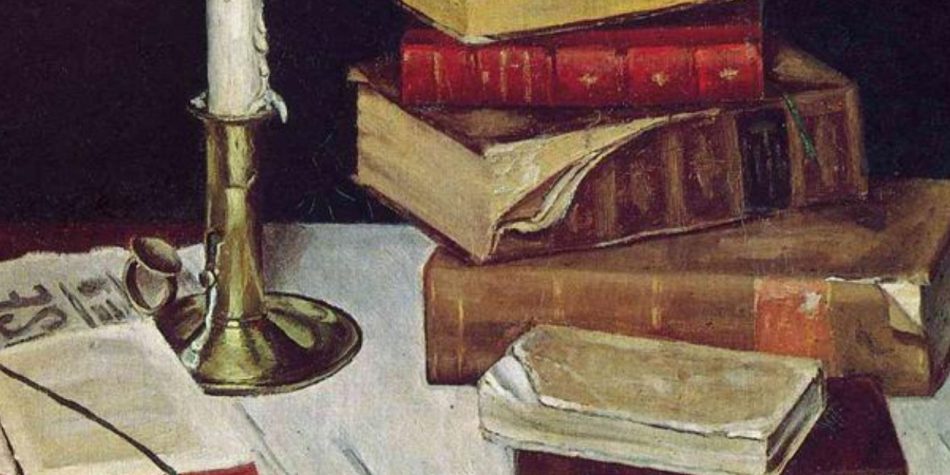
books

Bites of the Best Books: September 2020

Five books that contain sentences and paragraphs and pages full of unique ideas that move our minds, touch our hearts, and fill our souls with light.

Orthodoxy

G.K. Chesterton

In this classic work of Christian apologetics, the prince of paradox delivered an insight that illuminates what Jesus may have meant when he told his followers to become “like a little child.”  

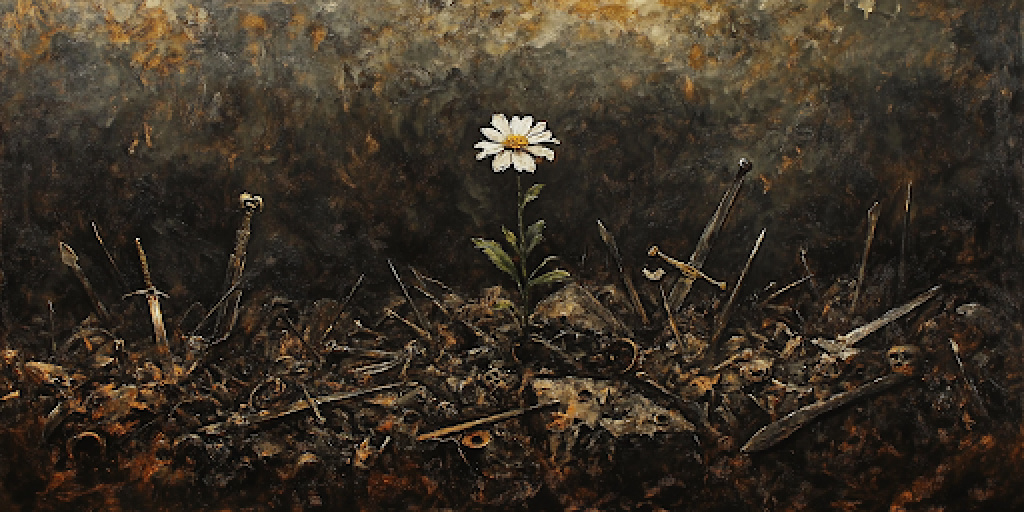
“Because children have abounding vitality, because they are in spirit fierce and free, therefore they want things repeated and unchanged. They always say, ‘Do it again’; and the grown-up person does it again until he is nearly dead. For grown-up people are not strong enough to exult in monotony. But perhaps God is strong enough to exult in monotony. It is possible that God says every morning, ‘Do it again’ to the sun; and every evening, ‘Do it again’ to the moon. It may not be automatic necessity that makes all daisies alike; it may be that God makes every daisy separately, but has never got tired of making them. It may be that He has the eternal appetite of infancy; for we have sinned and grown old, and our Father is younger than we.”

You Are What You Love

James K. A. Smith

Smith, a professor of philosophy at Calvin College, analyzed the formative power of the larger culture on our souls and the importance of weekly worship in the home and at church to combat its influence.

“An hour and a half on Sunday morning is not sufficient to re-habituate hearts that are daily immersed in rival liturgies. Yes, gathered, congregational worship is at the heart of discipleship, but this doesn’t mean that communal worship is the entirety of discipleship. While communal worship calibrates the heart in necessary, fundamental ways, we need to take the opportunity to cultivate kingdom-oriented liturgies throughout the week. The capital-L Liturgy of Sunday morning should generate lowercase-l liturgies that govern our existence the rest of the week. … Recognizing worship as the heart of discipleship doesn’t mean sequestering discipleship to Sunday; it means expanding worship to become a way of life. … We should be attentive to the rhythms and rituals that constitute the background hum of our families and should consider the telos toward which these activities are oriented. The frenetic pace of our lives means we often end up falling into routines without much reflection. We do what we think ‘good parents’ do. And we might think these are just ‘things that we do’ without recognizing that they may also be doing something to us.”

Letters and Papers from Prison

Dietrich Bonhoeffer

Bonhoeffer spent the last two years of his life imprisoned for his role in a plot to kill Hitler. In his final letter to his fiancé, some four months before his execution, he described how in the solitude of prison “the soul develops senses which we hardly know in everyday life.” Among these, he wrote in an earlier letter, is a hidden joy found only along the pathway of pain. 

“Stifter once said ‘pain is a holy angel, who shows treasures to men which otherwise remain forever hidden; through him men have become greater than through all joys of the world,’” he wrote. “It must be so and I tell this to myself in my present position over and over again—the pain of longing which often can be felt even physically, must be there, and we shall not and need not talk it away. But it needs to be overcome every time, and thus there is an even holier angel than the one of pain, that is the one of joy in God.”

A 20th Century Testimony

Malcolm Muggeridge

Muggeridge, an English journalist and satirist who converted to Christianity later in his 60s, left this powerful witness of what Christ’s suffering wrought in his life:

“Contrary to what might be expected, I look back on experiences that at the time seemed especially desolating and painful… [and] I can say with complete truthfulness that everything I have learned in my seventy-five years in this world, everything that has truly enhanced and enlightened my existence, has been through affliction and not through happiness, whether pursued or attained. In other words, if it ever were to be possible to eliminate affliction from our earthly existence by means of some drug or other medical mumbo jumbo … the result would not be to make life delectable, but to make it too banal or trivial to be endurable. This of course is what the cross signifies. And it is the cross, more than anything else, that has called me inexorably to Christ.”

Resurrection

Leo Tolstoy

In a passage from Count Lev Nikolayevich Tolstoy’s novel, Resurrection, he described the charitable heart and soul of probably every woman I know. This is a reminder to both recognize and acknowledge the remarkable feminine gifts that surround us every day.

“[She] never thought of herself, her only concern being to find ways of helping other people, in matters great and small. … [H]er favorite sport was charity. Like a hunter on the look-out for game, she focused the whole interest of her life on finding ways of serving others. And the sport had become a habit, the sole concern of her life. And all of this came so naturally to her that those who knew her took it for granted and placed no value upon it.”

About the author

Samuel B. Hislop

Samuel B. Hislop is a writer in Utah.
On Key

You Might Also Like

Disciples, Activists & the Drama Triangle

Ahmad Corbitt’s October 2022 talk to military chaplains challenged not just secular-minded activists, but also a common set of stories sometimes held by believing and sustaining church members.

Sean Astin & Ke Huy Quan Reunite, But “Love Hurts” Doesn’t Deliver

My son asked me what “Love Hurts” was about. I told him it was about how we can’t just move on from our past. “Oh,” he looked concerned, “That’s a bad movie.” Unlike my son concluded, “Love Hurts” isn’t a bad movie, but it’s not a Christian one. The theme repeated over and over is that we cannot move on from the past until we conquer it. Our main character desperately works for redemption, but the film keeps telling him he can’t have it. His aw-shucks charm in “Everything Everywhere All at Once,” combined with the nostalgia for his 80s career has combined to make Ke Huy Quan Hollywood’s “it” man of the moment. And “Love Hurts” is the star vehicle to determine if he can top the marquee of a nationwide opening.  It’s a bit of a mixed bag. The film is set over a Valentine’s Day weekend. Quan, plays Marvin Gable the regional realtor of the year. His upbeat attitude endears him to his clients and coworkers alike. Marvin used to be the enforcer for the local mob run by his brother. His brother ordered him to take out Rose, his unrequited crush, for stealing. But Marvin let her live and started a new life. Rose has decided to come back, delivering Valentine’s to the major players, dragging Marvin back into the life he tried to leave behind. The film, which runs a brisk 85 minutes, is mostly a series of choreographed fight scenes interspersed with just enough exposition to explain the plot and three love stories. So it’s worth mentioning that the fight choreography is very focused on creating tableaus showing off the imagination of the designer. And this does work to create some eye-popping visuals.  But I’m not sure if the trade-off to get those moments was worth it. To get to the visual moments it wants to show off the fights vacillate wildly between grounded brutal realism and physics so implausible it would make the Avengers blush, with no real explanation or meaning between the two. The pacing of the fights was often awkward and halting. And I never felt any stakes in the scenes because I never knew how much risk my protagonists were in.  The film uses a series of intermittent voice-overs from both Marvin and Rose to explain their attraction to one another. But the chemistry between the two never takes off. And while the film explains why Rose would be attracted to Marvin’s kindness and power, we never figure out why Marvin was willing to throw his entire life away twice at an outside chance with a woman who isn’t that interested in him.  The two grunts in the film played by André Eriksen and Marshawn Lynch, spend the time between their fights figuring out how to write a text to repair one of their marriages. The most amusing romance is between Raven, who breaks into Marvin’s office to fight him, and Ashley, the real estate assistant who finds his unconscious body and falls in love with him while reading his poetry in his notebook before he wakes up.  The movie is surprisingly funny. It leans into the cliches of the Asian mob film, and then juxtaposes it next to a bunch of odd things: suburban model homes, an all-American black belt, a poet, a pull-over sweater. It’s mostly just the one joke, but it’s enough for the film’s brisk run. My favorite part of the film was Sean Astin. Astin plays Marvin’s boss, and older brother figure who gave him the job when he escaped the mob. Astin and Quan famously shared the screen in “Goonies.” During the scene early in the film when Astin gives Quan the real estate award, you could feel the dialogue transcend the characters. It felt like Astin was so proud of the success of his old friend Quan, and this was his moment to tell him.  Quan, for his part, does everything right but doesn’t take the material to another level.  If you love fight choreography, there will certainly be some interesting things to look at here. And if you want a classic action romp with a few laughs and a Valentine’s twist this might be the film for you. But for most people, I don’t think it all comes together. It’s too gory without meaning. And while the movie seems to think it has a happy ending, I can’t imagine that most of the people watching will agree. It’s got R-rated content with no compensating uplift to make it worth the experience. Two out of five stars. “Love Hurts” opens nationwide on February 7, 2025.

A resilient but barren olive tree stands as a symbol amidst the human side of the Middle East crisis, offering hope for peace to bloom

The Human Voices from Israel and Palestine

Amidst the Israeli-Palestinian conflict’s turmoil, what resounds in the hearts of those directly affected? Personal narratives from Gaza to Jerusalem unveil a tapestry of despair, hope, and unwavering resilience in the face of adversity.