Close Up of Smiling Blonde Woman | How Modesty Empowers Women | Public Square Magazine | Why is Modesty Important? | The Importance & Value Of Women's Modesty

How Modesty Empowers

Is encouraging women to conform to the diminutive dress standards of Instagram leading them to a place of freedom and power - or just the opposite?
Photo by Giorgio Trovato on Unsplash

Several months back, a Twitter firestorm erupted when Sports Illustrated featured plus-size model Yumi Nu on its cover. What stood out to me was that, when confronted with yet another hypersexualized image of a woman being used to hock swimwear and magazines, the only important question for most Americans was how attractive (or not) they found the model. 

Whether one cries “yes” or “no” to celebrating plus-sized models, the upshot is that women are still being told that their bodies are what matter most. We are inundated with images of women in various states of dress, subjecting themselves to public adoration or scrutiny, all in an effort to drive some form of consumption. Sometimes, as with pornography, it’s women’s bodies themselves that are the product. 

For this reason, I’ve been taken aback by recent claims online that modesty sexualizes women. We’re told that teachings that emphasize conservative dress standards control women by shaming them into believing that their bodies cause men to have inappropriate thoughts. The implicit message is that it’s only by rejecting modest dress that one can escape this shame and act in a truly self-directed manner.

Does it seem like the young women baring their bodies according to the dictates of Instagram have escaped into freedom?

I would ask: does it seem like the young women baring their bodies according to the dictates of Instagram have escaped into freedom? Are these women and girls acting in a truly self-chosen manner? Or has embracing the pressures of our wider culture—and its demeaning, reductive, and dangerous messages about how women obtain their sense of value—been rebranded as liberation? Who actually benefits from this shift in mindset?

It is certainly true that women are not ultimately responsible for men’s thoughts, and I can understand why some women experience knee-jerk reactions to reminders of the value of modesty. And yet, we know that there is a connection between bodies and sexuality because the media and advertisers exploit that connection every day, reinforcing the idea that for women, sex appeal is their most valuable currency. If our discussions about modesty obscure this connection, it will not be to the advantage of our girls and women. Refusing to ask any thoughtful questions about why girls and women dress in certain ways in today’s society signals we’re missing the heart of why modesty matters—to help girls and women withstand relentless societal pressures to derive their sense of self-worth from their sex appeal.

I had very little understanding of the concept of modesty before joining the Church as a teenager. In the early days of my conversion, I mostly just dressed the way my friends had. I was not necessarily choosing revealing clothing with some ulterior motive to be more sexually appealing, but of course, even as a teenager, I was not ignorant to the fact that attractive women have more of society’s graces bestowed upon them. The predominant narrative presented to women through social media, popular shows, movies, and even music is that being sexually desirable sets you apart in important ways, even from other women. You can fast-track your sense of validation by dressing in ways that prioritize your physical appeal. More and more influencers are multiplying this message with an additional refrain: if anyone tries to stop you from obtaining validation in this way, it’s only because they want to shame and control you.

From a combination of church discussions and increased awareness that my own dress was incongruent with what the girls and women around me wore, my attire shifted, and by the time I enrolled at BYU at 17, my dress easily conformed with university standards. Of course, at some level, this change was driven by a desire to fit in with my new community. The desire to fit in is universal and certainly not limited to religious communities. But I also know that wasn’t the sole, or even most important, reason for the way I was choosing to dress.

You see, I’d stood alone in dressing rooms wrestling with questions about whether to buy a flattering but slightly too revealing garment. In those moments, I really didn’t see myself being ostracized for pushing modesty boundaries. On the contrary, even within a church context, I thought I’d actually find more approval and that it would outweigh whatever stigma I might encounter. But I sensed that my real internal conflict stemmed from a different question: to what sources am I turning for a sense of worth, and where would God have me find it? I realized that perhaps the dress limitations prescribed by church teachings were, in fact, intended to help me confront this very crucial question and to set me on a path toward a more transcendent sense of self-worth. And I came to appreciate that the higher teachings that motivated dressing modestly are ultimately about separating one’s sense of self-worth from the ever-changing dictates of fashion and the empty promises of our cultural obsessions with sex appeal.

Women can then decide whether popular trends that further undress them are leading them anywhere they can find true self-worth and fulfillment.

By comparison, many popular voices online seem to see conforming to certain dress standards as merely an act of conformity. They see only the internalization of other peoples’ values. I believe the truth is much more complicated. All cultures, religious and otherwise, hold expectations for the individuals within them. As we mature, we will naturally chafe to discover that some of our expectations for ourselves originated outside of us. But another part of maturity is seeing this realization less as a threat and more as an opportunity. We now get to decide whether we will consciously adopt those expectations as our own. Simply rejecting standards, like modesty, can be just as much of a decision directed by external pressures, with the result that we have not escaped into more individual freedom but into another community with its own, often less clearly stated expectations.

In other words, rejecting modest dress does not necessarily mean we are acting with greater self-direction and power. How you look is still very much a priority, but the reasons are different. There are still rules for how to dress being pushed on Instagram or in popular entertainment; they just serve different purposes. Where empowerment can really occur is in the space of awareness of competing values between one’s faith and one’s larger community.  In that space, women can then decide whether popular trends that further undress them are leading them anywhere they can find true self-worth and fulfillment.  

Let’s stop pretending that laying aside aspirations and standards for dress is a newly enlightened path to freedom. And let’s stop telling our girls and young women that there’s something oppressive about principles that interfere with our ability to fit in with the world. These principles are an invitation to true freedom—to letting go of the world’s expectations for us and obtaining treasures where neither moth nor rust can corrupt. In a world where women and men are hearing incessantly that the “worth of souls is great” if they look like this, I thank God for other voices reminding us that our value is intrinsic, eternal, and on a different plane entirely than the outfit we are wearing.


About the author

Meagan Kohler

Meagan Kohler is a Latter-day Saint wife, boy mom, writer, and occasional philosopher. She also writes on Substack at Mirabile Dictu.
On Key

You Might Also Like

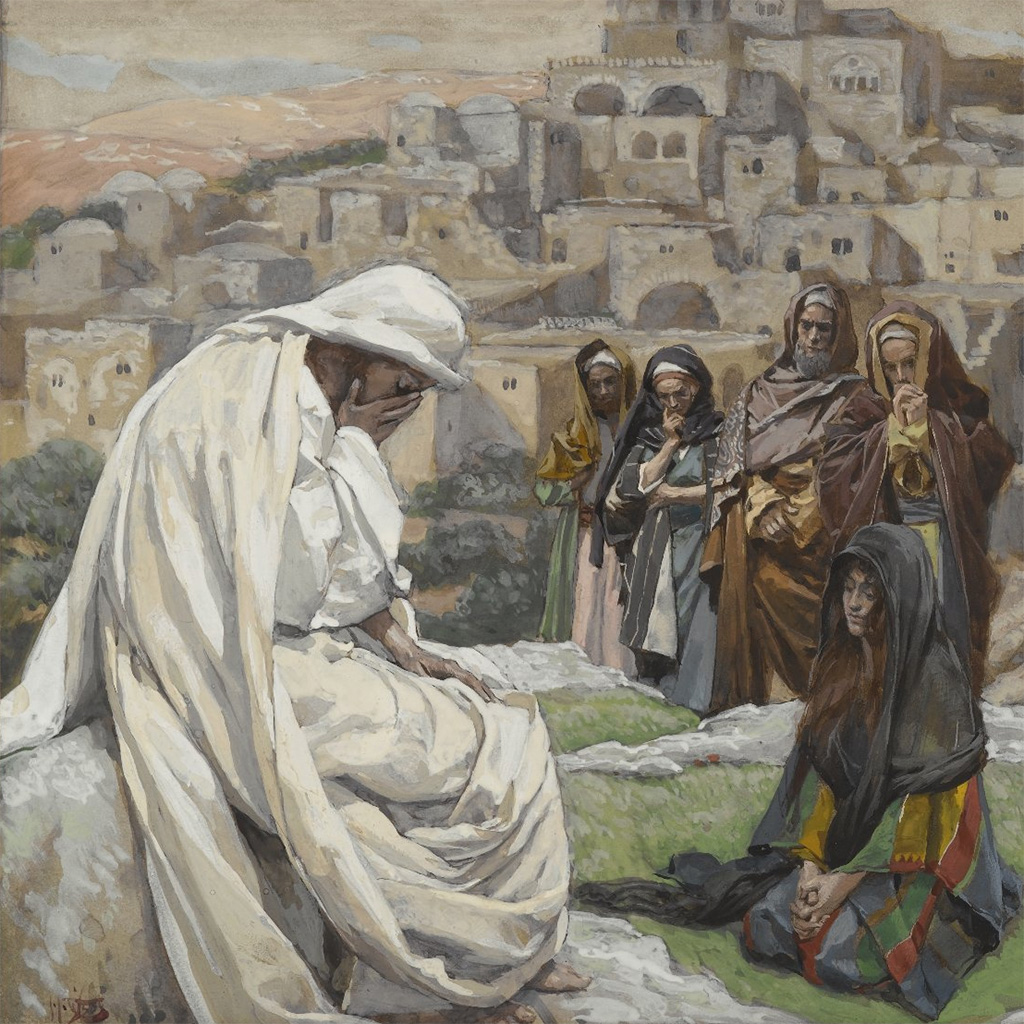
Mourning Together as Morning Dawns

Much sorrow is being felt in the wake of this pandemic, by so many. How can we better “mourn with those that mourn,” while also working through our own grief in healing ways?

The Ordinary Saint’s Guide to Under the Banner of Heaven

In an age that claims to value “own voices” media, it is sad that Under the Banner of Heaven is probably going to be the biggest story that the public sees about members of The Church of Jesus Christ of Latter-day Saints this year or this decade. While the tale it tells is based on an actual occurrence and about some actual problems within the broader movement of people hearkening back to Joseph Smith, one thing that can’t be said for either the book or the show was that they were written by a member of our community. The producer may have “grown up” as a Latter-day Saint, but he left the faith before he was an adult. If you’ve never had the experience of holding a calling, making temple covenants, or negotiating the relationships that make up a ward (Latter-day Saint congregation), are you really the best person to interpret our community? So I’m stepping in to offer my perspective. I am not a historian or theologian. So, though I try to be informed about the difficult parts of our religion’s past, I can only give you the perspective of what an average member would know or believe about these situations. I undoubtedly will get some of the nuances wrong. This will not be the best place if you’re looking for information about the historical accuracy of the show. (Consider checking FAIR’s guide or Book of Mormon Central.) However, I am an active participant in the larger Latter-day Saint literary community. I’ve written essays about my own life as a woman in the Church and fictional stories about others. I studied Latter-day Saint literature in college and continue reading contemporary Latter-day Saint literature. I am on the board of the Association for Mormon Letters, an organization that promotes literature written by, for, or about those who tie back to the prophet Joseph (including members of The Church of Jesus Christ of Latter-day Saints, but not exclusive to our denomination). So you might say I have some experience with portrayals of the Latter-day Saints and separate fundamentalist communities. The purpose of this series of recaps is two-fold. First, I want to summarize the series for ordinary Latter-day Saints who don’t intend to watch it so they won’t be surprised around the metaphorical watercooler this week. Second, I will catalog the series as it compares to Latter-day Saint literature more broadly. As a writer, reader, and advocate of Latter-day Saint literature, this is my home turf. I am interested to see where the show gets things right and wrong. Granted, my experience isn’t the experience of every member; like any community, Latter-day Saints are not a monolith. But I will compare the show to my personal knowledge of our community and talk about what sticks out. Without further ado, here are my impressions of the first two episodes of Under the Banner of Heaven. Episode 1, “When God Was Love”  Summary—The episode opens with Detective Pyre being called away from his family’s Pioneer Day celebrations to visit a crime scene. At an ordinary suburban house, he finds a scene of chaos with a mother (Brenda Lafferty) and her 15-month-old daughter (Erica) murdered in a gruesome way. (Luckily, we are only shown large quantities of blood on the floor and walls; the show shies away from showing the bodies, though we will get hints through dialogue about the exact method of killing.) Soon the husband (Allen Lafferty) is taken into custody, his clothes soaked in his wife’s blood. The killer claims that his wife was murdered by men with beards like “Mormon prophets” and continually ties his wife’s murder back to early church history stories, particularly Joseph and Emma marrying against her father’s will. We then get a flashback to a young Brenda. She is an energetic and ambitious young woman who transfers to BYU after being tired of “holding girl’s hair back while they puked” at her party school in Idaho. Allen introduces Brenda to his family at a large family dinner. His brothers seem both strangely attracted to her and judgmental of her for her ambition and less strict faith (caffeinated soda is mentioned). The Lafferty family band together to clear a neighbor’s land to prevent it from being seized by the federal government to build a highway. In the present, Detective Pyre’s partner Bill visits Allen’s brother Robin’s home and finds the house abandoned and papers burning. They arrest Robin after a chase through a motel. This episode depicts the First Vision. It shows Joseph going to the woods to pray and a light shining down on him. The script draws parallels between Joseph’s prayer and Robin’s prayer in the woods before he is caught by the police, which doesn’t really make much sense except that they are both kneeling in a natural setting. We also get a scene of Joseph and Emma discussing whether to marry against her father’s wishes. The show tries to make a big deal of them choosing between “God’s will” and her father’s authority, implying that the problem is that they can justify almost anything as God’s will. I found this assertion pretty strange, given that Joseph and Emma were hardly the first couple to marry against a parent’s wishes. It seems a thin justification on which to hang a condemnation of trusting God. Shibboleths—It’s apparent that the showrunners have made an effort to try to include jargon of Latter-day Saints in the dialogue. Sometimes this works: the Pyre family prayer scene feels exactly like the ones that take place in my family. Others make it apparent that the writers are not members of the community. While we do refer to God as Heavenly Father, particularly in prayer, we don’t use this term exclusively like the characters in the show. I regularly hear members refer to him as “God” or “the Lord,” and a brief search of the church’s 1980’s general conference talks shows that this isn’t a new innovation. While there is

Disciples, Activists & the Drama Triangle

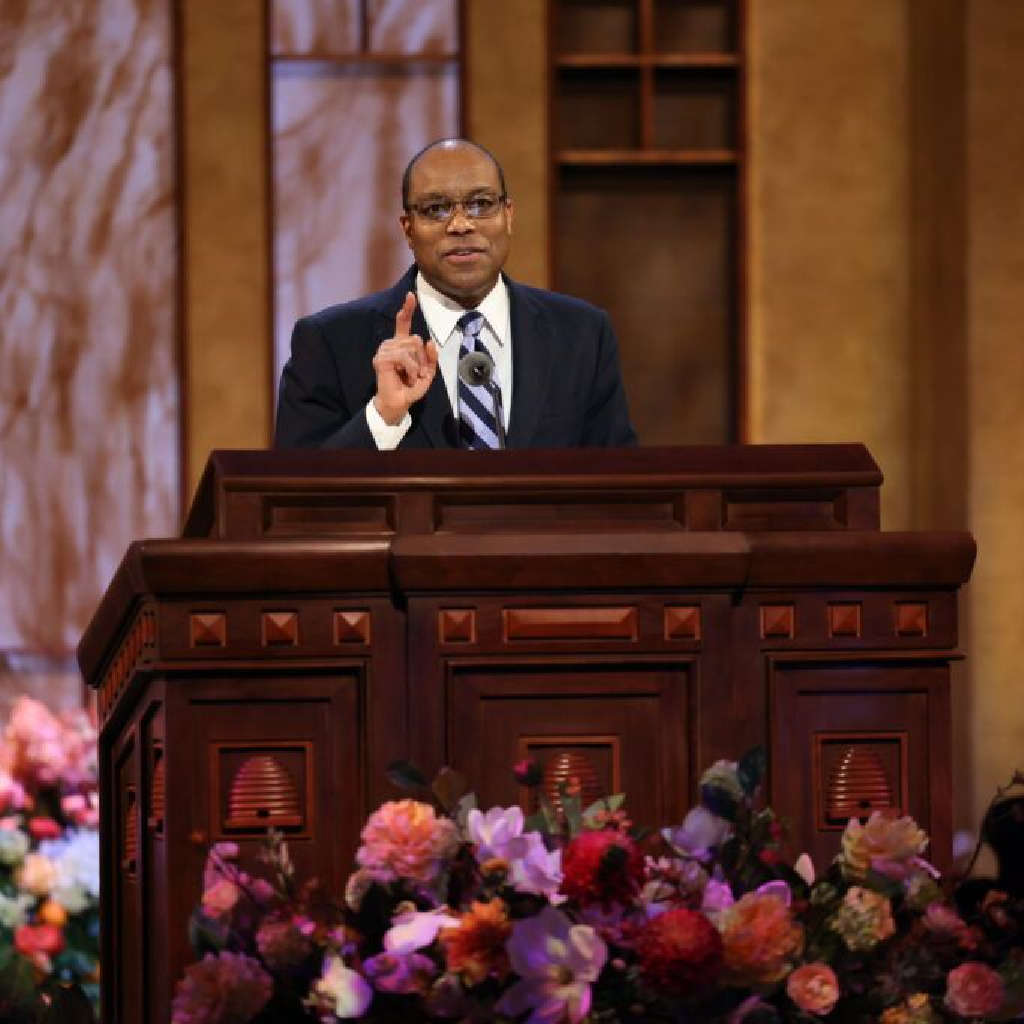
Ahmad Corbitt’s October 2022 talk to military chaplains challenged not just secular-minded activists, but also a common set of stories sometimes held by believing and sustaining church members.