
What is power? Even without a formal philosophical framework, it is easily recognizable in a multitude of dynamics: physical power, electrical power, political power, military power, economic power, intellectual power, social power, persuasive power, spiritual power, and more.
In a conflict, what can be done when it seems the other party has all the power? As Christians, should we desire power? And if so, what kind of power is righteous, and what kind is destructive?
The Series
This is the second-to-last article in the 12-part series published by Public Square Magazine and written by the team at TheFamilyProclamation.org. Each article expands on the ideas from 12 short, 1–2 minute videos in the playful yet poignant Peacemaking Series.
This week’s video, “What is Power?”, offers practical suggestions for navigating the power dynamics inherent in conflict resolution. The video uses the visual analogy of two children playing baseball to illustrate power plays that emerge in conflict. Its dual purpose is to help those who feel powerless recognize the power they do have, and to caution those who abuse power that they bring upon themselves natural consequences because of their abuse.
Power Defined: Control Over Resources
“What is power?” the video asks. “Perhaps the simplest definition is the ability to control a resource.” While this simplifies a vast and complex topic—one debated by Western thinkers from Plato and Aristotle to Locke, Marx, Foucault, Piaget, and Bourdieu—it provides an accessible entry point. This thesis seeks to provide an accessible, utilitarian definition that helps a person recognize their own power.
Viewed through this lens, a sense of powerlessness stems from a lack of control or an ignorance of or undervaluing of personal resources. Resources are not only external, like money, property, information, or authority, but internal as well: like participation, patience, integrity, ingenuity, empathy, motivation, faith, or moral conviction. Increasing one’s power becomes a matter of recognizing available resources and learning to exercise mastery over them.
Mastery and Self-Control
But what does it mean to be a “master”? Consider Christ, who taught, “Neither be ye called masters: for one is your Master, even Christ. But he that is greatest among you shall be your servant. And whosoever shall exalt himself shall be abased; and he that shall humble himself shall be exalted” (Matthew 23:10-12). True mastery is not domination, but compassion and self-control. The childhood adage “It doesn’t matter whether you win or lose; it’s how you play the game” captures a deep truth about sustainable power.
Christian discipleship emphasized such power of persuasion emanating from an internal purity of charity. We love God because He first loved us (1 John 4:19). Charity is a gift from God, yet manifests itself within a disciplined inner self (see 1 Corinthians 13:4-8). There are resonances of this principle beautifully expressed in ancient Asian philosophies. Confucius illustrated that an empire’s “good government” radiates out from the individual citizen’s self-mastery of heart, thoughts, and knowledge. Similarly, the Taoist believes “mastering others is strength; mastering yourself is true power.”
The Baseball Analogy: Play as Power
Patience, long-suffering, and charity are not merely moral virtues—they are practical strategies that make influence sustainable. Power emerging from coercion or fear may achieve immediate results, but will eventually fail.
In the video, a larger child wishes to play baseball with a smaller friend. When the larger child’s aggressive play causes an injury, the smaller friend no longer wants to participate. This simple example illustrates a profound principle: abusive systems of power eventually lose the participation of those they seek to dominate. Tyrants are overthrown; corrupt institutions collapse; cheaters stop getting invited to play.
The childhood adage “It doesn’t matter whether you win or lose; it’s how you play the game” captures a deep truth about sustainable power: Those who respect others’ agency and fairness and elicit joy inspire continued engagement.
Dr. Jordan Peterson illustrates life as a series of successive and increasingly complicated games. While winning is important, whether or not an individual wins the immediate game isn’t the most important objective. Fair-play is the quality of an individual who engages effectively in the “meta-game”; they demonstrate they are a person worth playing with and therefore attract playmates. Someone who wins repeatedly but fails to play fair will eventually exhaust their playmates. This might explain why someone can “win” some games (like the financial game of life), but “lose” in other games (like the relationship game of life).
The solution is mutuality: power is most durable when all parties willingly participate. Participation is power. And, play motivates participation. Systems perpetuate themselves when participation is voluntary, and relationships thrive when engagement is balanced and mutually beneficial. Whether we “win or lose” in any particular interaction is often secondary to whether our behavior encourages ongoing participation and trust.
Using Simple Resources
Power often begins not with influence over others, but with the careful stewardship of the resources already at one’s disposal. Consider William Kamkwamba, who, as a young boy in Malawi, built a windmill from scrap materials, bringing electricity to his village through ingenuity and persistence. Malala Yousafzai, despite attempted murder and continued death threats, risks her own safety to insist on women’s right to education—wielding her voice and persistence as resources to inspire global change. Mother Teresa used the simplest acts—tending the sick, feeding the hungry—to exert a quiet but transformative influence over those around her. Harriet Tubman’s courage and careful planning allowed her to lead countless enslaved people to freedom using her knowledge, relationships, and tireless action as her tools.
In each case, these individuals did not possess vast power in conventional terms like money, authority, athleticism, or status. And, in most of these examples, there were even adversarial individuals who utilized all the resources they had to try to stop these good-doers. But these impressive individuals got scrappy using what resources they did have, countering their antagonists, and succeeding in their goals. Their strength came from recognizing the resources they did have, like skills, relationships, knowledge, moral courage, and choosing to act. These examples demonstrate that sustainable power grows from within, from conscience, compassion, the willingness to act, and inviting others to willingly engage in the pursuit of justice, truth, and good.
Power and the Christian Perspective
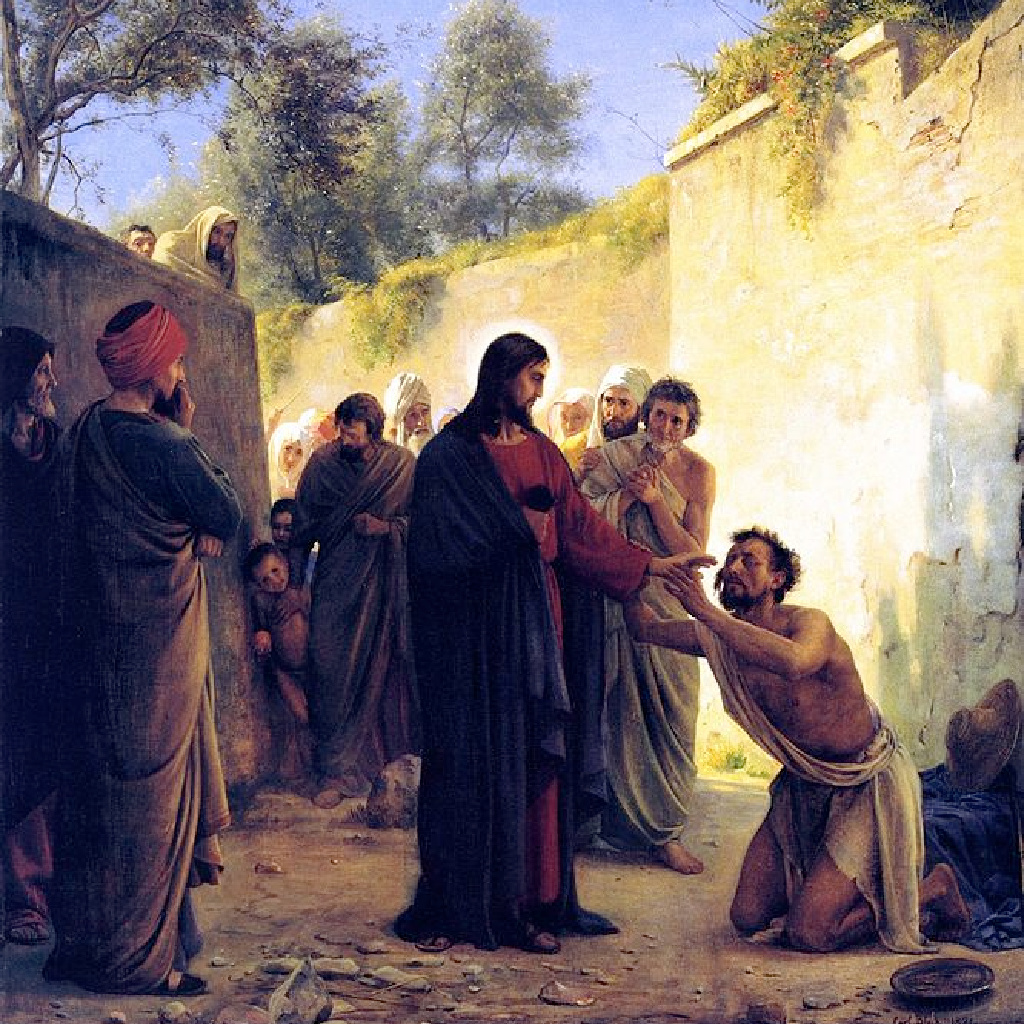
The gospel reframes our understanding of power. Power is not inherently good or evil. When aligned with God’s will, we become powerful in healing relationships, strengthening communities, and fostering enduring peace. Christ Himself never sought domination. He healed, taught, and served—exercising influence through love, persuasion, and example rather than force. Power begins … with the careful stewardship of the resources.
Influence rooted in persuasion, patience, and love aligns human relationships with divine law, creating sustainable cooperation and peace. When everyone wants to play, the game is on.