man (3)

“I’m Not Going Anywhere.” A Tribute to Godly Men

My past taught me that men were dangerous, not to be trusted, and likely to hurt and abandon me. I learned otherwise from my husband and my new faith.  
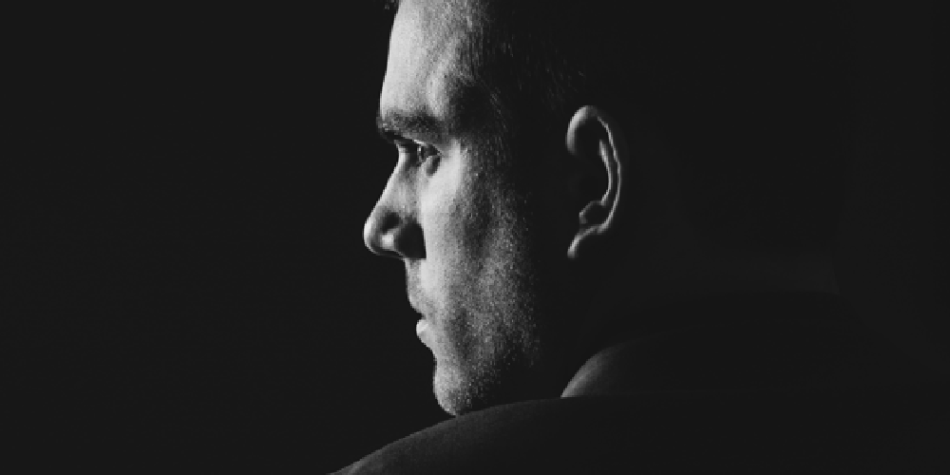
Photo by Drew Hays on Unsplash

Living with complex post-traumatic stress disorder or PTSD means sometimes life gets messy, especially in marital relations. 

My husband and I came from completely and entirely different childhood environments. He is the youngest son of six siblings, raised by a loving mother and father—and born into a family that belongs to The Church of Jesus Christ of Latter-day Saints. His mother is one of the most humble and meek women I’ve had the privilege of knowing, and his father is a hard-working, kind, and generous man. 

I was raised in a home with a lesbian mother who also taught me important things and showed me great love. Yet I was taught by example never to let even the smallest grievances go. The intent was to “keep things from festering,” but in reality, this meant frequent contention in our home. Sharing an opinion sometimes meant fists were flying—and nothing was ever “swept under the rug.” 

One of the greatest lessons since my turbulent childhood has come from observing my husband, who has shown me the value of silence and of keeping the peace. In a world that bombards us with the loudest voices, I have learned that being calm, mindful, and meek blesses the spirit of my home.

Our very different ways of communicating and problem-solving, compounded by my different upbringing, provide challenging learning experiences for us both. We’ve had a steep learning curve in understanding and anticipating each other’s needs. One especially stretching time happened in the midst of some extreme postpartum depression. Because of the immense pressure this put on our marriage, I found myself distraught on the bathroom floor. Through frantic sobs, I told my husband that I knew he would leave me one day—listing one important person after another who had abandoned me emotionally, physically, or both. I conveyed to him in desperation my sincere concern that he would not be able to endure my struggles with anxiety, depression, and being reactive.

At that moment, I was utterly convinced I would lose him.

I had no idea that this kind of man actually existed in real life.

When I met my husband, I thought I had met a real-life walking, talking, breathing angel on earth. I had never personally known a man who didn’t swear, drink alcohol, abuse drugs, and indulge in pornography. In addition, he made a choice to sacrifice two years of his life to teach others about Jesus Christ. He was hard-working and debt-free. He willingly followed the council of his religious leaders and attended church every week. I had no idea that this kind of man actually existed in real life. I am here to spread the word that this kind of man does exist. 

Fairytales can happen, and dreams can come true, but in that moment of my life, I felt mine was crumbling. In response to my traumatized fear and anxieties, my husband did something that had a lasting impact on me, something I can come back to if ever I begin to notice doubt creeping again. After I described the many others who had abandoned me, he held my face in his hands and looked into my eyes, saying, “None of those people went to the temple with you. But I did! I went to the temple with you, I knelt at the altar with you, I made covenants with you, and I meant them. I said yes to an eternity with you, in sickness and in health. I’m not going anywhere.

He went on to encourage me to give him more credit for the profound commitment I’ve made. There are other stories like this, and they always touch me. One Latter-day Saint father had a sweetheart with many health challenges. In sharing his experience supporting his wife, he related, “sometimes I do the right thing as a father and husband because I feel like it. And sometimes I do the right thing because I promised.” 

I know I’ve shared a glimpse into a deeply private moment. I recognize it may hurt if someone you love didn’t keep their promises. But these more encouraging kinds of stories need to be brought to light too. So please hold this space of gratitude with me; gratitude that there are men who keep their commitments, honor their priesthood, and bless the lives of their children and wives. These men are truly angels here on earth, and they deserve to be celebrated without apology.

I’m not going anywhere.

None of this was something I appreciated in my childhood and youth. I grew up feeling intimidated in the presence of men as my exposure to them was minimal at best. They were a mystery to me and were thought of as dangerous. In different ways, I was told they were “sexual predators,” “misogynist pigs,” or both. My solution to approaching half of the population back then was to simply ignore them. They were invisible to me, and, in turn, I made myself as invisible as possible in their presence as well. 

This began to change when a career path took me into the homes of hundreds of families. Over the course of a decade, I observed men who were becoming fathers. I assisted them as they ushered their unborn children into this world. I witnessed tender moments shared between husbands and wives. I saw men who deeply desired to learn and improve their ability to support their wives, men who weren’t afraid to ask questions or admit they weren’t the expert in the room. I found evidence in so many homes of men who dearly wanted to provide for and protect their wives and families. 

A colleague once drew my attention to the miraculous and visible change that takes place when a father holds his child in his arms for the very first time. Something settles over him, and he is transformed. At that moment, I’ve often witnessed men share these words, or something similar, with the brand new infant in their arms, “You’re here, you’re real, and I’m your father!” Their minds are captivated by this realization—something they could never completely comprehend until actually seeing their child on the outside of the womb. But once they enter that profound moment after birth, a tangible mantle seems to be placed squarely on their shoulders. Through these intimate and sacred experiences, I gained new trust in men and for men. 

At times I’m still guarded and recognize I have a journey of continued growth ahead. But because of experiences like these, I have gained a better understanding of what a true man is and what other men may become. Words fail in an effort to express gratitude for the good examples who have shown me such a thing exists, like angels on earth.


To learn more about Rachel Marie and her work, visit https://www.rachelmariespeaks.com/

About the author

Rachel Marie

Rachel Marie is a certified childbirth educator and Doula - and founder of SHINE SLC, an at risk youth nonprofit organization. She is a convert to the Church of Jesus Christ of Latter Day Saints and a mother of three.
On Key

You Might Also Like

The Disinformation Board and Religious Freedom + Today’s Digest

Our daily rundown of the articles from around the web that we feel our readers would enjoy and appreciate. We hope to highlight the best of what’s around. Public Square Bulletin recommends: Will the ‘Disinformation Governance Board’ censor religious viewpoints? Jorge Gomez—Christian Post While the article does lean into something of the more hysterical concerns about the Department of Homeland Security’s new board for tracking disinformation campaigns, it does address one of the big questions that government leaders must reckon with as the board settles on its role: how will this intersect with religious freedom concerns? The Hard Left and Populist Right Agree on All the Wrong Things Stephan Jensen—Quillette The “culture wars” are often a topic for dread. But Stephan Jensen posits that we’ve become hoodwinked by extremes on both sides that have exaggerated concerns well beyond what is warranted to keep us in a constant state of unease. But he suggests that the sane center may be making a comeback as the war in Ukraine helps us focus on what’s truly important. Insta-Therapy: Helping Or Hurting? Seerut K. Chawla—Unorthodox Chawla suggests that the overly simplified versions of mental health that are bandied about on social media cause many more problems than they solve. She suggests that all too often that this culture problematizes normal life in order to create a problem that the influencer is uniquely suited to solve. Go Forth and Proselytise Peter Davidson—Literary Review This review of the book “Jesuits: A History” focuses on the Jesuits’ missionary efforts. Peter Davidson makes a clear argument that missionary work has historically provided great value. Davidson frames Markus Friedrich’s book in a way that is a direct challenge to those who seek to eliminate or devalue ongoing proselyting efforts. Jacob’s Dream Gospel for Kids The latest video from this official YouTube channel of the Church provides a fun activity for kids that helps frame the story of Jacob’s ladder about the covenant path.

Demanding Conversations About Violence

In the weeks since the premiere of the Under the Banner of Heaven miniseries, there has been a broad consensus that the show doesn’t quite work. Its attempt to paint Latter-day Saints as promoting violence just doesn’t land. And its depiction of Latter-day Saints simply doesn’t resonate because it’s too dissimilar. This of course must come as some disappointment to critics of the Church who had hoped the series would prompt more conversations around the issues they deem problematic such as how the Church promotes violence. Into this void comes a new argument made most prominently by Taylor Petrey, but also echoed by a student columnist at the University of Utah, and now promoted on Twitter by Benjamin Park—namely, that because there has been some violence done by some Latter-day Saints who use the language of their culture in perpetrating it, Latter-day Saints should watch the series with the intent to learn how to make their Church less violent. Both Petrey and Park had previously criticized the series for its poor job in portraying Latter-day Saints, but have since shifted. We don’t want to attack the Daily Utah Chronicle piece because it’s a student article. But Petrey and Park should know better. Some of us have been on the record defending Petrey as a serious scholar, despite the fact that his conclusions don’t often derive well from the available evidence. But Petrey seems to suggest in his article that any violence that uses the language of religion must have been inspired by that religion. We understand the temptation of this point of view. What else could we blame violence on if not the culture it arose in? But Petrey’s position assumes that human beings are naturally non-violent, and only become violent as a result of their culture. This is a major assumption in the Robert Orsi essay that Petrey relies on extensively. Parks’ tweets similarly assume that any conversation about Latter-day Saints and violence must concede that the faith contributes to the violence in some way. But the causes of violence are often complicated. Because of the importance of our innate nature in creating violence, even the most peaceful society would still produce fringe examples of extreme violence. Having a Latter-day Saint who becomes violent isn’t proof that the faith contributes to that violence, even if the perpetrator uses the language of their culture in perpetuating that violence. Cultural contexts can then increase or decrease the likelihood of that emerging, but no culture has discovered how to remove it altogether. And because Under the Banner of Heaven fails to present a clear picture of what most experience as Latter-day Saint culture, it doesn’t do much to establish whether a Latter-day Saint context is more prone to cause violence than others. Those who use Latter-day Saint or another religious language and context to perpetuate violence weren’t necessarily made violent by those cultures. But rather, violent individuals will leverage anything around them to perpetrate their violence. We’re aware of many other similar examples—of abusers, for instance, who used the language of therapy to perpetuate abuse. But it would be absurd to suggest that therapeutic culture caused that abuse. Even pacifist language has been known to be used to perpetuate violence by shaming survivors into silence. An abusive person will draw upon the most powerful language available within their given cultural context and weaponize that. This is not coincidentally the conclusion made by prosecutors in the Lafferty case, that the murder was about power and relationships and that religion was merely the pretext. Does the Church of Jesus Christ disproportionately create violent offenders? We’d be interested in reading any definitive social science research on the question, but unfortunately, those promoting this point of view or hoping to have this conversation have not yet presented any. And rather than attempt to answer this question clearly itself, Under the Banner of Heaven skips the question and takes it as a given. A study of this sort could start the conversation Petrey, Parks, and the student author hope for. Instead, we get a story about a 38-year-old murder that was notable mainly for how unusual it was among the Latter-day Saint community and perpetrated by someone who had recently been kicked out of the Church for their extremist views. It should not surprise anyone that it hasn’t prompted anyone to conclude there’s a problem with violence among Latter-day Saints.

Subscribe To Our Weekly Newsletter

Stay up to date on the intersection of faith in the public square.

You have Successfully Subscribed!